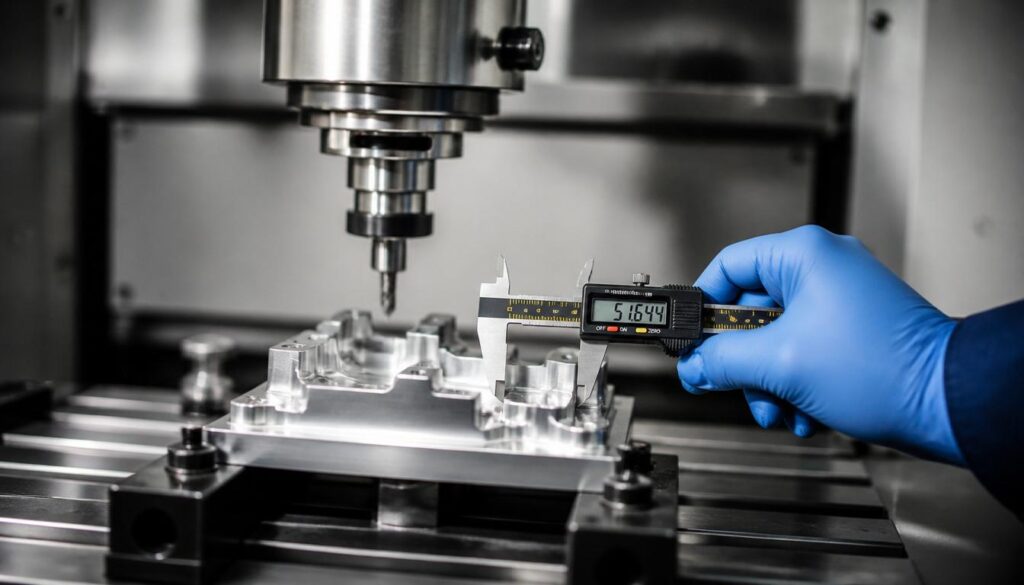
Precision milling plays a critical role in modern manufacturing, where even minor deviations can impact product performance, assembly, and overall production costs. Industries such as aerospace, automotive, medical device manufacturing, and industrial equipment production rely on tight tolerances and consistent machining quality to meet demanding specifications.
Achieving high-quality milling results requires more than advanced machinery alone. Tool selection, process control, machine stability, and inspection procedures all contribute to maintaining accuracy throughout the production cycle. Among these factors, the proper use of End milling cutters remains one of the most important considerations in precision milling operations.
Understanding Quality Control in Precision Milling
Quality control in precision milling involves monitoring and managing every stage of the machining process to ensure that components meet specified dimensions, surface finish requirements, and functional performance standards.
A comprehensive quality control strategy focuses on:
- Dimensional accuracy
- Surface finish consistency
- Tool condition monitoring
- Process stability
- Material integrity
- Repeatability across production runs
When these factors are effectively controlled, manufacturers can reduce scrap rates, minimize rework, and improve overall operational efficiency.
The Importance of Tool Selection
The selection of cutting tools directly affects machining quality. Different materials, geometries, and coatings are designed for specific applications and workpiece materials.
High-quality End milling cutters help manufacturers achieve:
- Better dimensional precision
- Improved surface finish
- Reduced vibration during cutting
- Longer tool life
- Greater process reliability
Selecting the wrong cutter geometry or tool material can lead to poor chip evacuation, excessive heat generation, and premature tool wear, all of which negatively impact product quality.
Monitoring Tool Wear
Tool wear is one of the most common causes of quality issues in milling operations. As cutting edges gradually wear down, machining accuracy can decline, leading to dimensional inconsistencies and surface defects.
Quality control programs should include routine inspection of End milling cutters to identify:
- Flank wear
- Edge chipping
- Built-up edge formation
- Coating deterioration
- Excessive tool runout
Implementing predictive maintenance schedules can help replace worn tools before they affect product quality.
Machine Stability and Alignment
Even the best cutting tools cannot compensate for machine instability. Precision milling requires rigid machine structures, accurate spindle alignment, and proper workholding systems.
Common machine-related quality issues include:
- Excessive vibration
- Thermal expansion
- Spindle runout
- Fixture movement
- Improper machine calibration
Regular machine maintenance and calibration procedures are essential for maintaining consistent production quality.
Optimizing Cutting Parameters
Cutting speed, feed rate, depth of cut, and step-over values significantly influence milling performance.
When machining parameters are not optimized, manufacturers may experience:
- Poor surface finish
- Tool breakage
- Excessive heat generation
- Reduced dimensional accuracy
- Increased production costs
Using appropriate cutting conditions for specific End milling cutters and workpiece materials helps ensure stable machining performance and repeatable results.
Surface Finish Inspection
Surface finish is often a critical quality requirement, particularly for components used in high-performance applications.
Factors affecting surface finish include:
- Tool sharpness
- Cutter geometry
- Machine rigidity
- Cutting parameters
- Material properties
Regular inspection using surface roughness measurement equipment helps verify compliance with customer specifications and industry standards.
Material Consistency and Verification
Variations in material hardness, composition, and internal structure can influence machining performance.
Manufacturers should verify incoming material quality through:
- Material certifications
- Hardness testing
- Batch traceability systems
- Supplier quality assessments
Consistent material quality helps maintain predictable cutting conditions and supports stable milling operations.
In-Process Measurement and Inspection
Modern manufacturing increasingly relies on real-time inspection methods to detect deviations before they become costly defects.
Common inspection techniques include:
- Coordinate Measuring Machines (CMM)
- Laser measurement systems
- Probe-based machine inspection
- Digital metrology tools
In-process measurement allows operators to make adjustments quickly, improving process control and reducing waste.
Read more: Top Milling Cutter Manufacturers in 2026
The Role of Data-Driven Manufacturing
Industry 4.0 technologies are transforming quality control practices in precision milling.
Advanced monitoring systems can track:
- Tool performance
- Machine conditions
- Production trends
- Quality metrics
- Predictive maintenance indicators
By leveraging manufacturing data, companies can identify potential quality issues early and continuously improve machining performance.
Conclusion
Quality control in precision milling requires a combination of skilled process management, reliable equipment, and high-performance cutting tools. From tool selection and wear monitoring to machine stability and in-process inspection, every aspect of the machining operation contributes to final product quality.
As manufacturing tolerances become increasingly demanding, investing in robust quality control procedures and utilizing premium End milling cutters can help manufacturers achieve greater accuracy, improved efficiency, and long-term production consistency. Organizations that prioritize quality at every stage of the milling process are better positioned to meet customer expectations and remain competitive in today’s precision-driven manufacturing environment.