Keeping a commercial property in good condition requires more than fixing equipment when something goes wrong. From air conditioning systems to plumbing, electrical installations, and shared building areas, every facility needs consistent attention to remain safe and functional. For businesses exploring facility management services in Dubai, understanding the difference between reactive and preventive maintenance can help them make better decisions, control maintenance expenses, and reduce unnecessary disruptions.
Both approaches have a place in property management, but relying entirely on emergency repairs can create avoidable challenges. A balanced maintenance strategy helps businesses address immediate problems while preventing smaller issues from becoming costly failures.
What Is Reactive Maintenance?
Reactive maintenance refers to repairs carried out after equipment breaks down, a fault is discovered, or a facility component stops working as expected. It is sometimes called breakdown maintenance because the response begins when a problem has already occurred.
For example, if an office air conditioning unit stops cooling during a busy summer afternoon, the management team may need to arrange an urgent inspection and repair. Similarly, a leaking pipe, failed light fitting, or malfunctioning access door may require immediate attention to restore normal operations.
Reactive maintenance is not always a poor decision. Certain minor faults are inexpensive to fix, and some equipment does not justify frequent inspections or scheduled servicing. In these situations, repairing an item when necessary may be a reasonable approach.
However, the main disadvantage is uncertainty. Managers may not know when the next failure will happen, how serious it will be, or how much the repair will cost. Emergency callouts, replacement parts, and unexpected downtime can place additional pressure on operating budgets.
When several systems fail around the same time, the impact can be even greater. Staff productivity may suffer, customers may experience inconvenience, and building occupants may face uncomfortable or potentially unsafe conditions.
What Is Preventive Maintenance?
Preventive maintenance focuses on inspecting, servicing, and maintaining equipment at planned intervals before major problems develop. Instead of waiting for a breakdown, maintenance teams follow a schedule based on manufacturer recommendations, equipment condition, operating hours, and the requirements of the property.
Typical preventive maintenance activities include cleaning air conditioning filters, inspecting electrical connections, checking plumbing fixtures, testing safety equipment, servicing pumps, and identifying signs of wear in mechanical components.
Consider a commercial building in Dubai that depends heavily on air conditioning throughout the year. Regular inspections can help identify blocked filters, unusual vibrations, drainage problems, or reduced cooling performance before they lead to a complete system failure.
Preventive maintenance also makes planning easier. Property managers can schedule work during quieter periods, organise spare parts in advance, and coordinate technicians without unnecessarily interrupting normal business activities.
Although scheduled maintenance involves an ongoing cost, it can reduce the likelihood of expensive emergency repairs and help equipment operate more reliably over time.
Key Differences Between Reactive and Preventive Maintenance
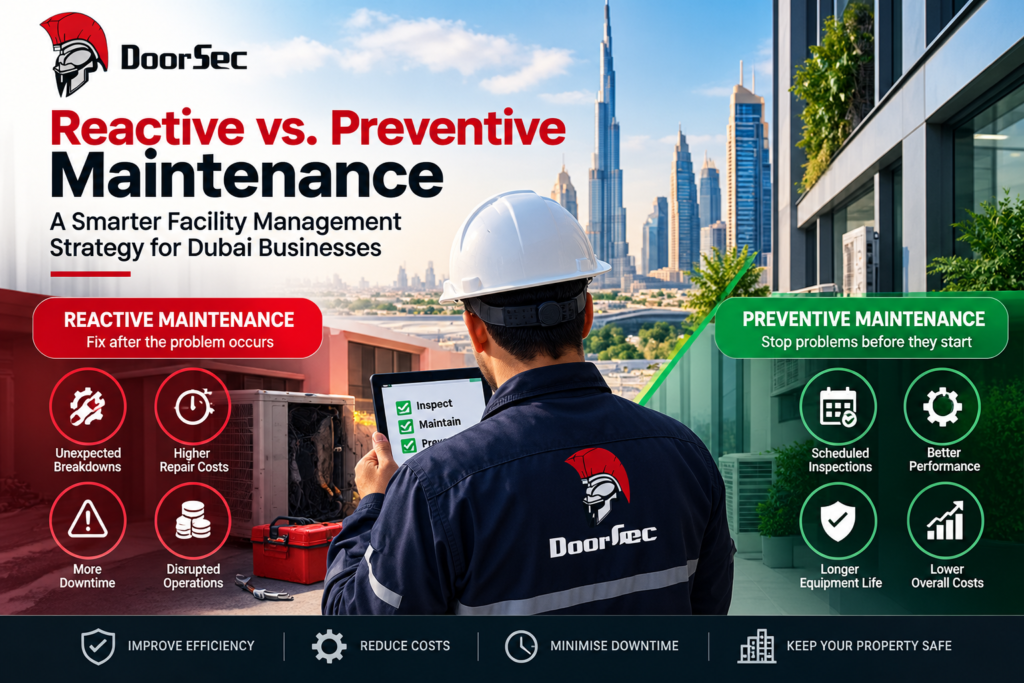
The most important difference is when action takes place. Reactive maintenance responds to an existing fault, while preventive maintenance attempts to reduce the likelihood of that fault occurring in the first place.
There are several other differences worth considering.
Cost planning: Reactive maintenance can involve unpredictable expenses, particularly when urgent repairs or replacement components are needed. Preventive maintenance makes routine spending easier to forecast, although it cannot eliminate every unexpected cost.
Equipment reliability: Waiting until a system fails may lead to longer periods of disruption. Planned inspections can identify developing problems and support more consistent performance.
Operational continuity: An unexpected breakdown can affect employees, tenants, customers, and visitors. Scheduled maintenance allows businesses to arrange work around operational requirements whenever possible.
Asset lifespan: Equipment that receives appropriate servicing may experience less avoidable wear. However, maintenance alone cannot prevent every failure or guarantee a particular lifespan.
Workload management: Reactive maintenance often requires teams to reorganise their priorities at short notice. Preventive schedules help managers allocate labour, book specialist contractors, and prepare materials more effectively.
Neither approach guarantees a problem-free building. The right choice depends on the type of equipment, its importance to operations, repair costs, and the consequences of a potential failure.
Why Preventive Maintenance Matters in Dubai
Dubai’s commercial properties operate in an environment where cooling performance, indoor comfort, and reliable building services are especially important. High outdoor temperatures can place considerable demand on air conditioning equipment, while dust and frequent system use can increase the need for appropriate inspections and cleaning.
For offices, retail outlets, hospitality venues, and residential developments, an air conditioning problem can affect more than comfort. It may interfere with business activities, create complaints from occupants, and require urgent technical attention.
Plumbing and drainage systems also need regular checks. Small leaks can damage finishes, affect neighbouring areas, and increase water consumption if they remain unnoticed. Similarly, neglected electrical components may develop faults that require more extensive investigation and repair.
A preventive maintenance plan helps property managers pay attention to these risks before they become significant operational concerns. The schedule should reflect the actual conditions of the building rather than applying the same checklist to every property.
For instance, a large office tower may require a more detailed maintenance programme than a small commercial unit because it has more equipment, shared systems, and occupants to consider.
How to Build an Effective Maintenance Plan
A practical maintenance strategy begins with a clear understanding of the property. Businesses do not necessarily need an expensive or complicated system to get started. A structured process, accurate records, and consistent follow-up can make a meaningful difference.
-
Identify Critical Building Systems
Start by listing the equipment and facilities that are essential to daily operations. These may include HVAC systems, electrical panels, water pumps, plumbing installations, lifts, emergency lighting, and fire safety equipment.
Prioritise systems according to their operational importance, safety implications, and potential repair costs. Equipment whose failure could affect occupant safety or shut down business operations generally requires closer attention.
-
Establish Appropriate Service Schedules
Maintenance intervals should be based on manufacturer guidance, equipment condition, usage patterns, and applicable safety requirements. Some components may need frequent inspections, while others can be checked less often.
Avoid scheduling work simply for the sake of following a calendar. The objective is to maintain equipment appropriately and identify developing issues without carrying out unnecessary servicing.
-
Keep Accurate Maintenance Records
Document inspections, completed repairs, replaced components, recurring faults, and upcoming service dates. These records help managers recognise patterns and identify equipment that repeatedly requires attention.
If the same air conditioning unit develops similar problems several times, for example, reviewing its maintenance history may reveal the need for a more thorough assessment rather than another temporary repair.
-
Work With Qualified Technicians
Maintenance tasks should be assigned to appropriately trained personnel. Electrical work, HVAC servicing, and other technical activities may require specialist skills, relevant authorisations, and compliance with applicable regulations.
A reliable maintenance provider should communicate clearly, explain identified problems, document completed work, and advise when further investigation is necessary.
-
Review and Improve the Plan
A maintenance schedule should not remain unchanged indefinitely. Review repair records, recurring faults, operating costs, and feedback from building occupants to determine whether the current approach is working.
If equipment repeatedly fails despite regular servicing, the maintenance method, inspection frequency, or condition of the asset may need to be reassessed.
Is Reactive Maintenance Ever the Better Option?
Yes. Preventive maintenance is valuable, but it does not make sense to schedule intensive servicing for every component regardless of its condition or importance.
For inexpensive items that are easy to replace and have little impact on operations, a reactive approach may be more economical. Businesses may also need reactive repairs when an unexpected fault occurs despite following a well-maintained schedule.
The key is to distinguish between manageable faults and failures that could affect safety, cause significant property damage, or interrupt essential services.
A sensible strategy uses preventive maintenance for critical systems and predictable wear-related issues while retaining the ability to respond quickly when unforeseen problems arise. This combination is often more practical than relying exclusively on either approach.
Choosing a Facility Management Partner in Dubai
Managing multiple building systems can be challenging, particularly for businesses that lack an in-house maintenance team. A professional facility management partner can help organise inspections, coordinate technical services, maintain service records, and respond to repair requirements according to the agreed scope of work.
When evaluating a provider, consider its technical capabilities, staff qualifications, communication procedures, reporting practices, and ability to work around your operating hours. It is also worth asking how maintenance schedules are developed and how urgent faults are prioritised.
A good provider should understand that every property has different requirements. A retail outlet, office building, warehouse, and residential complex will not necessarily need the same maintenance frequency or service arrangement.
Businesses looking for a coordinated approach can explore facility management solutions from DoorSec to understand the available services and determine whether they match their property’s needs.
Conclusion
Reactive and preventive maintenance serve different purposes, but neither should be considered in isolation. Reactive maintenance helps address unexpected faults, while preventive maintenance supports better planning, equipment reliability, and fewer avoidable disruptions.
For businesses in Dubai, a balanced strategy can be particularly valuable when maintaining air conditioning, plumbing, electrical installations, and other essential building systems. By prioritising critical equipment, following suitable service schedules, keeping accurate records, and reviewing recurring problems, property managers can make more informed maintenance decisions.
Ultimately, smarter facility management is not simply about fixing problems quickly. It is about understanding where failures are most likely to occur, preparing for them appropriately, and keeping the property operating as safely and efficiently as possible.