It usually happens at the worst moment. You’re heading west on the 134 after work, the dashboard lights up, and the car starts losing power. Within a minute, you’re on the shoulder with traffic rushing past and no clear idea what to do next.
For many drivers, that’s their first real look at Roadside Assistance in Glendale, CA. Most people don’t think about roadside help until they need it. Knowing how it works ahead of time can turn a stressful afternoon into a minor delay.
This guide covers the breakdowns local drivers see most often, what roadside service usually includes, why a nearby responder matters, and how to tell reliable help from the rest.
Why Breakdowns Happen So Often Around Glendale
Glendale sits where several busy routes meet. The I-5, the Ventura Freeway (SR-134), and the Glendale Freeway (SR-2) all carry heavy daily traffic. Stop-and-go driving puts real strain on brakes, cooling systems, and transmissions.
The local climate adds to the wear. Long, hot summers are hard on batteries and radiators. Steep residential streets near the Verdugo foothills also work engines and brakes harder than flat suburban roads do.
Then there’s ordinary city driving. Short trips to the store or school never give a battery enough time to fully recharge. Over months, that slow drain catches up with even newer cars.
The Most Common Roadside Problems
Most roadside calls fall into a handful of familiar categories. Knowing them helps drivers describe the issue clearly when they ask for help.
Dead Batteries
This is the classic call. A driver leaves a mall parking structure near Brand Boulevard, turns the key, and hears only a click. Heat often weakens batteries during the summer, and the failure shows up when temperatures finally drop in the fall.
Flat or Damaged Tires
Potholes, debris on the freeway shoulder, and curb strikes in tight parking spots all cause flats. Many newer cars no longer carry a full spare. That turns a simple tire change into a bigger problem.
Overheating
A rising temperature gauge on a hot afternoon is a clear warning sign. Low coolant, a failing thermostat, or a worn water pump can all push an engine past its limit. Pulling over quickly can prevent costly engine damage.
Lockouts and Fuel Issues
Keys locked inside the car are more common than most people admit. Running out of gas happens too, especially when a driver underestimates a commute in heavy traffic.
What Roadside Assistance Typically Includes
Roadside service is designed to get a car moving again, or safely to a place where it can be repaired. Coverage varies by provider, but most packages share a core set of services.
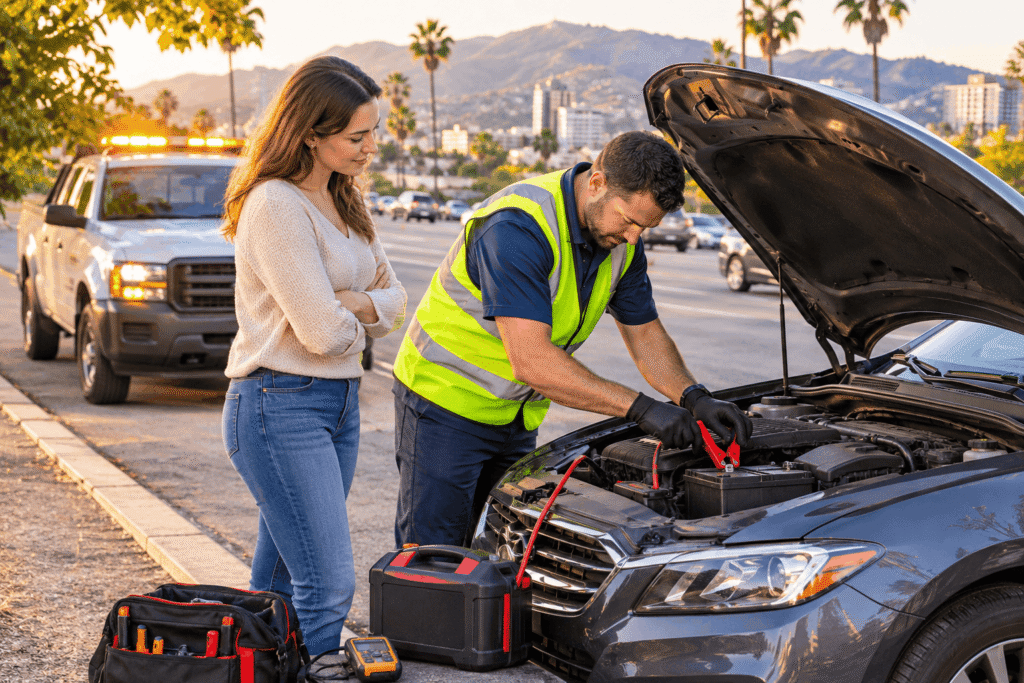
Jump-starts and battery testing are standard. Many providers also replace batteries on the spot if the old one is beyond saving. Tire changes using the vehicle’s spare are almost always included.
Fuel delivery brings enough gas to reach the nearest station. Lockout service helps drivers get back into their vehicles without damaging locks or windows. Towing covers cases where the car simply can’t be fixed where it sits.
Some mobile mechanics go further than basic roadside help. They can diagnose warning lights, replace belts, swap out starters or alternators, and handle brake repairs right at the curb. That option can save a tow and a separate trip to the shop.
Why Local Response Time Matters
Distance makes a bigger difference than many drivers expect. A responder dispatched from across the county may face an hour or more of freeway traffic. A provider based nearby can often arrive much sooner.
Speed also affects safety. Sitting on a narrow freeway shoulder is risky, especially at night or in poor visibility. The less time a driver spends waiting beside moving traffic, the better.
Local responders also know the area. They understand which exits are hard to reach, where it’s safe to work on a vehicle, and how to get around rush-hour backups. That knowledge saves time on every call.
Many drivers in the area split their days between neighboring cities. Someone who lives near Glendale but works across the line may look for a Trusted Mobile Mechanic in Burbank, CA so they’re covered on both ends of the commute. Providers that serve the wider area tend to fit those daily routes better.
How Drivers Evaluate Reliable Roadside Help
Not every roadside provider offers the same quality of service. A few signals help separate dependable help from frustrating experiences.
Clear, Upfront Pricing
Reputable providers explain costs before the work begins. Drivers should feel free to ask about service fees, mileage charges, and parts. Vague answers on the phone are often a warning sign.
Honest Arrival Estimates
A realistic arrival window matters more than an optimistic one. Providers who give honest timeframes, and call if they’re running late, tend to be reliable in other ways too.
Licensing and Reviews
Customer reviews offer a useful picture of real experiences. Patterns matter more than any single comment. Repeated praise for punctuality and fair pricing says a lot. Repeated complaints about surprise charges say even more.
Range of Services
A provider that can handle both quick fixes and minor repairs adds flexibility. Some drivers prefer mobile mechanic services, such as those from Green Way Mobile Mechanic, because a single visit can often cover diagnosis and repair together.
Real-World Situations Drivers Run Into
Picture a parent dropping kids off at school on a cold morning. The car won’t start in the driveway, and the clock is ticking. A quick jump-start and battery test resolve the problem in under half an hour, and the family is back on schedule.
Now think of a commuter heading home on the I-5 during a July heat wave. The temperature gauge spikes near the Colorado Street exit. Instead of pushing on, the driver pulls over safely. A mobile technician finds a split radiator hose and replaces it on site, avoiding a tow and a possible engine rebuild.
Another common case involves weekend shoppers near the Glendale Galleria. One returns to find a flat tire and no usable spare. A roadside provider brings a replacement tire to the parking structure, and the errand day carries on.
Each of these moments shows the same pattern. The outcome depends less on the breakdown itself and more on how quickly the right help arrives.
Preparing Before Something Goes Wrong
A little planning goes a long way. Drivers can save a roadside provider’s number in their phone and check whether their auto insurance or credit card already includes coverage. Many people have benefits they’ve never used.
Simple habits help too. Keeping a phone charger, water, a flashlight, and a reflective triangle in the car makes any wait safer and more comfortable. Regular battery and tire checks prevent many breakdowns before they start.
For anyone driving regularly through Glendale, CA, understanding local options is part of being a prepared motorist. Taking ten minutes today to review coverage and save a few trusted contacts can make the next breakdown far easier to handle.
FAQs
How long does roadside assistance usually take to arrive?
Arrival times vary based on traffic, location, and demand. In busy urban areas, waits can range from about 30 minutes to over an hour. Local providers often reach drivers faster than those dispatched from farther away.
Does car insurance include roadside assistance?
Many auto insurance policies offer roadside coverage as an optional add-on. Some credit cards and new-car warranties include it as well. Drivers should review their policy details to confirm what’s covered.
Can a mobile mechanic fix a car on the roadside?
Yes, in many cases. Mobile mechanics can handle battery replacements, belt and hose repairs, brake work, and diagnostics on site. Major engine or transmission repairs usually still require a shop.
What should I do while waiting for roadside help?
Move to a safe spot if possible and turn on hazard lights. On freeways, staying inside the vehicle with a seatbelt fastened is often safer than standing nearby. Keep your phone charged so the responder can reach you.
How much does roadside assistance cost without a membership?
One-time service calls often start around $75 to $150 for basic help like jump-starts or tire changes. Towing costs more and usually depends on distance. Prices vary, so asking for a quote upfront is always a good idea.