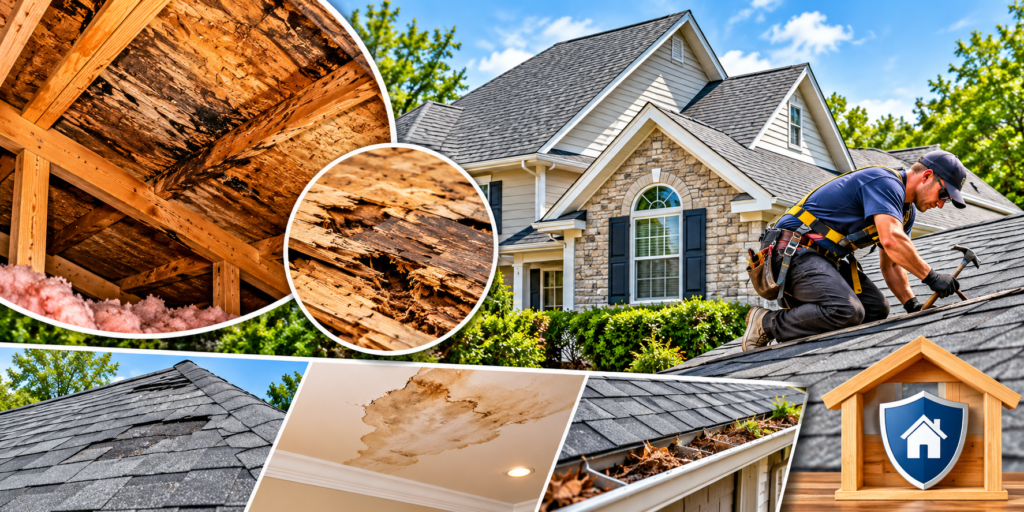
Roof Decking
Roof decking sits beneath your shingles, so deterioration can develop without being visible from the ground. In Northern Virginia, Maryland, and Washington, DC, seasonal rain, humidity, and storms can contribute to moisture problems. Recognizing the warning signs helps you address potential damage before it spreads to larger parts of the roof.
What Is Roof Decking, and Why Does It Matter?
Roof decking (sheathing) is plywood or OSB attached to roof framing. It supports the underlayment and shingles while distributing loads across the structure.
Repeated moisture exposure can weaken this wood and reduce its ability to hold roofing fasteners securely. Installing new shingles over deteriorated sheathing won’t fix the underlying structural problem.
Common Signs of Rotted Roof Decking
Signs of rotted roof decking may appear in the attic, on ceilings, or on the roof’s exterior. No single symptom confirms rot, but several warning signs together justify a professional inspection.
1. Soft, Spongy, or Crumbling Wood
Look for darkened wood, flaking surfaces, or visibly deteriorated decking in accessible attic areas. These conditions can indicate prolonged moisture exposure and decay. Never press on questionable panels or walk across potentially weakened sheathing, as it may not safely support your weight.
2. Sagging or Uneven Roof Surfaces
Sagging roof decking symptoms include visible dips, waves, or unusual changes in the roofline. Moisture-damaged sheathing can contribute to these changes, but damaged framing and other structural problems can also cause sagging. Arrange a prompt professional assessment if the roofline has changed noticeably.
3. Water Stains and Discoloration
Brown stains on attic decking, rafters, or ceilings may indicate water intrusion. Peeling paint and recurring marks in upper rooms can also point to a roof leak. Even if a stain has dried, an earlier leak may have damaged the wood.
4. Musty Odors and Visible Growth
A persistent musty smell in the attic may indicate excess moisture. Discoloration or suspected mold growth deserves attention, especially when accompanied by damp insulation or water stains. A professional can assess the moisture source and determine whether the wood requires repair or replacement.
5. Roofing Problems Around Vulnerable Areas
Roof valleys, eaves, chimneys, plumbing vents, and other penetrations rely on effective flashing and drainage. Missing shingles, deteriorated flashing, or recurring leaks can expose the decking to moisture. These defects do not automatically confirm rot, but they increase the need for inspection.
What Makes Roof Plywood Wear Out?
Understanding the causes of damaged roof plywood sheathing helps homeowners address the source instead of repeatedly treating visible symptoms.
Roof Leaks and Failed Flashing
Damaged shingles, loose flashing, and deteriorated seals can allow rainwater to reach the sheathing. Small leaks may develop gradually and remain unnoticed until stains or wood deterioration appear.
Poor Attic Ventilation and Condensation
Warm, moist indoor air can enter an attic and condense on cooler surfaces. Repeated condensation may contribute to wood decay even when the shingles appear intact. Bathroom exhaust fans should discharge outdoors, while appropriate air sealing and ventilation help control attic moisture.
Clogged Gutters and Storm Damage
Blocked gutters can interfere with drainage and contribute to moisture problems around roof edges. Strong winds, falling branches, and aging roofs can expose the decking to water.
How to Inspect Roof Decking Rot Safely
Learning how to inspect roof decking rot starts with identifying warning signs without putting yourself at risk.
Check the Interior First
Examine accessible attic areas for water stains, damp insulation, dark patches, and apparent sagging. Inside the home, look for peeling paint or recurring ceiling stains. Avoid unsafe attic spaces, unstable flooring, and areas with exposed electrical hazards.
Examine the Roof From the Ground
Use binoculars or photographs to look for missing shingles, uneven surfaces, damaged flashing, and sagging gutters. Never climb onto a roof to investigate suspected rot, particularly in wet or windy conditions.
Arrange a Professional Assessment
A roofing professional can inspect the covering, sheathing, attic, and related components to determine the extent of the damage. Moisture measurements and closer examination may help distinguish surface staining from deteriorated wood.
Repairing Moisture-Damaged Roof Deck
To repair moisture-damaged roof decking, address the source of moisture and restore the affected sections.
1. Identify and Fix the Source
The contractor should investigate leaks involving shingles, flashing, roof penetrations, or drainage. Also address ventilation and condensation problems when they contribute to moisture buildup.
2. Determine Whether the Wood Needs Replacement
Surface staining does not always require panel removal if the wood remains structurally sound and the moisture problem has been resolved. Soft, crumbling, delaminated, or significantly weakened sheathing generally requires replacement.
3. Replace Damaged Sections Properly
The contractor removes roofing materials as needed, exposes the damaged sheathing, and replaces compromised sections with suitable materials. The new panels must be properly supported and fastened before the underlayment and shingles are restored.
4. Prevent Recurring Damage
Keep gutters clear, maintain flashing, control indoor humidity, and schedule inspections after major storms. These steps help reduce the risk of repeated moisture damage.
How Roof Decking Problems Affect Roof Performance in the DMV
Northern Virginia, Maryland, and Washington, DC, face humid summers, seasonal storms, and temperature swings. Proper drainage, ventilation, and prompt leak repairs protect roofs. Decking rot doesn’t always require full replacement; the solution depends on the extent of the damage, surrounding materials, and the roof’s remaining life.
Concerned about soft decking, roof stains, or recurring leaks? Impact Exteriors can assess the damage and explain the right next steps. Ask about roof decking replacement when weakened sheathing needs attention.
FAQs
1. Can roof decking rot without a visible leak?
Yes. Condensation, hidden flashing failures, and small leaks can introduce moisture without creating obvious drips. Attic stains, musty odors, and deteriorating wood may provide early clues.
2. Does every sagging roof indicate rotted plywood?
No. Sagging may result from damaged sheathing, weakened framing, excessive loading, or other structural problems. A professional inspection is necessary to establish the cause.
3. Can rotted decking be repaired without replacing the entire roof?
Yes, if the damage is localized and the rest of the roofing system is serviceable. The affected sheathing must be repaired or replaced, and the moisture source must be corrected.
4. How can homeowners reduce the risk of roof decking rot?
Maintain shingles and flashing, keep gutters clear, repair leaks promptly, and manage attic ventilation and indoor humidity. Inspections after significant storms can help identify problems early.
5. Is it safe to walk on a roof with suspected decking rot?
No. Deteriorated sheathing may fail under a person’s weight. Stay off the roof and arrange a qualified inspection.
Final Thoughts
Roof decking rot can remain hidden until moisture affects the attic, ceilings, or roof structure. Water stains, soft wood, sagging, and persistent odors warrant investigation. Identifying the moisture source and replacing weakened sheathing when necessary helps DMV homeowners protect their properties.
Impact Exteriors can help evaluate roof damage and explain maintenance options that support the roof lifespan in Northern Virginia. Arrange an assessment to understand your roof’s condition and next steps!