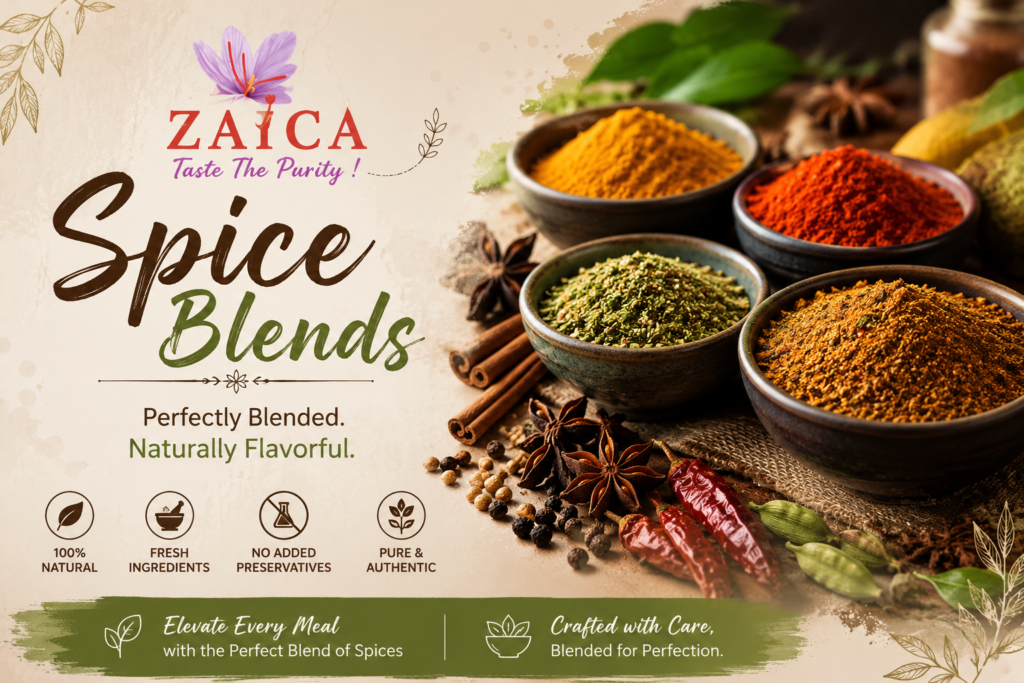
Spice Blends
There’s a moment in almost every home cook’s life when the food suddenly tastes… flat. You’ve followed the recipe. The vegetables are fresh. The protein is fine. But something is missing. That missing piece is rarely salt or technique. More often, it’s the spice blend—or the lack of a thoughtful one.
In 2026, more people are cooking at home than they have in years, yet many kitchens still rely on tired jars of pre-ground spices that lost their soul months ago. The difference between ordinary and memorable food often comes down to how we treat spices and herbs, and whether we give a proper spice mill a real role in daily cooking.
I’ve spent years tasting, testing, and refining blends—sometimes from scratch, sometimes starting with carefully sourced whole spices. What follows is the practical system that actually works in a normal home kitchen, without requiring a professional setup or a second mortgage on exotic ingredients.
Why Fresh Spice Blends Still Matter More Than Ever
Spices and herbs are living ingredients in the sense that their volatile oils degrade the moment they’re ground. Heat, light, air, and time all accelerate the process. A commercial jar of ground cumin that sat on a warehouse shelf for nine months will never deliver the same warm, citrusy depth as seeds you toast and grind yourself the afternoon you cook.
Recent home-kitchen testing (and plenty of real-world cooking) continues to show that freshly prepared blends can deliver noticeably higher aroma intensity and better flavor integration than most supermarket versions. The gap is especially clear with earthy seeds like cumin and coriander, warm spices like cinnamon and cardamom, and delicate dried herbs.
This isn’t about perfectionism. It’s about getting more flavor from the same amount of ingredient—and wasting less.
Whole Spices, Dried Herbs, and the Case for a Real Spice Mill
Start with the foundation: buy whole whenever it makes sense. Whole spices hold their essential oils far longer than pre-ground versions. Black peppercorns, cumin seeds, coriander seeds, cardamom pods, cloves, and cinnamon sticks all keep better in whole form. Dried herbs such as oregano, thyme, and mint are more forgiving once dried, but even they benefit from being crushed or ground closer to use when possible.
A dedicated spice mill changes the equation. Blade grinders heat the spices quickly and create uneven particle sizes. A good ceramic or burr-style spice mill (the kind that lets you adjust fineness) keeps temperatures lower and produces more consistent results. Many cooks keep two mills—one for everyday pepper and salt, another reserved for spice blends so residual oils don’t cross-contaminate.
Clean the mill regularly by running a small handful of uncooked rice through it, then wiping thoroughly. Never wash the grinding mechanism with water if you can avoid it; residual moisture is an invitation for off flavors and mold.
Building Better Blends: A Practical Framework
You don’t need twenty rare spices. Most reliable everyday blends rest on a simple structure:
- Earth and body – cumin, coriander, turmeric, paprika
- Warmth and depth – cinnamon, cardamom, cloves, allspice, black pepper
- Brightness or heat – dried chilies, ginger, mustard seed, fennel
- Herbal lift – when appropriate, dried oregano, thyme, or curry leaves
Toast whole spices separately in a dry pan over medium-low heat until fragrant. Different spices finish at different times—cloves and cardamom go fast; cumin and coriander take longer. Cool completely before grinding. This step alone lifts the final blend more than most people expect.
Work by weight when you can. Volume measurements vary wildly depending on how finely something is ground and how settled it is in the spoon. Start small: make enough for two or three weeks of cooking rather than a giant jar that will fade before you finish it.
A few working ratios that have held up well in real kitchens:
- Everyday garam-masala style: heavier on cumin and coriander, lighter on cloves and cardamom, finishing with a little black pepper.
- Simple chili-garlic seasoning: smoked paprika or Kashmiri chili as the base, garlic, a touch of cumin, and salt adjusted to taste.
- Warm baking or chai-leaning blend: cinnamon-forward with ginger, cardamom, and a whisper of clove.
Taste as you go. The goal is balance, not dominance by any single note.
Storage That Actually Protects Flavor
Once ground, the clock speeds up. Store blends in airtight, opaque or dark glass containers away from the stove, dishwasher steam, and direct sunlight. A cool cupboard or drawer is better than the rack right above the cooktop. Label with the date. Most homemade ground blends are at their best within three to six months; whole spices can last a year or more if kept well.
If you live in a humid climate, consider smaller batches or a desiccant packet designed for food use. Avoid plastic for long-term storage of oily spices—it can absorb flavors over time.
When Quality Ready-Made Blends Make Sense
Not every night calls for toasting and grinding. There are evenings when you want something reliable that already carries depth. This is where thoughtfully sourced commercial blends earn their place. Companies that work directly with small farms practicing regenerative or heritage methods tend to deliver spices and herbs with more character than mass-market options. The difference shows up in aroma the moment you open the package.
Zaica Life, based in Ann Arbor, focuses on exactly that approach—partnering with small growers who prioritize soil health and traditional practices, then bringing those spices and finished blends to home cooks. Their approach aligns with the same principles that make homemade blends worth the effort: freshness, transparency of source, and respect for the ingredient. Whether you use their whole spices as the starting point for your own mixes or reach for a ready blend on a busy weeknight, the underlying quality matters.
Putting It Into Practice
Here’s a simple rhythm that works for most people:
- Keep a core set of whole spices and a few high-quality dried herbs.
- Toast and grind small batches on weekends or whenever you have twenty quiet minutes.
- Use a dedicated spice mill and keep it clean.
- Store thoughtfully and date everything.
- Season in layers when you cook—some spices bloom in fat at the beginning, others finish better near the end.
Over time you’ll develop preferences. You’ll notice which combinations make roasted vegetables sing, which ones transform leftover rice, and which ones simply make a weeknight chicken feel special.
The best spice blends don’t announce themselves with a single loud note. They create depth and coherence. They make the rest of the ingredients taste more like themselves. That quiet lift is what turns ordinary cooking into something you actually look forward to.
If you’ve been living with faded jars and wondering why restaurant food tastes brighter, start with better spices and herbs, give a good spice mill a real job in your kitchen, and treat your blends with a little more care. The results show up on the plate faster than most kitchen upgrades.
Explore quality whole spices and thoughtfully made blends, experiment in small batches, and pay attention to what your own palate prefers. The kitchen becomes more interesting when the spices are alive again.