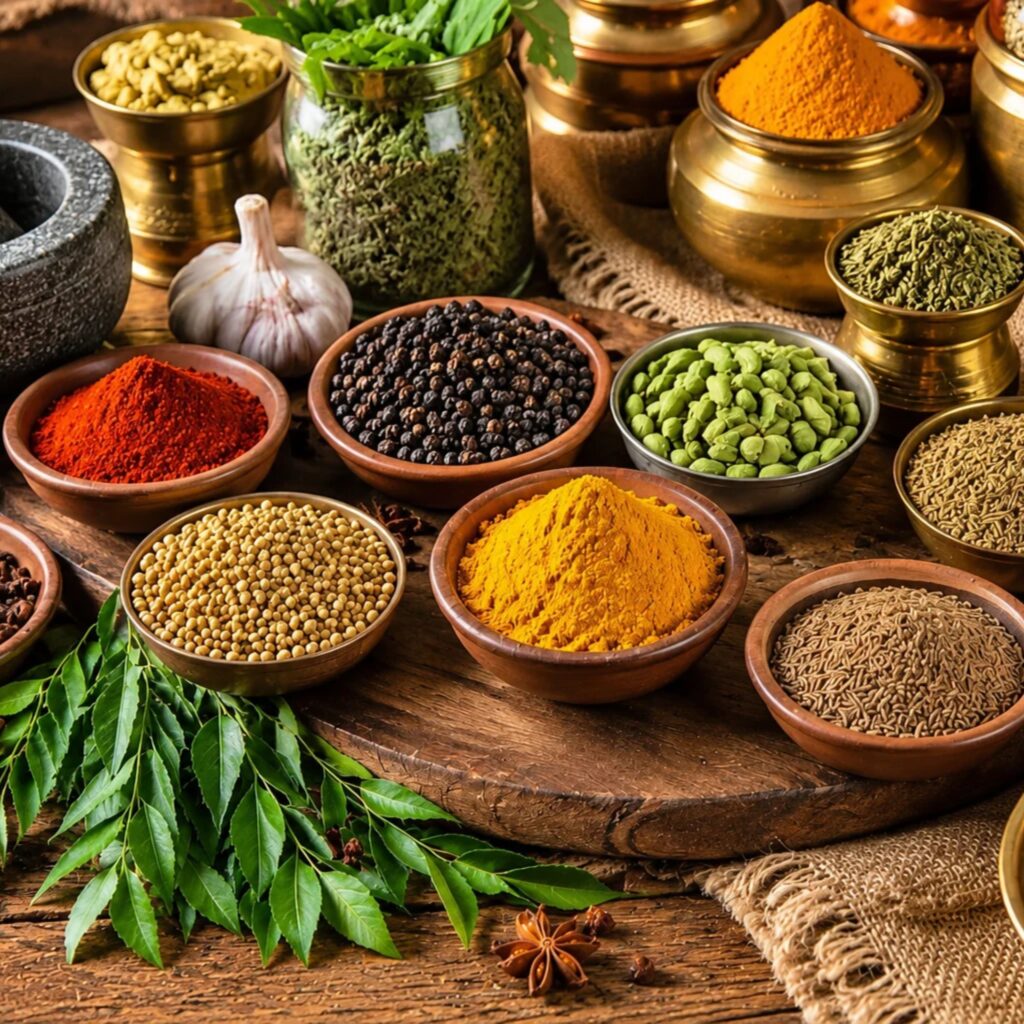
Indian cooking brings together a wide variety of herbs, spices, and fresh ingredients that give each dish its own flavour and character. From homemade chutneys to traditional curries, herbs have been used in Indian kitchens for generations. Coriander, mint, curry leaves, fenugreek, turmeric, and tulsi are some familiar examples that continue to be part of daily food preparation.
These ingredients are used in different forms, including fresh leaves, dried leaves, and seeds. Some are added while cooking, while others are used as garnishes or ingredients in refreshing drinks. Knowing how to use herbs correctly can help home cooks prepare flavourful meals and explore regional Indian recipes. Readers interested in traditional herbs and botanical ingredients can find more information on the Arkveda Herbals website.
How Herbs Add Flavour to Indian Food
Herbs contribute more than just colour to everyday meals. Their natural aromas and distinctive tastes help create balanced flavours in different recipes. Fresh herbs often provide a light, refreshing quality, while dried herbs and seeds can offer a stronger, more concentrated taste.
The method of preparation also influences how herbs taste. Adding fresh coriander to a finished curry gives it a different flavour from cooking coriander seeds with other spices. Similarly, heating curry leaves in oil releases their characteristic aroma, making them suitable for tempering lentils and vegetables.
Indian households use herbs according to local traditions, family recipes, and personal preferences. Even a small quantity of the right herb can change the character of a familiar dish.
1. Coriander: A Regular Ingredient in Everyday Meals
Coriander, known as dhania, is widely used across Indian cuisines. Both the fresh leaves and the dried seeds have important roles in cooking.
Fresh coriander leaves are commonly sprinkled over dal, vegetable curries, soups, and rice dishes. They are also blended with green chillies, lemon juice, and other ingredients to prepare green chutney. The leaves give food a fresh aroma and a mild, distinctive taste.
Coriander seeds have a warmer, slightly citrus-like flavour. They can be used whole or ground and are frequently included in spice blends, pickles, and curry preparations. Roasting the seeds lightly before grinding can bring out their aroma.
2. Mint: A Refreshing Addition to Recipes
Mint, commonly called pudina, is recognised for its cool and refreshing flavour. It is often used in Indian chutneys, raita, salads, rice dishes, and homemade beverages.
Mint chutney is a popular accompaniment to snacks such as samosas, pakoras, and sandwiches. To prepare it, fresh mint leaves can be blended with coriander, green chillies, lemon juice, and a little salt. Mint is also used in some biryani recipes, where its aroma complements rice and spices.
For the best results, wash mint leaves carefully and remove any damaged portions. Adding the leaves towards the end of cooking can help retain their fresh taste.
3. Curry Leaves: A Source of Distinctive Aroma
Curry leaves are an important ingredient in many South Indian dishes and are also used in other regional cuisines. Their strong aroma makes them particularly suitable for seasoning everyday meals.
One of the most common ways to use curry leaves is through tadka, also known as tempering. The leaves are briefly heated in oil with mustard seeds, cumin seeds, or dried red chillies. This mixture is then added to dal, sambar, chutneys, and vegetable preparations.
Curry leaves may also be used in certain rice dishes and homemade spice powders. Adding them to warm oil helps release their aroma and spread the flavour throughout the recipe.
4. Fenugreek: Used Fresh, Dried, and as Seeds
Fenugreek, or methi, is another familiar ingredient in Indian kitchens. Its fresh leaves, dried leaves, and seeds have different culinary uses.
Fresh fenugreek leaves are often cooked with potatoes, added to vegetable curries, or used to prepare methi parathas. Their slightly bitter flavour pairs well with several vegetables and spices.
Dried fenugreek leaves, known as kasuri methi, are commonly crushed and mixed into gravies near the end of cooking. They provide a distinctive aroma to dishes such as paneer curries and vegetable preparations. Fenugreek seeds are used in pickles, spice mixtures, and tempering. Since the seeds have a bitter taste, they are usually used in modest quantities.
5. Turmeric: A Familiar Yellow Spice
Turmeric, known as haldi, is widely used in Indian food for its bright yellow colour and earthy flavour. It is obtained from the rhizome of the turmeric plant and is commonly available as a powder.
A small quantity of turmeric is often added to lentils, vegetable curries, soups, rice, and marinades. It is also an ingredient in many traditional spice blends. Turmeric works well alongside spices such as cumin, coriander, and black pepper.
Its role in ordinary cooking should be distinguished from the use of concentrated turmeric supplements, which may have different safety considerations.
6. Tulsi: Popular in Traditional Herbal Infusions
Tulsi, also called holy basil, holds cultural significance in many Indian households. It is more commonly used in traditional herbal drinks than in regular savoury recipes.
Tulsi leaves can be steeped in hot water to prepare an aromatic infusion. Some people combine them with ginger or lemon for additional flavour. Because tulsi has a strong, distinctive aroma, a small amount may be sufficient.
Although tulsi is associated with traditional wellness practices, herbal drinks should not be treated as substitutes for prescribed medicines or professional medical advice.
Practical Tips for Using Herbs at Home
Choose fresh herbs with healthy-looking leaves and wash them thoroughly before cooking. Store fresh herbs appropriately to maintain their quality, and keep dried leaves, seeds, and spices in airtight containers away from moisture, direct sunlight, and excessive heat.
When trying an unfamiliar herb, begin with a small quantity and adjust it according to the recipe. Delicate fresh leaves are often best added near the end of cooking, while ingredients used for tempering can be added earlier to release their aroma. Using clean utensils and handling ingredients hygienically also helps maintain food quality.
Conclusion
Traditional Indian herbs add variety, aroma, and flavour to everyday meals. Coriander, mint, curry leaves, fenugreek, turmeric, and tulsi each have distinctive characteristics and can be used in different recipes, from chutneys and vegetable curries to rice dishes and herbal infusions.
Learning about these ingredients helps home cooks understand their culinary uses and appreciate the diversity of Indian food traditions. Simple choices in selecting, storing, and preparing herbs can make everyday cooking more interesting. For further information about traditional herbal ingredients, explore the Arkveda Herbals website and visit the Arkveda Herbals products page.