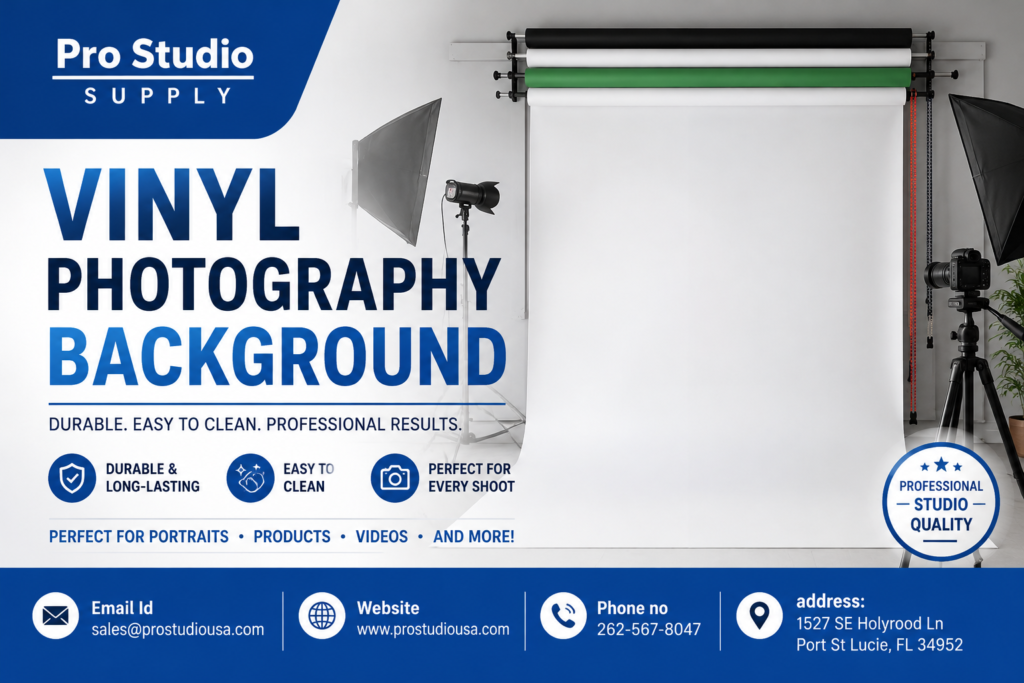
Choosing the right Vinyl Photography Background can make a significant difference in the quality and consistency of studio images. Whether you photograph portraits, school pictures, products, or commercial projects, a dependable background helps create a clean, professional appearance while simplifying everyday studio work.
Vinyl backgrounds are popular because they offer a durable surface that can be cleaned and reused. Understanding their advantages, applications, and maintenance requirements can help photographers choose the right option for their needs.
What Is a Vinyl Photography Background?
A vinyl photography background is a durable synthetic surface used behind or beneath a subject during a photo shoot. Available in different colors, finishes, and sizes, vinyl backgrounds can accommodate various photography applications.
Professional studios often use vinyl when they need a background that withstands frequent handling and can be wiped clean between sessions. Depending on the design, it may be suitable for portrait photography, product photography, and commercial studio work.
Key Benefits of Vinyl Photography Backdrops
1. Durable and Reusable
Compared with disposable background materials, a quality vinyl backdrop can provide extended service when handled and stored properly. This makes it worth considering for busy studios that photograph multiple clients or products each day.
2. Easy to Clean
Dust, fingerprints, and light surface marks can often be removed with a soft cloth and a suitable cleaning method. Always follow the manufacturer’s care instructions to protect the finish.
3. Consistent Background Appearance
A suitable vinyl surface helps photographers maintain a consistent background across multiple sessions. This is particularly useful for product catalogs, school portraits, and commercial photography where visual consistency matters.
4. Multiple Color Options
White, black, and chroma-key green are useful choices for different studio requirements. White can create a bright, clean appearance, black can provide contrast and dramatic portraits, and green can support chroma-key workflows when lighting and software are configured correctly.
How to Choose the Right Vinyl Background
Before purchasing a vinyl photography background, consider these essential factors:
- Size: Choose a width and length appropriate for your subject, camera framing, and available studio space.
- Finish: A matte surface may help reduce unwanted reflections, although lighting position remains important.
- Thickness: Check the material specification to understand its construction and intended use.
- Color: Select a background that complements your subject and the final image style.
- Mounting: Consider whether you need a portable support, a fixed installation, or a roller system for regular studio use.
Professional photographers should also consider how frequently the background will be used and how easily it can be maintained.
Vinyl vs. Paper Photography Backgrounds
Vinyl and seamless paper each have advantages. Paper is popular for clean, uniform backgrounds and can be replaced when sections become dirty or damaged. Vinyl is useful when repeated cleaning and reuse are priorities.
The best choice depends on the photography application, lighting setup, available budget, and expected maintenance. For high-volume studios, comparing long-term replacement costs can be just as important as comparing the initial purchase price.
How to Maintain a Vinyl Photography Background
Proper maintenance helps preserve the appearance and usability of your background.
First, remove dust and loose debris before cleaning. Wipe the surface gently with a soft cloth using a cleaning solution approved for the material. Avoid abrasive products that could scratch or damage the finish.
When storing a vinyl backdrop, roll it carefully rather than folding it. Keep it in a clean, dry location, and avoid placing heavy objects on top of it. For floor-level photography, remove grit before rolling the material to reduce the risk of scratches.
Where Can You Use a Vinyl Photography Background?
Vinyl backgrounds are useful for product photography, professional portraits, school picture sessions, promotional images, and selected commercial photography applications.
The right setup depends on the size of the subject, the background material, and the desired visual result. For larger studios, a suitable background roller system can also make changing backgrounds more convenient.
For photographers looking to upgrade their studio equipment, Pro Studio Supply offers photography backgrounds and related studio products to help support different professional photography needs. Explore the available options to identify a background that fits your workspace and shooting requirements.
Frequently Asked Questions
Is a vinyl photography background washable?
Many vinyl backgrounds can be wiped clean with a soft cloth and an appropriate cleaning method. Always check the manufacturer’s care instructions before using cleaning products.
Is vinyl better than paper for photography?
Vinyl is useful when durability and easy cleaning are priorities. Paper is often preferred for seamless backgrounds that need frequent replacement. The better choice depends on your application.
What color vinyl background should I choose?
White works well for bright product images, black can create contrast and dramatic portraits, and green is useful for chroma-key photography. Choose according to your lighting setup and project requirements.
How should I store a vinyl photography backdrop?
Roll the backdrop carefully, keep it clean and dry, and avoid folding it. Proper storage helps minimize creases and surface damage.
Conclusion
A Vinyl Photography Background can be a practical investment for photographers who need a reusable, easy-care studio surface. By considering size, color, finish, lighting, and maintenance, you can select a background that supports consistent results and your workflow. Compare your options carefully and choose equipment suited to your studio’s specific requirements.