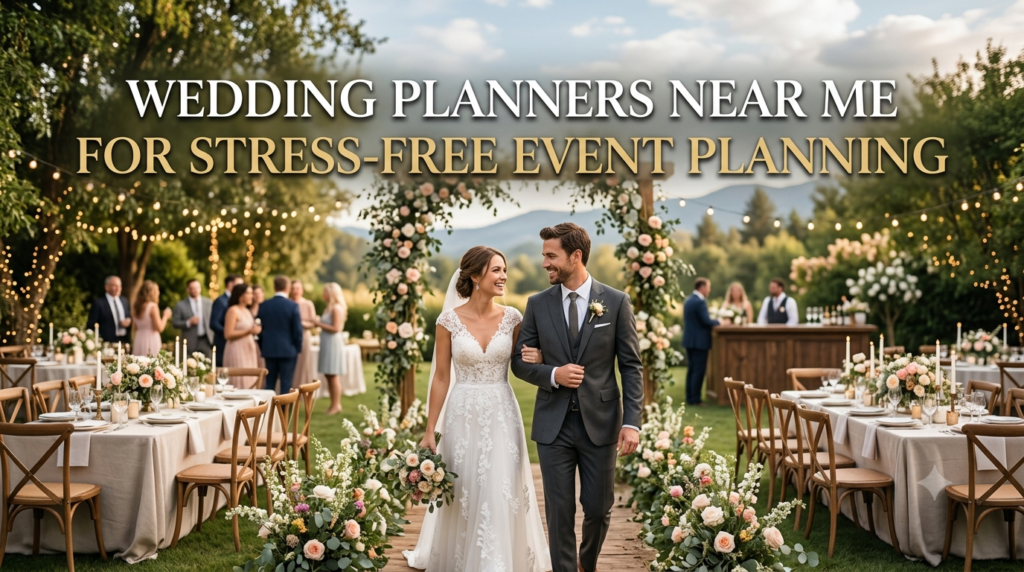
Planning a wedding sounds exciting at first. Then the guest list grows, the venue needs an answer, your photographer sends three emails, and suddenly you’re comparing table linens at 11:30 p.m. If you’ve been searching for wedding planners near me, you’re probably hoping to find someone who can take some of that pressure off your shoulders. And honestly, that can be a very good idea. A wedding planner isn’t just there to pick flowers or make a pretty timeline. The right person can help keep dozens of small decisions from becoming one giant headache.
Why Hire a Wedding Planner?
There is a funny thing about weddings. Most couples have never planned one before, yet they’re expected to coordinate a fairly complicated event in a matter of months.
There are vendors to contact, payments to track, invitations to send, menus to choose, guests to accommodate and schedules to organize. Then there are the unexpected things. A vendor arrives late. Someone changes their meal choice. The weather decides to be difficult.
A wedding planner gives you another person in the room who knows what needs attention.
You still make the important choices. You just don’t have to carry every little task in your head.
What Does a Wedding Planner Actually Do?
The work depends on the type of service you hire.
Some planners handle the entire wedding from the early planning stage right through the reception. Others step in closer to the wedding date and manage the details on the day itself.
Wedding planning services may include:
- Finding and comparing venues
- Managing vendor communication
- Creating a wedding budget
- Building the event timeline
- Coordinating the ceremony and reception
- Organizing decorations and rentals
- Managing guest logistics
- Reviewing vendor contracts
- Coordinating setup and cleanup
- Handling last-minute problems
A full-service wedding planner may be involved for many months. A day-of coordinator might only take over shortly before the wedding.
Neither option is wrong. It really depends on how much help you need.
Search Locally First
Typing “wedding planners near me” into Google is an easy starting point, but don’t stop at the first few names you see.
Local planners often know venues and vendors in the area from actual experience. They may know which reception spaces have parking problems, which photographers work well with certain venues, or which caterers are reliable for larger groups.
That local knowledge can be surprisingly useful.
A planner who regularly works in your area may also know the practical stuff that isn’t obvious from a venue’s website. Where vendors unload. When music has to stop. Whether there is enough space behind the reception room for catering staff.
Those details aren’t exciting, but they can save headaches.
Look at Their Previous Weddings
Before hiring someone, look at their recent work.
Don’t only look at the prettiest photographs. Try to get a feel for the types of weddings they have actually planned.
If you’re organizing a small outdoor ceremony, a planner whose portfolio mainly shows huge ballroom weddings may not be the right match. Likewise, someone experienced with intimate weddings may not have the vendor network needed for a 250-person celebration.
Ask to see complete wedding galleries if they’re available.
A few polished Instagram photographs don’t always tell the whole story.
Ask About Their Planning Style
This part gets overlooked.
Some couples want a planner who handles most of the details and only brings them decisions that require their input. Other couples want to be involved in almost everything.
Neither approach is better.
You want a planner whose working style feels comfortable for you.
During an initial conversation, ask how often you’ll communicate, how decisions are handled and what happens if you disagree about a vendor or design choice.
Pay attention to how they listen.
If you explain what you want and they immediately start talking over you, that’s probably not a great sign. Your wedding should still feel like your wedding.
Talk About the Budget Early
Money conversations can feel awkward. Have them anyway.
Ask what the planning fee covers and whether the planner charges a flat rate, percentage, hourly fee or another structure. Also ask about additional charges for extra meetings, travel, setup or other services.
A good wedding planner should be comfortable talking about numbers.
You should also explain your overall wedding budget before getting too far into the process. A planner needs to know whether you’re planning a $20,000 celebration or a $100,000 one because the recommendations will obviously be different.
Don’t feel embarrassed about your budget.
There is no magic number that makes a wedding meaningful.
Read Reviews, But Read Them Carefully
Reviews can tell you a lot, especially comments about communication, organization and how the planner handled unexpected problems.
Look for patterns rather than focusing on one extremely positive or negative review.
Did couples mention that the planner answered messages? Did they say vendors were well coordinated? Did someone mention that the planner stayed calm during a last-minute issue?
Those comments are more useful than a review that only says, “Amazing!”
Also check how recent the reviews are. A business can change staff, services or pricing over time.
Consider a Destination Wedding Planner
Planning a wedding in another city or country creates another layer of work.
You’re dealing with travel, accommodation, local vendors, transportation and sometimes legal paperwork. If you can’t visit the venue regularly, having someone on the ground becomes even more useful.
This is one area where destination wedding planners can save couples a lot of running around.
For Canadian couples planning celebrations abroad, Dreamwed is an example of a wedding planning service focused on destination celebrations and the many moving parts that come with them.
You can still make the creative decisions from home. Someone local can handle the practical details.
Ask What Happens on the Wedding Day
This is a big one.
You don’t want to hire a planner and then discover that they leave after the ceremony.
Ask who will actually be present on the wedding day. Will the planner stay through dinner and dancing? Who handles vendor arrivals? Who checks the timeline? Who deals with a missing boutonniere or a DJ who can’t find the power outlet?
Someone needs to handle those things.
And preferably, that someone isn’t the bride.
Trust Your Gut a Little
Credentials and experience matter, but so does the feeling you get during the consultation.
You’re going to spend a lot of time talking about your wedding, your family, your budget and probably a few things that don’t go according to plan. You should feel comfortable asking questions.
If the conversation feels rushed or you leave feeling unheard, keep looking.
There are plenty of wedding planners near you. The right one should make planning feel more manageable, not like you’ve added another person to chase down.
A Less Stressful Wedding Starts Before the Big Day
A wedding planner can’t control every little thing. Nobody can. Rain happens. Guests change plans. Flowers arrive five minutes later than expected.
What a good planner can do is make sure those little problems don’t become your problems.
So take your time, talk to a few planners, ask about fees and services, look at their past work, and pay attention to how they communicate. Once you find someone you trust, planning can become enjoyable again.
And that’s really the point, isn’t it?
You should remember the laughter, the music, the food, the people you love standing around you. Not the spreadsheet you were fighting with at midnight.