Picture a family settling in for movie night when the living room speakers start crackling. Then the Wi-Fi drops, and the doorbell camera goes offline. None of these problems involve the main electrical panel, yet together they can make a modern home feel broken.
This is the kind of work a Low Voltage Technician in Stuart FL handles every day. These specialists work with the systems that power how people live, communicate, and stay safe, from home theaters to security cameras to office data networks.
This article explains what low voltage systems are, what technicians in this field actually do, and why their work matters more in coastal Florida than many people realize.
Understanding Low Voltage Systems
Low voltage systems run on far less power than standard household wiring. Typical outlets carry 120 or 240 volts. Low voltage equipment usually runs at 50 volts or less, and often much lower.
That lower power covers a wide range of everyday technology. Security cameras, alarm panels, intercoms, thermostats, speakers, network cables, and smart home controls all fall into this category.
Because these systems use less power, people sometimes assume the work is simple. In reality, low voltage wiring requires its own kind of precision. A single poorly terminated cable can slow an entire network or leave a camera blind at the worst possible moment.
The Role of a Low Voltage Technician
A low voltage technician designs, installs, tests, and repairs these systems. Electricians focus on power distribution. Low voltage technicians focus on signal, data, and communication.
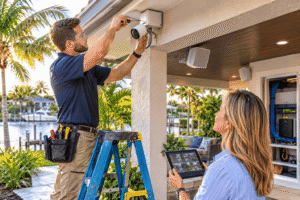
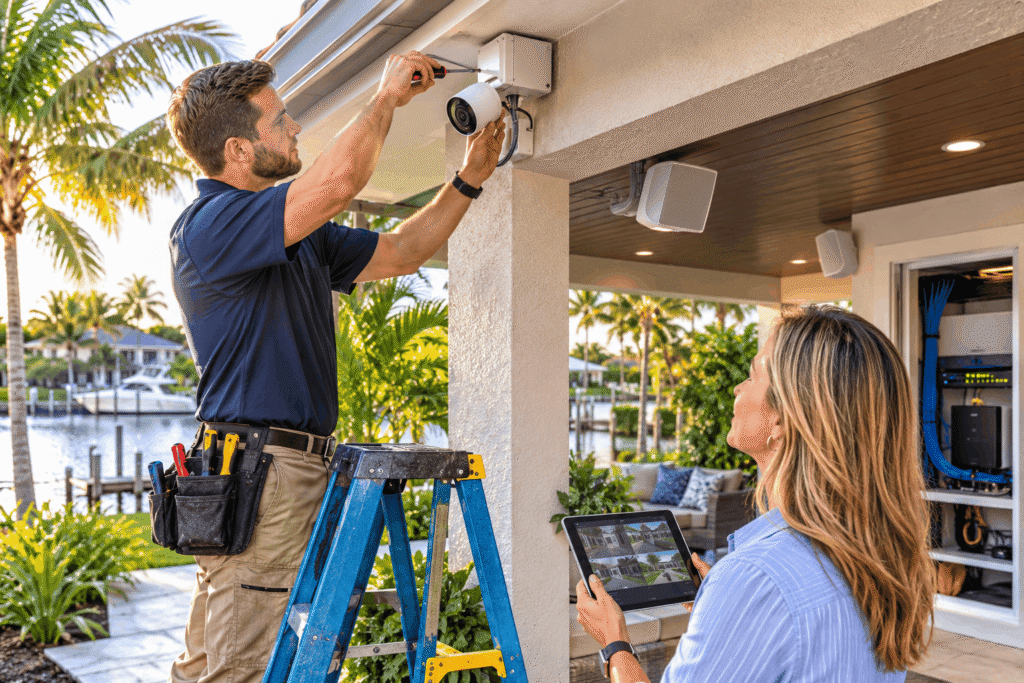
On a typical day, the work might include running structured cabling through an attic, mounting outdoor cameras, or configuring a network switch. It could also mean tracing a fault in an older installation that nobody documented.
Much of the job happens out of sight. Good technicians plan cable paths carefully, label every run, and leave room for future upgrades. Homeowners rarely see this part of the work, but they notice it years later when adding a new device takes an hour instead of a day.
Licensing and Training Matter
Florida regulates certain types of low voltage work, especially alarm systems and some limited energy installations. Licensing runs through the state’s Electrical Contractors’ Licensing Board.
For property owners, this means checking credentials is a smart move before any project starts. A properly licensed technician understands code requirements, inspection rules, and the safety standards that apply to fire and security systems.
Why Coastal Conditions Change the Work
Working as a Low Voltage Technician in Stuart FL brings challenges that inland technicians may not face. The Treasure Coast climate is tough on electronics.
Salt air speeds up corrosion on outdoor connectors and camera housings. High humidity can creep into poorly sealed junction boxes. Summer lightning storms send power surges through cables that aren’t properly grounded or protected.
Then there’s hurricane season. Outdoor cameras, antennas, and speakers need secure mounting that can handle strong winds. Many homeowners also want battery backups so their security systems keep running when the power goes out.
Experienced local technicians plan for all of this from the start. They choose weather-rated hardware, use sealed connectors, and add surge protection where it counts.
The Benefits of Professional Low Voltage Work
The most obvious benefit is reliability. Systems installed with care simply work better. Cameras record clearly, Wi-Fi reaches every room, and audio sounds the way it should.
Safety is another big factor. Alarm systems and fire detection equipment must work every single time. Proper installation and testing give homeowners and business owners confidence that these systems will respond when needed.
There’s also a clean, finished look to consider. Professionals hide wiring inside walls and ceilings instead of stapling it along baseboards. That matters in homes where appearance counts, and it also protects cables from damage.
Finally, good low voltage work saves money over time. A well-planned cabling setup supports new devices without major rewiring. Troubleshooting also becomes faster and cheaper when everything is labeled and documented.
Where Audio Fits In
Sound systems are one of the most popular low voltage projects in the area. Many homes feature lanais, pool decks, and open floor plans that make whole-home audio especially appealing.
Sound System Installation in Stuart FL often goes well beyond mounting a few speakers. Technicians think about room acoustics, speaker placement, and wire gauge. Outdoor speakers also need to handle sun, rain, and salty breezes without fading or rusting.
A properly designed audio system lets people control music in different zones from a phone or wall keypad. Someone can play soft music on the patio while a game plays in the den, without either space interfering with the other.
Real-World Examples
Consider a retired couple who moved into a waterfront home along the St. Lucie River. Their old security cameras kept failing every few months. A technician found that the outdoor connectors had corroded from salt exposure. After switching to sealed, marine-grade hardware, the problem disappeared.
Or think about a small dental office downtown. The staff dealt with constant network slowdowns that disrupted patient scheduling. The cause turned out to be a tangle of mismatched, unlabeled cables in a closet. A clean structured cabling setup fixed the issue and made future changes far easier.
A young family offers another common example. They wanted music on their pool deck, a video doorbell, and better Wi-Fi in the kids’ rooms. One coordinated project handled all three, instead of three separate vendors working around each other.
Restaurants and retail shops also rely on low voltage systems more than most customers notice. Background music, point-of-sale networks, and surveillance cameras all need to run smoothly during busy hours. Local firms such as JP Electronics & Surveillance are among the companies that handle this kind of combined security and communication work in the region.
Choosing the Right Technician
When comparing technicians, experience with similar projects is a good starting point. Someone who regularly handles both security and audio work can often design systems that share infrastructure efficiently.
It also helps to ask how they handle weather protection, surge protection, and documentation. Clear answers usually signal a thoughtful approach. Vague answers may mean shortcuts.
Property owners should also ask about support after installation. Technology changes fast, and having someone who understands the original setup makes future upgrades much smoother.
Final Thoughts
Low voltage systems quietly shape daily life, from home security to background music to the internet connection everyone depends on. When they’re installed well, people barely think about them. When they’re installed poorly, problems show up fast.
On the Treasure Coast, salt air, humidity, and storms make skilled installation even more important. Anyone planning a new security setup, network upgrade, or audio project can benefit from understanding what this work involves. A good next step is to list the systems you want, then compare licensed local technicians who can explain how they’d plan for coastal conditions.
Frequently Asked Questions
What does a low voltage technician do?
A low voltage technician installs and repairs systems that run on reduced power. These include security cameras, alarm systems, network cabling, intercoms, and audio equipment.
Is a low voltage technician the same as an electrician?
Not exactly. Electricians handle standard power wiring, while low voltage technicians focus on data, communication, and signal systems. Some professionals hold credentials in both areas.
Do low voltage technicians need a license in Florida?
Certain types of low voltage work, such as alarm and fire systems, require state licensing in Florida. It’s always wise to verify a technician’s credentials before hiring.
How much does Sound System Installation in Stuart FL typically cost?
Costs vary widely based on the number of rooms, speaker quality, and whether outdoor areas are included. A single-room setup costs far less than a full multi-zone home system.
How long does a low voltage installation take?
Small projects like a doorbell camera may take a few hours. Larger jobs, such as whole-home cabling or multi-zone audio, can take several days depending on the home’s layout.