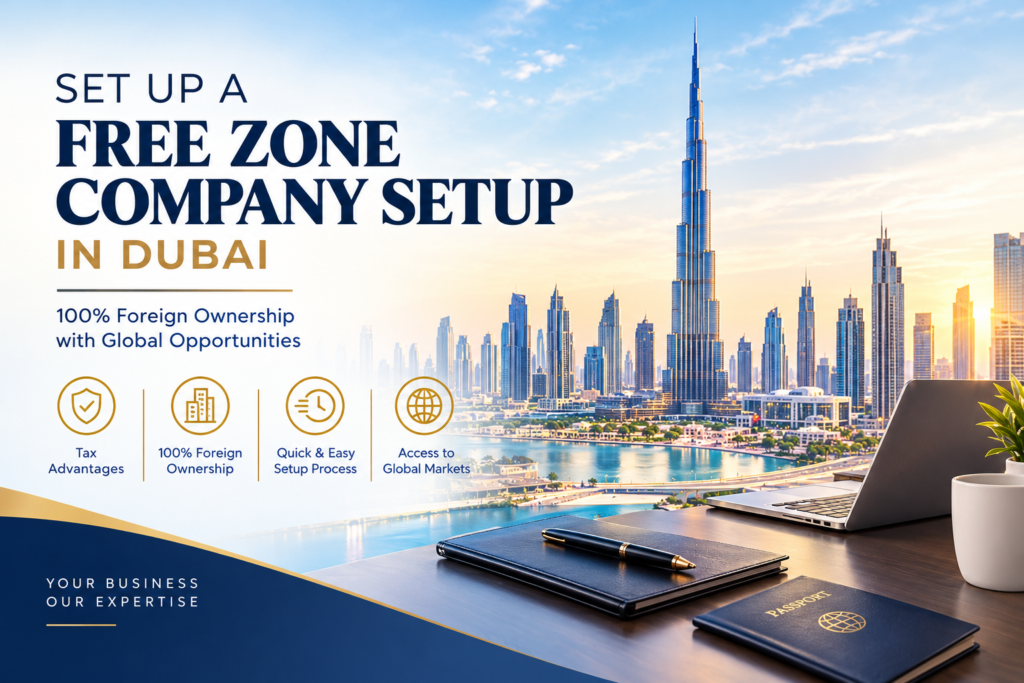
Dubai has become a popular destination for entrepreneurs, investors, and international businesses. Its modern infrastructure, business-friendly environment, and access to global markets make it an attractive place to start a company. Free zones offer different business activities, flexible office options, and company registration services to help investors establish their businesses.
Understanding the process of Free Zone Company Setup in Dubai can help entrepreneurs make informed decisions before investing. From choosing the right free zone to obtaining a business licence, every step requires careful planning. Takween Advisory helps entrepreneurs understand company formation requirements, select suitable setup options, and manage the registration process according to their business needs.
1. Choose the Right Free Zone
The first step is selecting a free zone that supports your planned business activity. Dubai has several free zones serving industries such as trading, technology, consulting, logistics, media, e-commerce, and financial services.
Each free zone has its own rules, licensing options, facilities, and pricing. For example, a trading business may need access to warehouses and logistics facilities, while a consultancy may prefer a flexible office package.
Before making a decision, compare the permitted activities, licence fees, visa eligibility, office requirements, and renewal costs. Selecting the right free zone from the beginning can help you avoid unnecessary expenses and registration delays.
2. Decide on Your Business Activity
Your business activity determines the type of licence you need and the free zones where you can register. Common licence categories include commercial, professional or service, industrial, and e-commerce licences.
Prepare a clear description of the products or services your company will provide. If you plan to conduct multiple activities, check whether the selected authority allows them under one licence or requires additional approvals.
Choosing the correct activity is important because your company must operate within the scope of its approved licence.
3. Select the Legal Structure
After deciding on the business activity, choose the appropriate legal structure. Depending on the free zone, you may be able to establish a Free Zone Establishment (FZE), a Free Zone Company (FZCO or FZ-LLC), or a branch of an existing company.
An establishment commonly supports a single shareholder, while company structures may accommodate multiple shareholders, subject to the authority’s rules. A branch can be suitable for an existing UAE or international company that wants to expand its operations.
Review the shareholder requirements, management arrangements, and legal responsibilities before selecting your structure.
4. Reserve Your Company Name
The next step is selecting and registering a trade name. The proposed name should follow the relevant free zone authority’s naming rules and must be available for registration.
Avoid names that are prohibited, misleading, or too similar to existing registered names. You may need to provide alternative names if your first choice is unavailable.
Once the authority approves the name, you can proceed with the remaining registration requirements.
5. Prepare the Required Documents
Document requirements vary depending on the free zone, business activity, shareholder type, and legal structure. However, applicants commonly need to provide:
- Passport copies of shareholders and the proposed manager.
- Passport-size photographs, where required.
- Application forms and shareholder information.
- UAE visa and Emirates ID copies, if applicable.
- A business plan for activities or applications that require one.
- Parent-company documents for corporate shareholders or branches.
- No-objection letters or additional approvals, where applicable.
Corporate documents issued outside the UAE may require notarisation, legalisation, attestation, or translation. Confirm the exact requirements with the selected authority before submitting your application.
6. Obtain Initial Approval
Once the application and supporting documents are ready, submit them to the relevant free zone authority. The authority reviews the proposed business activity, shareholder details, legal structure, and compliance requirements.
Some business activities may require approval from additional government or regulatory bodies. For example, regulated financial, healthcare, educational, or other specialised activities may have extra conditions.
Initial approval allows the application to progress, but it does not always mean the company is fully authorised to begin operating. Follow the authority’s instructions for completing registration and licensing.
7. Arrange Office Space
Most free zones offer several office options to suit different budgets and operational needs. These may include shared desks, flexi-desks, serviced offices, dedicated offices, warehouses, or industrial facilities.
A small consultancy may be able to use a flexible workspace, while a trading or manufacturing business may need storage or dedicated premises.
Your chosen facility can affect the total setup cost and the number of visas available. Confirm the applicable conditions before signing a lease or selecting a package.
8. Pay the Fees and Obtain Your Business Licence
After completing the required approvals and documentation, pay the registration and licensing fees specified by the authority. Depending on your package, the total may include company registration, licence issuance, office facilities, and other administrative charges.
Once all requirements are satisfied, the free zone authority issues the relevant business licence and incorporation documents. Review the approved activities, company details, and licence validity period carefully.
Keep track of the renewal date and any ongoing compliance obligations to maintain your company’s legal status.
9. Apply for Visas and Open a Corporate Bank Account
After incorporation, eligible shareholders and employees can begin the relevant residence visa process. Requirements may include an establishment card, entry permit, medical fitness test, Emirates ID application, and other immigration formalities.
You can also approach UAE banks to open a corporate bank account. Banks conduct their own due diligence and may request the company licence, incorporation documents, shareholder identification, business plan, expected transaction details, and proof of business activity.
Company formation does not guarantee visa approval or bank account acceptance. Both depend on the relevant authority’s and institution’s requirements.
10. Understand Tax and Compliance Responsibilities
Before starting operations, understand the UAE’s corporate tax, VAT, bookkeeping, and reporting requirements. Free zone registration does not automatically exempt every business from corporate tax.
Qualifying Free Zone Persons may benefit from a 0% corporate tax rate on qualifying income, subject to the applicable conditions. Other income may be taxed at the relevant rate. VAT registration may also be required when the applicable legal conditions and thresholds are met.
Maintain accurate financial records, renew your licence on time, and comply with the rules governing your activities.
How Takween Advisory Can Help
Takween Advisory supports entrepreneurs who want to establish a company in Dubai by helping them understand free zone options, licensing requirements, documentation, and estimated costs. Professional guidance can make it easier to compare setup packages and identify the appropriate registration route.
Before choosing a package, discuss your business activity, shareholder structure, visa needs, office requirements, and expected operating expenses. This helps you select a setup option that matches your goals rather than focusing only on the lowest initial fee.
Frequently Asked Questions
1. How do I set up a free zone company in Dubai?
Choose a suitable free zone, select your business activity and legal structure, reserve a trade name, submit the required documents, obtain approvals, arrange office facilities, and pay the applicable fees to receive your licence.
2. How much does free zone company setup in Dubai cost?
The cost depends on the free zone, licence type, business activity, office package, visa requirements, and additional approvals. Request an itemised quotation that includes registration, licence issuance, visas, office facilities, and renewal charges.
3. Can a foreigner own 100% of a Dubai free zone company?
Yes. Free zones generally permit 100% foreign ownership, subject to the relevant authority’s rules and any sector-specific restrictions.
4. How long does it take to register a free zone company?
The timeline varies by authority, application completeness, business activity, and additional approvals. Straightforward applications may be processed relatively quickly, while regulated activities or incomplete documents can take longer.
5. What documents are required for free zone company registration?
Common documents include passport copies, application forms, shareholder details, photographs, and residency documents where applicable. Corporate shareholders may need additional company records and attested documents.
6. Can a Dubai free zone company do business on the mainland?
A free zone company must follow the applicable rules to conduct business in the UAE mainland. Depending on the activity, this may require a relevant permit, licence, mainland branch, or another authorised arrangement.
7. Does a free zone company have to pay corporate tax?
Free zone companies are subject to UAE corporate tax rules. A qualifying Free Zone Person may receive a 0% rate on qualifying income if all applicable conditions are satisfied; this is not an automatic exemption for all income.
8. Can I get a residence visa through a free zone company?
Eligible business owners and employees may apply for residence visas, subject to immigration requirements, the company’s eligibility, and the selected free zone’s visa allocation.
9. Do I need an office to establish a free zone company?
Office requirements depend on the free zone and licence package. Some authorities offer flexi-desks or shared workspaces, while certain activities require dedicated premises, warehouses, or other facilities.
10. Can Takween Advisory help with free zone company formation?
Takween Advisory can help you understand available setup options, documentation, licensing requirements, and cost considerations so you can plan your company formation more effectively.
Conclusion
Setting up a free zone company in Dubai involves several important decisions, from selecting the right authority and legal structure to obtaining a licence and meeting ongoing compliance requirements. Careful planning can help entrepreneurs avoid unnecessary costs and establish a business that supports their long-term goals.
With guidance from Takween Advisory, entrepreneurs can better understand the registration process and choose a suitable company formation option based on their business activities, budget, and operational requirements.