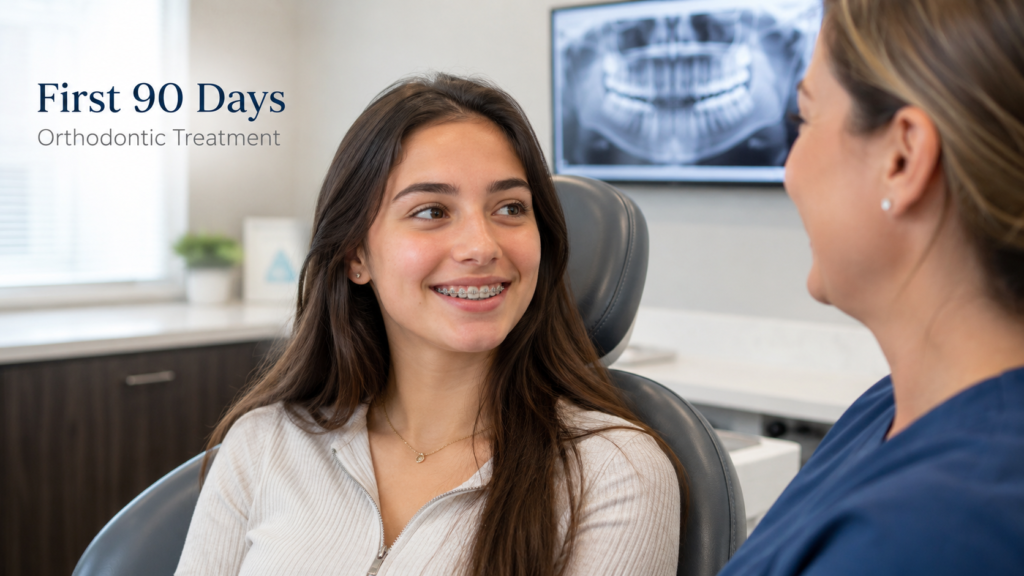
Starting orthodontic treatment is exciting, but the first few weeks can feel unfamiliar. Whether you receive traditional braces, ceramic braces, clear aligners, or another appliance, your mouth needs time to adjust to new pressure, new cleaning habits, and a different daily routine.
The first 90 days matter because they establish habits that can influence the rest of treatment. During this period, you may notice tenderness, changes in the way your teeth meet, early tooth movement, and a greater awareness of how food and oral hygiene affect your appliance.
Every treatment plan is different, so your orthodontist’s instructions should always come first. Still, knowing what commonly happens during the first three months can make the process easier and help you recognize when something deserves a call to the office.
Before Treatment Begins: Understanding the Plan
Orthodontic treatment usually starts with an assessment. The orthodontist may examine your teeth and bite, review digital scans or impressions, take photographs, and use X-rays when needed. This information is used to plan how the teeth should move and which appliance is most suitable.
Patients are often given an estimated timeline, but not every stage happens on an exact date. Tooth movement depends on the complexity of the case, growth, oral health, appointment attendance, appliance care, and how closely instructions are followed.
For readers still comparing braces and aligners, reviewing orthodontic treatment options for children, teens, and adults can make the main differences easier to understand before a consultation.
Days 1–7: The Initial Adjustment Period
The first week is usually the biggest adjustment. Braces begin applying light pressure after placement, while a new set of aligners may feel tight when first inserted. This pressure is expected because the appliance is beginning the controlled process of moving teeth.
Tenderness is often most noticeable when biting or chewing. Many patients prefer softer foods for a few days, such as yogurt, soup, pasta, eggs, oatmeal, rice, smoothies, or soft-cooked vegetables. Very hard, sticky, or chewy foods may be uncomfortable, and some can damage brackets or wires.
With braces, the cheeks and lips may rub against unfamiliar brackets. Orthodontic wax can create a temporary barrier over an irritating area. A warm salt-water rinse may soothe minor mouth irritation. Any medication should be taken only according to professional advice, the product label, and personal medical guidance.
Clear aligner patients may notice pressure, extra saliva, or a slight change in speech. Most people adapt as they become familiar with inserting, removing, and speaking with the trays.
Weeks 2–4: Building a Daily Routine
By the second week, the appliance usually feels less foreign. Initial tenderness often settles, and eating becomes easier. The focus now shifts from adjustment to routine.
Braces require careful brushing because plaque and food can collect around brackets and under wires. Patients may need a soft-bristled toothbrush, fluoride toothpaste, floss threaders, interdental brushes, or a water flosser, depending on the orthodontist’s recommendations. The goal is to clean above, below, and around each bracket rather than brushing only the visible tooth surfaces.
Clear aligners must be removed for meals and most drinks other than plain water. Teeth should be cleaned before the trays are placed back in because trapped food and sugar can contribute to odor, staining, and decay. Aligners also need to be cleaned as directed, without very hot water that could distort them.
This stage often reveals practical challenges. A student may need a small hygiene kit for school. An adult may need to plan aligner removal around meetings. A child may need reminders from a parent. These adjustments become easier with repetition.
Around Days 30–60: Your First Progress Check
Many patients have a follow-up appointment within the first several weeks, although the timing depends on the appliance and treatment plan. These visits are generally shorter than the initial placement appointment.
For braces, the team may inspect brackets and wires, check oral hygiene, replace elastics, adjust the wire, and evaluate how the teeth are responding. Some patients feel pressure again after an adjustment, but it is usually temporary.
Clear aligner patients may receive more trays, have attachments checked, or be assessed for how well the aligners are fitting. The orthodontist may also review wear time. Because aligners are removable, daily discipline is central to treatment. Wearing them for fewer hours than prescribed can allow teeth to fall behind the planned sequence.
This visit is also the right time to discuss discomfort, cleaning difficulties, damaged appliances, sports, travel, or uncertainty about instructions.
Eating During the First 90 Days
Food choices matter most for patients with fixed braces. Hard foods can loosen brackets, while sticky foods can pull on wires and become difficult to clean away. Popcorn kernels, hard candy, ice, chewy sweets, and biting directly into very hard foods commonly create problems.
This does not mean every meal must be soft for three months. Once tenderness fades, most patients can eat a varied diet with sensible preparation. Apples can be sliced, raw vegetables can be cut into smaller pieces, and tougher foods can be chewed carefully.
Aligner patients have fewer food restrictions because the trays are removed for meals. However, frequent snacking can reduce wear time and create more occasions when brushing is needed. A regular meal schedule often makes prescribed wear easier to maintain.
Oral Hygiene Is Part of the Treatment
The first 90 days are the best time to establish cleaning habits that can continue throughout treatment. Brush thoroughly and follow the technique demonstrated by the orthodontic team. Floss or clean between teeth with the recommended tool.
Continue routine dental checkups and professional cleanings because orthodontic appointments do not replace general dental care.
Watch for persistent gum swelling, bleeding, white marks near brackets, bad breath that does not improve with cleaning, or areas that remain difficult to reach. The orthodontist or dentist may recommend a change in technique or additional cleaning support.
Days 60–90: Treatment Starts to Feel Normal
By the third month, most patients have settled into a predictable routine. Braces feel less noticeable, aligner removal becomes faster, and cleaning supplies have found a permanent place in a backpack, bathroom, desk, or travel bag.
This is also when motivation can dip. The excitement of starting may fade before the final result feels close. Keeping appointments, wearing elastics or aligners as directed, protecting the appliance, and maintaining oral hygiene all support progress.
You may see early alignment changes in photographs, especially when comparing your smile with images taken before treatment. Monthly photos can be encouraging, but they should not be used to decide whether treatment is ahead or behind. Orthodontic movement includes roots and bite relationships that are not visible in casual pictures.
What Is Normal, and When Should You Call?
Mild pressure, temporary tenderness, brief irritation from a bracket, and short-term tightness with a new aligner are common early experiences. These symptoms usually improve as the mouth adapts.
Contact the orthodontic office if you have severe or worsening pain, facial swelling, signs of infection, a significant injury to the mouth, a wire causing ongoing injury, a loose bracket, a damaged appliance, or an aligner that no longer fits as expected. Do not wait until the next scheduled visit when a problem could affect comfort or treatment.
For braces, wax may provide temporary relief from a poking area, but the office should still be told if the problem continues. For aligners, do not discard a previous tray unless instructed, because the orthodontist may advise using it temporarily if a current tray is lost or damaged.
A Practical 90-Day Checklist
By the end of the third month, you should understand your appliance, cleaning routine, food or wear-time rules, and the best way to contact the office. Keep these basics in mind:
- Attend every scheduled appointment.
- Follow instructions for aligners, elastics, expanders, or other appliances.
- Brush carefully around all orthodontic components.
- Clean between the teeth every day.
- Keep routine appointments with your general dentist.
- Store aligners in their case whenever they are removed.
- Avoid habits that can bend wires or break brackets.
- Report damage or persistent pain promptly.
- Carry a small care kit when away from home.
Frequently Asked Questions
Will I See Results During the First 90 Days?
Some patients notice visible changes within the first few weeks or months, especially in crowded front teeth. Others experience less obvious movement because the early stage is preparing space or correcting the bite.
How Long Will My Teeth Feel Sore?
Tenderness commonly occurs after braces are placed, after some adjustments, or when a new aligner is started. It usually improves within a few days. Severe, persistent, or worsening pain should be reported.
Can I Play Sports During Orthodontic Treatment?
Most patients can continue sports. An orthodontic mouthguard may be recommended for contact or high-impact activities. Ask the orthodontist which type works with your appliance.
What Happens if I Break a Bracket or Lose an Aligner?
Contact the orthodontic office and explain what happened. The team can decide whether you need an earlier visit or temporary instructions. Acting quickly may prevent delays.
Do Orthodontic Appointments Replace Dental Cleanings?
No. The orthodontist monitors tooth movement and the appliance, while the general dentist continues checking for cavities, gum problems, and other oral-health needs.
The First 90 Days Set the Tone
The first three months of orthodontic treatment are mainly about adaptation. You learn how the appliance feels, how to clean around it, what foods or habits create problems, and how to respond when something does not feel right.
Temporary tenderness and small routine changes are common, but treatment should not involve ignored pain or unanswered concerns. A reliable orthodontic team will explain what is expected, monitor progress, and adjust the plan when needed.
Anyone preparing to begin treatment or seeking a second opinion can request an orthodontic consultation with Mellion Orthodontics to discuss suitable options and what the first stages may look like for their individual case.
With good communication and dependable daily habits, the first 90 days can become a strong foundation for the rest of the orthodontic journey.