There is a unique kind of rhythm to an Australian December. While the rest of the world is dreaming of a white Christmas with snowdrifts and heavy woollen sweaters, we are usually navigating the mid summer heat, firing up the barbecue, and trying to find the coolest spot in the house. But despite the tropical temperatures and the glare of the summer sun, one tradition has remained surprisingly consistent across our sunburnt country: the communal jigsaw puzzle. Whether it is set up on a card table in the corner of the lounge or taking up half the dining table, an Xmas jigsaw puzzle has become the unofficial centerpiece of the Aussie holiday season.
The appeal of a holiday puzzle has grown tremendously. In a world that feels increasingly fast paced and digital, there is something incredibly grounding about the tactile click of two pieces joining together. It is a slow hobby for a fast world, and during the Christmas break, it provides the perfect excuse to switch off the phone, put down the remote, and spend some quality time with the people who matter most.
The Communal Hub of the Home
For many Australian families, the Christmas puzzle begins on Christmas Eve or early Boxing Day. It serves as a passive social hub where people wander past, pick up a piece, find its home, and move on. It is the kind of activity that does not require a constant, intense conversation, yet it brings people together in a way that few things do. You might find yourself sitting next to an aunt or cousin you have not seen in a year, both silently hunting for a specific shade of crimson or the edge of a reindeer’s ear.
This shared goal creates a low pressure environment that is perfect for catching up. It is also a fantastic way to keep the kids entertained during those long, hot afternoons when it is too bright to be outside but they have too much energy to just sit quietly. It turns the living room into a collaborative space where everyone contributes to a single, beautiful outcome.
Escapism and Local Flavor
When it comes to designs, Australians have always had a foot in both worlds. We still have a deep nostalgia for the classic northern hemisphere imagery. There is something comforting about piecing together a snowy Victorian village, a cozy cabin with a roaring fire, or Santa’s bustling workshop while you are wearing a singlet and shorts. These traditional themes offer a bit of festive escapism and lean into the magical, storybook side of the holidays that we grew up seeing in movies and books.
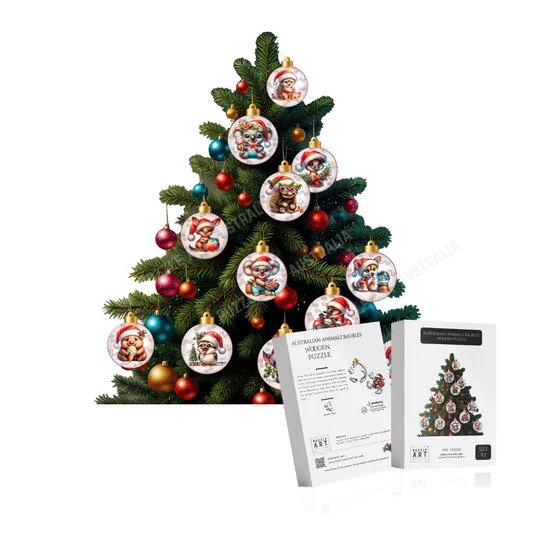
However, there is an unmistakable shift toward more localized, homegrown designs. The market for Christmas puzzles Australia wide has expanded to include themes that truly reflect our actual experience of the season. These local options feature Santa in board shorts, surfboards decorated with tinsel, or native wildlife like kangaroos, kookaburras, and wombats wearing festive hats among the blooming gum blossoms. Beautiful wooden puzzles from local brands or illustrated spreads of a classic Christmas pavlova are replacing the traditional pine trees and snowmen on many tables.
The Gift That Keeps on Giving
If you are looking for a gift that will not just end up in the back of a cupboard by mid January, a high quality jigsaw is a safe bet. Puzzles are one of the few gifts that can be enjoyed immediately on Christmas Day. Whether you are buying for a serious enthusiast who wants a massive 1,000 piece challenge or a toddler who needs big, chunky floor puzzles to develop their fine motor skills, the variety available is incredible.
Many boutique Australian brands are now collaborating with local artists to create vibrant, high definition images that are beautiful enough to be framed once they are completed. This shift toward puzzle art means you are not just giving a game; you are giving a creative project that doubles as home decor. It is a thoughtful, sustainable present that encourages mindfulness rather than screen time.
Tips for Managing the Christmas Build
If you are planning to have a festive puzzle on the go this December, a little bit of strategy goes a long way to keeping it fun rather than frustrating:
- The Sorting Stage: Get the whole family involved in sorting the border pieces first. It is a quick win that gives the puzzle its structure and makes the middle feel less daunting.
- Lighting is Everything: If you are working on a puzzle with a lot of dark or similar colors, make sure you have a good overhead light or a portable lamp. The Aussie summer sun is great, but once evening hits, you do not want to be straining your eyes under dim bulbs.
- The Puzzle Mat: If you need your dining table for the actual Christmas lunch, invest in a roll up puzzle mat or a dedicated puzzle board. It allows you to clear the space in seconds and slide your progress under the couch or on top of a cupboard without losing any pieces.
Why Puzzling is Good for the Soul
Beyond the fun and the family bonding, there is a genuine mental health benefit to puzzling. It is often referred to as active meditation. By focusing on the small details of shapes and colors, you are effectively giving your brain a break from the noise of daily life. For many, the holiday break is the only time of the year when they truly slow down. There is a deep, simple satisfaction in seeing a chaotic pile of pieces transform into a coherent, beautiful image through your own patience and persistence.
Conclusion
At the end of the day, an Xmas jigsaw puzzle is about more than just the image on the box. It is about the quiet moments of connection that happen around the table when the world outside slows down. It is about the satisfaction of finding that one elusive piece that everyone has been looking for and the collective cheer when the final bit of the sky is finally filled in. In a season that can often feel hectic and over scheduled, the humble jigsaw puzzle invites us to take a breath, sit with our loved ones, and enjoy the holiday season one piece at a time.
Frequently Asked Questions (FAQ)
- What piece count should I choose for a family puzzle?
For a mixed group of adults and children, a 500 piece or 750 piece puzzle is usually the sweet spot. It is challenging enough to keep adults interested but does not take so long that the kids lose patience. If it is just for experienced adults, 1,000 pieces is the classic holiday standard. - How long does it typically take to finish a 1,000 piece puzzle?
It varies depending on the complexity of the image, but for most people, a 1,000 piece puzzle takes between six and ten hours of active building. Over the Christmas break, this usually translates to a few days of dipping in and out between meals and afternoon naps. - What is the best way to store a puzzle for next year?
If you want to do the puzzle again next Christmas, break it down into large sections and place them back in the box, or take it all apart and put the pieces in a zip lock bag inside the box. This prevents any pieces from escaping through the corners of the box over the year. - Can I frame my Christmas puzzle?
Absolutely. Many people choose to frame their favorite holiday puzzles to use as seasonal decor. You just need some puzzle glue to seal the pieces together and a standard sized frame. It is a lovely way to remember a specific holiday and save on buying new decorations every year. - Are there puzzles designed for people with limited vision or seniors?
Yes. Many brands now offer large format puzzles. These have the same total dimensions as a standard 1,000 piece puzzle but only contain 300 or 500 larger pieces. This makes the details much easier to see and the pieces easier to handle for both young children and seniors.