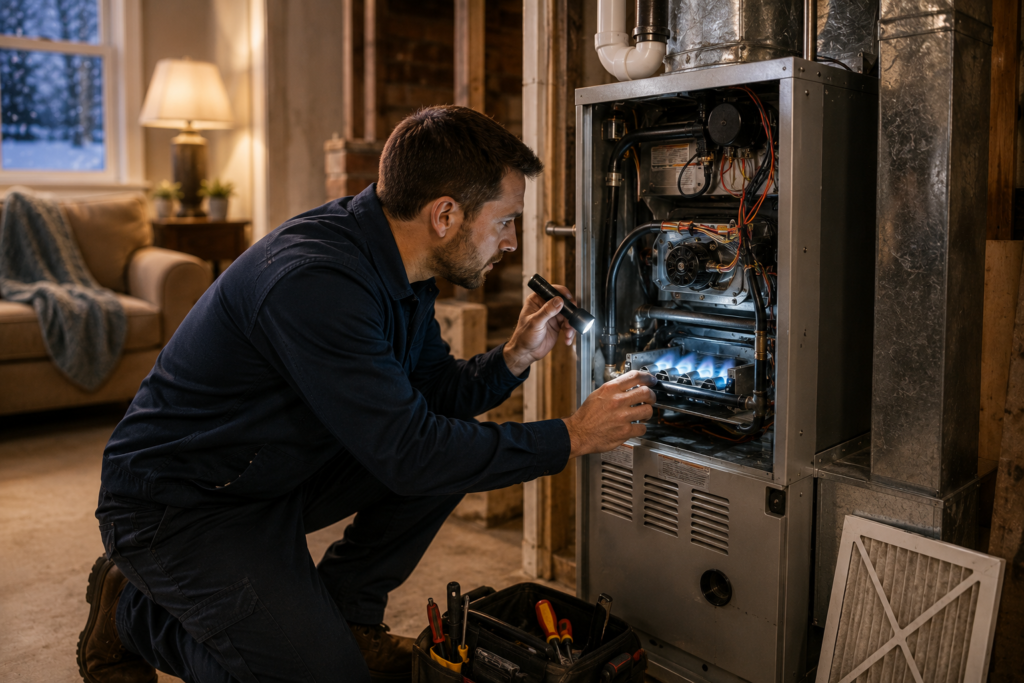
Every heating contractor in Southern California knows exactly when the phones will light up. It is not a mystery and it is not random. It happens on the first genuinely cold night of the season, usually somewhere between late October and early December, when thousands of thermostats click over to heat at roughly the same hour and thousands of furnaces are asked to wake up after eight months of doing absolutely nothing.
A remarkable number of them refuse. The furnace that worked fine last February produces a clunk, a burning smell, or nothing at all, and suddenly a household that has not thought about heating since spring is shopping for help on the same night as everyone else. Understanding why this happens is the first step toward never being part of that crowd.
The Long Sleep Is the Problem
In mild climates, furnaces live a strange life. They work hard for three or four months, then sit completely idle through a long, dusty summer. During those idle months, dust settles on the burners, the ignitor, the flame sensor, and the heat exchanger. Spiders and insects find their way into burner compartments. Rubber and plastic components dry out. Pilot assemblies and electronic ignition systems corrode quietly in the dark.
When the first cold snap arrives, all of that accumulated neglect gets tested at once. The dusty burners light unevenly or not at all. The coated flame sensor cannot confirm a flame, so the safety system shuts everything down. The dried out blower belt squeals or snaps. This is why furnace failures cluster so dramatically at the start of the season. The equipment did not break in October. It broke slowly all year, and October is simply when anyone noticed.
The Signals a Furnace Sends Before It Quits
Furnaces rarely fail without complaining first. A strong burning smell in the first hour of the season is usually just dust cooking off the heat exchanger and fades quickly, but a smell that persists into the second or third day is a different matter. Repeated clicking without ignition points to a failing ignitor or a dirty flame sensor. A furnace that starts, runs briefly, and shuts down again is short cycling, which can indicate anything from a clogged filter to an overheating limit switch.
Pay attention to the burner flame if your unit allows you to see it. A healthy natural gas flame burns steady and blue. A lazy, flickering, yellow or orange flame suggests incomplete combustion, and incomplete combustion deserves immediate professional attention rather than a wait and see approach. Rising gas bills without rising usage, rooms that heat unevenly, and a system that runs longer than it used to are all quieter versions of the same message.
The Safety Question That Outranks Comfort
Cooling failures cost you comfort. Heating failures can cost considerably more, because a gas furnace that malfunctions in the wrong way can introduce carbon monoxide into your home. The most serious version of this risk is a cracked heat exchanger, the metal chamber that keeps combustion gases separated from the air your family breathes. Cracks develop slowly through years of heating and cooling cycles, and they are invisible without a proper inspection.
This is why every home with gas appliances needs working carbon monoxide detectors on every level, tested at the start of each heating season, and why persistent headaches, dizziness, or flu symptoms that improve when you leave the house should never be ignored. It is also why a furnace inspection is not an upsell. A technician checking the heat exchanger, gas connections, and venting once a year is checking the things you cannot check yourself.
What Repair Actually Involves and Roughly What It Costs
Most furnace repairs are smaller than homeowners fear. Ignitors, flame sensors, capacitors, and thermostat issues are common culprits, and these repairs typically land in the low hundreds of dollars. Blower motors and control boards cost more, often reaching several hundred dollars depending on the system. The expensive territory begins with the heat exchanger, where repair costs climb into the thousands and frequently push the conversation toward replacement, especially on a furnace already past its fifteenth birthday.
Age matters in these decisions. The Department of Energy notes that older heating systems often operated at 56 to 70 percent efficiency, while modern equipment converts as much as 98.5 percent of its fuel into useful heat. A big repair on an old, inefficient unit means spending real money to keep burning extra gas every month. A small repair on a young, efficient unit is almost always worth authorizing on the spot.
Beat the Rush Instead of Joining It
The single smartest move a homeowner can make is to shift heating attention from the first cold night to the weeks before it. Book professional furnace repair or a full heating tune up in early fall, when schedules are open, pricing is normal, and a discovered problem can be fixed on your timeline instead of during a regional cold snap. A proper tune up covers burner cleaning, flame sensor service, heat exchanger inspection, gas pressure checks, and a full safety test, which addresses nearly every failure the first cold night would otherwise expose.
If your furnace does fail during the busy season, companies offering genuine emergency HVAC service exist for exactly that moment, and it is worth knowing who you would call before you need to. Screen for a valid license, insurance, written pricing, and reviews that mention heating work specifically. The middle of a cold night is a terrible time to meet a contractor for the first time, so do the homework while the weather is still warm.
The Bottom Line
Furnaces in mild climates fail predictably because they are ignored predictably. The long idle season loads the equipment with small problems, and the first cold night collects the bill. Homeowners who flip that pattern, running the heat for ten minutes on a mild October afternoon, replacing the filter, testing the carbon monoxide detectors, and booking service before the rush, spend less money, get better appointment times, and spend the first cold night of the year exactly where they should be, which is comfortably asleep.
Frequently Asked Questions
Why does my furnace smell like burning when I first turn it on?
A dusty burning smell during the first hour of seasonal use is normal, since dust that settled on the heat exchanger over summer burns away when the system fires up. The smell should fade the same day. A burning odor that persists, returns repeatedly, or smells electrical rather than dusty warrants shutting the system down and calling a professional.
How often should a furnace be serviced in Southern California?
Once a year, ideally in early fall before the heating season begins. Even though furnaces here run fewer months than in cold climates, the long idle period creates its own problems, including dust accumulation and corrosion, so the annual inspection matters just as much for safety as it does for reliability.
How long does a gas furnace usually last?
Most gas furnaces last 15 to 20 years, with maintenance quality making the biggest difference inside that range. Once a unit passes 15 years, any major repair deserves a comparison against replacement cost, since newer equipment is significantly more efficient and comes with fresh warranties.
Is a cracked heat exchanger really a reason to replace the furnace?
Usually, yes. The heat exchanger is the barrier between combustion gases and your household air, so a crack creates a genuine carbon monoxide risk. Replacing the exchanger itself is one of the most expensive furnace repairs, and on an older unit that money is almost always better applied toward a new system.
Should I repair or replace a furnace that is 16 years old?
Lean toward replacement if the repair is major, such as a heat exchanger, control board, or blower motor, and lean toward repair only for small, inexpensive parts. At that age you are buying time rather than reliability, and the efficiency gap between old and new equipment means the old unit costs extra money every month it keeps running.