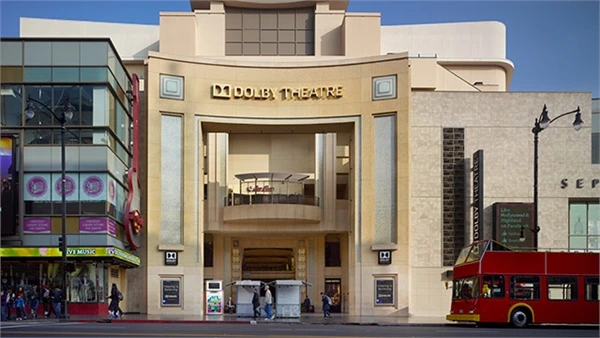
Walk down Hollywood Boulevard today and you’ll find plenty of visitors asking directions to a venue that technically hasn’t carried its original name in over a decade. The Kodak Theatre, now officially known as the Dolby Theatre, remains one of the most recognizable names in entertainment history, and for good reason. Even years after its rebranding, people still search for the Kodak Theatre by name, because for an entire generation of moviegoers, that name is inseparable from the Academy Awards and everything the ceremony represents.
At Discover Hollywood Magazine, we think it’s worth revisiting exactly why the Kodak Theatre earned such a lasting place in Hollywood’s cultural memory, even as the venue itself has evolved and changed hands over the years. In this piece, we’ll walk through the history of the Kodak Theatre, why it became such a significant landmark, and what’s changed since it took on its current name.
The Kodak Theatre Was Built With the Oscars in Mind
Unlike many historic Hollywood venues that were later adapted to host awards shows, the Kodak Theatre was purpose-built from the ground up specifically to become the permanent home of the Academy Awards. Before its construction, the Oscars had bounced between multiple venues over the decades, including the Dorothy Chandler Pavilion and the Shrine Auditorium, without ever settling into a consistent, dedicated home. This lack of permanence created real logistical challenges for an event of the Academy Awards’ scale and global visibility.
The Academy of Motion Picture Arts and Sciences worked directly with developers to design a venue capable of solving this problem once and for all, and the result was the Kodak Theatre, which opened its doors on November 9, 2001, following a construction cost of roughly $94 million. This intentional design is a major reason the Kodak Theatre became so important to Hollywood history — it wasn’t simply pressed into service for the Oscars, it was conceived specifically to host them.
A Landmark Deal That Kept the Oscars in Hollywood
Before the Kodak Theatre existed, there was genuine uncertainty about whether the Academy Awards would remain in Hollywood at all, given the difficulty of finding a suitable long-term venue. The construction of the Kodak Theatre as part of the larger Hollywood & Highland entertainment complex resolved this uncertainty, cementing Hollywood Boulevard itself as the permanent home of the ceremony rather than losing it to another part of Los Angeles.
This matters enormously when considering why the Kodak Theatre is important to Hollywood history, because it directly preserved the symbolic connection between the Academy Awards and the neighborhood most associated with the American film industry. Without this venue, the Oscars could easily have ended up hosted somewhere with far less historical and cultural resonance.
The Naming Rights Story Behind the Kodak Theatre
Part of what makes the Kodak Theatre such an interesting case study in entertainment history is the naming rights deal itself. Eastman Kodak Company paid approximately $75 million for the rights to have its name attached to the venue, a significant sponsorship deal at the time and one that closely tied the theater’s identity to one of the most iconic brands in the history of photography and film. For over a decade, watching the Oscars meant watching them unfold specifically at the Kodak Theatre, a name that became permanently etched into pop culture through years of red carpet broadcasts and acceptance speeches.
That naming relationship came to an end when Eastman Kodak filed for Chapter 11 bankruptcy protection in early 2012, ultimately leading a bankruptcy court to approve the early termination of the company’s naming rights agreement. The venue briefly operated under the temporary name Hollywood and Highland Center before Dolby Laboratories signed a new 20-year naming rights deal, officially renaming the venue the Dolby Theatre in May 2012. Even with this change, the Kodak Theatre name has remained deeply embedded in how people remember and search for the venue, which speaks to just how strong its cultural imprint became during its original run.
Why the Kodak Theatre Name Still Resonates
Even though the venue has operated under the Dolby name for well over a decade now, references to the Kodak Theatre continue to appear constantly in conversations about Hollywood history, older awards show footage, and casual conversation among visitors exploring the neighborhood. This lingering recognition isn’t just nostalgia — it reflects how significant the venue’s original branding period was in shaping how audiences worldwide came to think about the Academy Awards’ physical home.
For roughly its first decade of operation, essentially every major Oscars moment — the memorable speeches, the historic wins, the iconic red carpet arrivals — happened under the Kodak Theatre name. That decade of visibility explains why so many people still associate the venue with its original title, even now, and why the Kodak Theatre remains a meaningful reference point in Hollywood history despite the official rebranding.
More Than Just the Oscars
While the Academy Awards connection is central to why the Kodak Theatre became so important, the venue’s significance extends beyond a single annual ceremony. Since opening, it has hosted numerous concerts, other awards shows, symphony performances, and major entertainment events, establishing itself as a genuinely versatile live-performance venue rather than a space used only once a year for the Oscars.
The theater also became home to a permanent Cirque du Soleil production for a period, further diversifying its role within Hollywood’s live entertainment landscape. This broader use reinforces why the Kodak Theatre earned such a lasting reputation — it wasn’t simply an awards show set piece, but a fully functioning, technologically advanced auditorium contributing to Hollywood’s entertainment infrastructure in multiple ways.
The Venue’s Evolving Ownership and Future
The story of the Kodak Theatre has continued evolving well beyond its 2012 rebranding. In 2017, the City of Los Angeles purchased the theater from the Community Redevelopment Agency of Los Angeles as that agency was being formally disbanded. More recently, ownership shifted again when the venue was acquired by Jebs Hollywood Entertainment in October 2024, continuing the long history of changing stewardship behind the building originally known as the Kodak Theatre.
Perhaps most notably for anyone following the venue’s connection to the Academy Awards specifically, it was announced in 2026 that the Oscars ceremony will move to the Peacock Theater starting in 2029, ending the awards show’s long-running residency at the venue originally built to be its permanent home. This upcoming change adds a new layer of significance to the Kodak Theatre’s legacy, since the venue’s entire original purpose was to give the Academy Awards a stable, permanent location after years of moving between different sites. Even with this transition ahead, the Kodak Theatre’s place in Hollywood history remains firmly secured by the decades of iconic moments already associated with it.
Why This History Still Matters to Visitors Today
For anyone visiting Hollywood Boulevard today, understanding the story of the Kodak Theatre adds real context to what might otherwise just look like another entertainment complex along a busy tourist strip. Knowing that this specific building was purpose-built to solve a decades-long logistical challenge for the Academy Awards, that it hosted some of the most memorable moments in Oscars history under its original name, and that it has continued evolving through multiple ownership and naming changes, gives visitors a much richer appreciation of what they’re actually looking at.
The Kodak Theatre’s story is, in many ways, a microcosm of Hollywood itself — glamorous, historically significant, shaped by corporate sponsorship and shifting fortunes, and constantly evolving while still carrying forward a legacy that refuses to fully fade, even under a new name.
Final Thoughts
Why is the Kodak Theatre important to Hollywood history? Because it solved a genuine problem for the Academy Awards, gave the Oscars a permanent home after decades of uncertainty, and became the backdrop for some of the most memorable moments in awards show history during its original run. Even as the venue has changed names, ownership, and even its future relationship with the Oscars, the Kodak Theatre’s legacy remains a defining chapter in the story of Hollywood as both an industry and a physical place. Discover Hollywood Magazine will continue covering how this iconic venue’s story unfolds as its next chapter takes shape.
Frequently Asked Questions
Is the Kodak Theatre still called that today?
No. The venue was renamed the Dolby Theatre in 2012 after Dolby Laboratories signed a 20-year naming rights deal, though many people still refer to it by its original name.
When did the Kodak Theatre open?
It opened on November 9, 2001, and first hosted the Academy Awards ceremony in March 2002.
Why did the venue stop being called the Kodak Theatre?
Eastman Kodak filed for bankruptcy in early 2012, ending its naming rights agreement, after which Dolby Laboratories acquired the naming rights.
Will the Oscars always be held at the venue formerly known as the Kodak Theatre?
No. It was announced in 2026 that the Academy Awards will move to the Peacock Theater starting in 2029, ending its long run at the venue built specifically to host it.