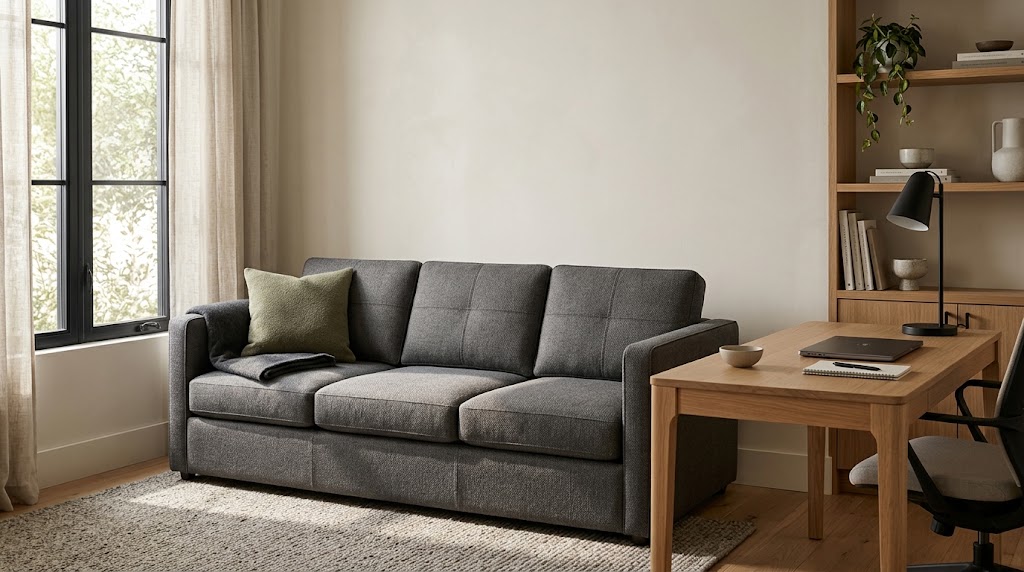
The couch in your living room used to serve a single purpose. People sat on it to watch television or unwind after dinner. That assumption has shifted considerably. Remote work turned many living room seats into makeshift workstations — places where emails get answered, calls get taken, and documents get reviewed between meetings.
A couch filling that role faces competing demands. It needs to look composed and intentional behind you on screen. It also needs to spare your shoulders and back after hours of sitting. Getting both outcomes from one piece of furniture starts with understanding what you can change and what you cannot.
The Case for Treating Your Couch as a Work Surface
Desk fatigue is real. Sitting in a rigid chair for six straight hours drains concentration and stiffens muscles. Shifting to a couch between tasks offers physical relief and mental reset. The catch is that not every couch supports productive work.
A seat that’s too soft invites drowsiness. One that’s too firm discourages you from using it at all. What you want is a middle option — supportive enough to maintain alertness but comfortable enough that you don’t dread sitting down. This is the foundation on which every other decision should rest.
Fabric Selection: Balancing Visual Appeal With Daily Demands
People on your video calls notice more than your face. They register the environment behind you, including the furniture. A couch with visible wear, fading, or damage undercuts your credibility regardless of what you say during the meeting.
Leather remains a popular choice for those seeking a sharp appearance. It reads well on camera and resists everyday messes. The trade-offs deserve mention: leather temperature fluctuates with the season, and it produces audible creaks when you shift your weight. During a quiet call, those sounds become a distraction.
Tightly woven textiles often serve working professionals better. Structured linens and tweeds appear polished while reducing light reflection, which helps your image stay clear on camera. Velvet offers visual depth but degrades visibly at pressure points over time. Many working professionals turn to sofa upholstery services when comparing these options side by side. A specialist can lay out fabric swatches under your actual room lighting, which reveals how each material will truly read on camera.
For daily-use seating, durability matters as much as appearance. Performance textiles have improved dramatically in recent years. They replicate the hand-feel and visual texture of conventional upholstery while repelling liquid and resisting stains. A coffee spill sits on the surface instead of soaking through to the cushion core.
Picking Colors That Serve Both the Room and the Camera
Room color decisions carry more weight when the room doubles as a broadcast space. Vivid hues and complex prints might satisfy personal taste, but they introduce noise into your video feed. Dense patterns in particular can create moiré interference — a warping effect that makes your camera image look blurry or shimmering.
Solid, desaturated shades perform more reliably. Navy, deep green, charcoal, and earthy taupe all project steadiness and competence. These tones also conceal everyday wear better than pale options. If you share the couch with a pet during working hours, a darker shade hides fur and minor stains without constant attention.
What Happens Inside the Cushion Matters
A handsome exterior means little if the interior offers no structure. Since office use demands sustained sitting, cushion engineering becomes a priority. Plush, feather-filled cushions feel indulgent for the first ten minutes. After an hour, you’ve sunk deep enough that your spine curves unnaturally.
Firmer, high-density foam prevents that outcome. It compresses slightly when you sit but resists full collapse. You should feel supported without noticing the wooden framework beneath. The cushion should spring back to its original shape after each use rather than retaining your impression.
Deciding Whether to Replace or Recover
Picture this: the frame underneath is hardwood and rock-solid. The cushions still bounce back after sitting. But the fabric tells a different story — coffee stains, a tear near the cushion, a color that clashes with your evolving office aesthetic. That’s precisely when sofa reupholstery becomes the logical move. Discarding a structurally sound piece over surface-level problems is wasteful and unnecessary.
Recovering preserves everything that already works. You retain the seat height, depth, and support profile you’ve grown accustomed to. What changes is the exterior — a fresh textile in a color and weave that suits your current workspace. Sofa upholstery services extend well beyond fabric replacement. During the process, technicians typically inspect and repair the frame, re-tension weakened springs, and replace degraded foam. Pattern-matched seams and even piping require a trained hand, and those finishing details separate a mediocre result from one that genuinely looks factory-new.
The Timeline and Stages of the Work
Expect the project to span roughly two weeks. Day one involves removing every trace of old material down to the skeleton. The bare frame gets assessed for structural issues — cracked joints, loose bolts, deteriorated webbing.
Next comes reinforcement. The technician repairs and re-secures whatever the inspection uncovered. Fresh padding goes over the frame before the new fabric is cut, stretched, and anchored. Piping and trim finish the edges. The final piece should look uniform from every angle, with no sagging or bunching visible on any surface.
An Acoustic Benefit Worth Knowing About
Most homeowners overlook sound when furnishing a workspace. Yet the surfaces around you directly affect audio quality during calls. Hard, reflective materials — glass tabletops, hardwood floors, metal shelving — send sound waves bouncing in multiple directions. The result is echo, and your colleagues hear it through your microphone.
A cushioned, fabric-wrapped seat absorbs a significant portion of those reflections. It dampens the room and gives your voice a warmer, more controlled quality. Leather absorbs less sound than woven textiles, which is another consideration if audio clarity matters to you.
Routine Care That Extends Your Investment
Furniture in a work environment accumulates grime faster than residential seating. You spend more hours in that room, shedding dead skin and dropping food particles. A weekly vacuum with a brush-head attachment prevents buildup, especially along seams where debris collects.
Spills should be addressed immediately. Press a dry, clean cloth against the liquid and let it absorb — never scrub, since friction drives the stain deeper. Arrange professional cleaning twice a year to refresh the fibers. As the textile naturally wears from constant use, sofa reupholstery offers a way to refresh the exterior without touching the frame. That milestone typically arrives after five to ten years, depending on usage intensity.
Tailoring the Seat to Your Actual Routine
Honest self-assessment helps here. If you perch on the couch during brief breaks between desk sessions, a firm seat with structured arms will look sharpest. If you routinely spend four or more hours working from the couch, cushion depth and airflow become more critical than visual crispness.
Describe your habits openly when consulting a technician. They need to know about laptop placement, pen usage, drink proximity, and whether you sit in one spot or move around. These details influence fabric recommendations and foam density choices.
Sofa upholstery services often include ergonomic consultations as part of the process. The technician adjusts internal components to match how you actually sit, which makes a meaningful difference over months of daily use.
Final Thoughts on Building a Workspace That Works
A productive home office requires furniture that earns its place in multiple ways. Seating must project competence on camera while supporting your body through demanding days. Neither quality should be sacrificed for the other.
With deliberate choices about fabric type, color tone, and cushion firmness, you can achieve both goals in a single piece. When an existing frame remains structurally sound, reupholstering provides a sustainable path to a refreshed, office-ready seat. The result is furniture that serves your daily workflow and your professional presentation with equal competence.