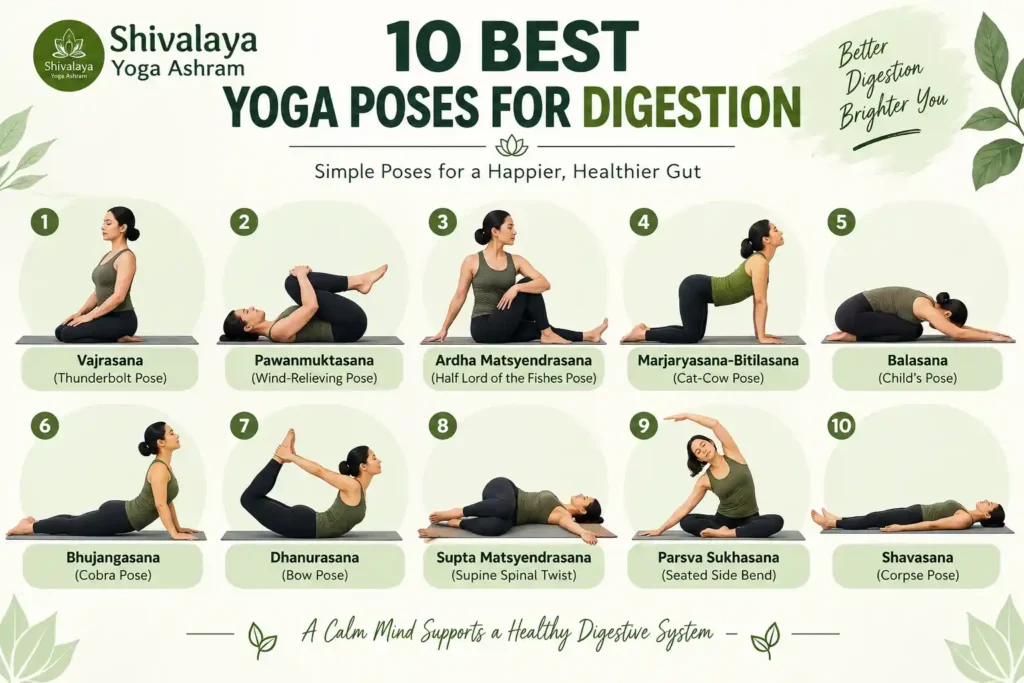
Yoga is an ancient practice that combines physical postures, breathing techniques, and mindfulness to improve the connection between the body and mind. Certain yoga postures involve gentle abdominal movements, spinal twists, and controlled compression that may help support normal digestive activity, ease tension, and encourage relaxation.
Practicing the 10 Best Yoga Poses for Digestion can be a simple and natural way to support gut health while improving flexibility, posture, and overall wellness. Whether you are a beginner or an experienced yoga practitioner, these poses can be adapted to suit different fitness levels.
In this article, we will explore ten effective yoga poses for digestion, their potential benefits, and practical tips for including them in your daily routine.
Why Is Yoga Beneficial for Digestion?
Digestion is a complex process influenced by diet, hydration, physical activity, sleep, and stress levels. When the body experiences prolonged stress, digestive comfort and regularity may be affected.
Yoga can support digestive wellness in several ways. Gentle movement encourages physical activity, which is beneficial for normal bowel function. Certain postures involve abdominal compression and rotation, while breathing exercises and relaxation techniques can help calm the nervous system.
Here are some potential benefits of practicing yoga regularly:
-
Supports bowel regularity: Gentle physical movement may help encourage normal intestinal activity.
-
Helps reduce stress: Breathing exercises and meditation promote relaxation, which can support digestive comfort.
-
Relieves physical tension: Stretching and twisting movements can reduce tightness around the abdomen and lower back.
-
Improves body awareness: Mindful yoga practice encourages healthier eating habits and greater awareness of physical signals.
-
Promotes overall wellness: Regular practice supports flexibility, mobility, and general physical health.
Although yoga can complement a healthy lifestyle, it should not replace medical treatment for persistent digestive problems.
10 Best Yoga Poses for Digestion
The following yoga poses are suitable for people looking to support digestive health naturally. Beginners should start slowly, avoid forcing movements, and practice according to their comfort level.
1. Pawanmuktasana (Wind-Relieving Pose)

Pawanmuktasana, also known as Wind-Relieving Pose, is one of the most popular yoga postures associated with digestive wellness. It involves bringing the knees toward the chest while lying on the back.
This gentle compression of the abdominal area may help relieve feelings of bloating and trapped gas in some practitioners.
How to practice:
-
Lie flat on your back with your legs extended.
-
Slowly bend both knees toward your chest.
-
Wrap your arms around your knees.
-
Gently bring your thighs closer to your abdomen.
-
Breathe naturally and hold for 20–30 seconds.
-
Slowly release your legs.
Benefits: May help ease abdominal discomfort, stretch the lower back, and release physical tension.
2. Vajrasana (Thunderbolt Pose)

Vajrasana is a traditional seated yoga posture commonly practiced after meals. Unlike many other yoga poses, it involves sitting upright on the heels rather than performing complex movements.
This posture encourages an upright sitting position and provides an opportunity for relaxed breathing after eating.
How to practice:
-
Kneel on your yoga mat.
-
Bring your big toes together and keep your knees comfortable.
-
Slowly lower your hips onto your heels.
-
Place your hands on your thighs.
-
Keep your spine straight and shoulders relaxed.
-
Breathe slowly for 2–5 minutes.
Benefits: Encourages mindful relaxation after meals and promotes comfortable posture.
Tip: If you experience knee or ankle discomfort, use a cushion or choose a comfortable chair instead.
3. Ardha Matsyendrasana (Half Spinal Twist)

Ardha Matsyendrasana is a seated twisting posture that stretches the spine and gently rotates the abdominal area. Twisting movements are often included in yoga routines designed to support digestive wellness.
This pose can also improve spinal mobility and reduce stiffness caused by prolonged sitting.
How to practice:
-
Sit on the floor with both legs extended.
-
Bend your right knee and place your right foot outside your left thigh.
-
Place your left elbow gently against your right knee.
-
Place your right hand behind you for support.
-
Slowly rotate your upper body to the right.
-
Hold for 20–30 seconds and repeat on the other side.
Benefits: Improves spinal flexibility, stretches the abdominal region, and encourages mindful movement.
4. Balasana (Child’s Pose)

Balasana is a relaxing yoga posture that gently stretches the lower back, hips, and thighs. It is particularly useful for people who experience physical tension due to stress or long working hours.
The gentle abdominal contact with the thighs may also provide a relaxing sensation.
How to practice:
-
Begin in a kneeling position.
-
Slowly lower your hips toward your heels.
-
Extend your arms forward or rest them beside your body.
-
Lower your forehead toward the mat.
-
Relax your shoulders and breathe deeply.
-
Hold for 30–60 seconds.
Benefits: Encourages relaxation, reduces muscular tension, and supports a calm breathing pattern.
5. Bhujangasana (Cobra Pose)

Bhujangasana is a gentle backbend that strengthens the back muscles and stretches the front of the body, including the abdominal region.
This posture can be included in a balanced yoga sequence to improve spinal mobility and counteract stiffness caused by sitting for long periods.
How to practice:
-
Lie on your stomach with your legs extended.
-
Place your palms beside your chest.
-
Keep your elbows close to your body.
-
Slowly lift your chest using your back muscles and hands for support.
-
Keep your shoulders relaxed.
-
Hold for 15–20 seconds before lowering.
Benefits: Stretches the abdominal muscles, improves spinal flexibility, and strengthens the back.
6. Marjaryasana-Bitilasana (Cat-Cow Pose)

Cat-Cow Pose combines two gentle movements that improve spinal mobility and encourage coordination between breathing and movement.
It is an excellent option for beginners because it does not require advanced flexibility or strength.
How to practice:
-
Begin on your hands and knees.
-
Keep your wrists below your shoulders and knees below your hips.
-
Inhale and gently lift your chest and tailbone (Cow Pose).
-
Exhale and round your spine while gently drawing your abdomen inward (Cat Pose).
-
Repeat the movements slowly for 8–10 rounds.
Benefits: Encourages gentle abdominal movement, improves spinal mobility, and promotes relaxation.
7. Paschimottanasana (Seated Forward Bend)

Paschimottanasana is a seated forward-bending posture that stretches the hamstrings, spine, and lower back. It also creates gentle contact between the upper body and thighs.
Practicing this pose mindfully can help release physical tension and encourage a relaxed state.
How to practice:
-
Sit with your legs extended in front of you.
-
Keep your spine comfortably upright.
-
Inhale and raise your arms overhead.
-
Exhale and slowly bend forward from your hips.
-
Hold your feet, ankles, or shins without forcing the stretch.
-
Maintain slow breathing for 20–30 seconds.
Benefits: Stretches the back and hamstrings, improves flexibility, and encourages mindful relaxation.
8. Malasana (Garland Pose)

Malasana is a deep squatting posture that stretches the hips, ankles, and inner thighs. Squatting is a natural body position that can help some people adopt a more comfortable posture during bowel movements.
This makes Malasana a useful posture to include in a mobility-focused yoga routine.
How to practice:
-
Stand with your feet slightly wider than hip-width apart.
-
Slowly bend your knees and lower your hips.
-
Keep your heels grounded if comfortable.
-
Bring your palms together in front of your chest.
-
Use your elbows gently against your inner knees.
-
Hold for 20–30 seconds.
Benefits: Improves hip mobility, stretches the lower body, and supports comfortable squatting mechanics.
9. Setu Bandhasana (Bridge Pose)

Setu Bandhasana is a gentle backbend that strengthens the glutes and back muscles while opening the chest and stretching the front of the body.
It can be a valuable addition to a yoga routine focused on improving overall movement and physical well-being.
How to practice:
-
Lie on your back with your knees bent.
-
Place your feet flat on the floor, hip-width apart.
-
Keep your arms beside your body.
-
Press your feet gently into the mat.
-
Slowly lift your hips toward the ceiling.
-
Hold for 15–30 seconds and lower gradually.
Benefits: Strengthens the lower body, stretches the front of the body, and improves spinal mobility.
10. Supta Matsyendrasana (Supine Spinal Twist)

Supta Matsyendrasana is a relaxing twisting posture performed while lying on the back. It gently stretches the spine and muscles around the abdomen and lower back.
This pose is particularly suitable for ending a gentle yoga session.
How to practice:
-
Lie comfortably on your back.
-
Bend both knees and bring them toward your chest.
-
Extend your arms out to the sides.
-
Slowly lower both knees toward the right.
-
Turn your head gently toward the left if comfortable.
-
Hold for 20–30 seconds and repeat on the opposite side.
Benefits: Improves spinal mobility, stretches the lower back, and encourages relaxation.
How to Create a Daily Yoga Routine for Better Digestion
Knowing the right yoga poses is only the first step. Consistency and proper practice are equally important.
Here is a simple routine that beginners can follow:
| Yoga Pose | Suggested Duration |
|---|---|
| Vajrasana | 2 minutes |
| Cat-Cow Pose | 2 minutes |
| Pawanmuktasana | 2 minutes |
| Cobra Pose | 1 minute |
| Half Spinal Twist | 2 minutes |
| Child’s Pose | 2 minutes |
| Seated Forward Bend | 1 minute |
| Malasana | 1 minute |
| Bridge Pose | 1 minute |
| Supine Spinal Twist | 2 minutes |
You can adjust the duration according to your flexibility and comfort.
Best practices for your routine:
-
Practice most yoga poses on an empty stomach or after sufficient time has passed following a meal.
-
Vajrasana can be practiced briefly after eating if comfortable.
-
Avoid intense twisting, deep forward bends, or abdominal compression immediately after meals.
-
Focus on slow, steady breathing.
-
Stay hydrated throughout the day.
-
Combine yoga with a balanced diet rich in fiber.
-
Avoid pushing your body into uncomfortable positions.
Additional Lifestyle Tips to Support Healthy Digestion
Yoga works best when combined with healthy everyday habits. Consider incorporating these simple changes into your lifestyle:
Eat mindfully: Chew your food properly, avoid rushing meals, and pay attention to hunger and fullness signals.
Include fiber-rich foods: Fruits, vegetables, whole grains, legumes, and seeds can support normal bowel movements.
Stay physically active: Walking, swimming, and other moderate activities can complement your yoga practice.
Manage stress: Meditation, deep breathing, and adequate sleep can support overall digestive wellness.
Maintain regular meal timings: Consistent eating habits may help establish a comfortable daily routine.
If digestive symptoms are persistent, severe, or accompanied by unexplained weight loss, blood in the stool, vomiting, or significant abdominal pain, consult a qualified healthcare professional.
Who Can Practice Yoga for Digestion?
Most healthy adults can incorporate gentle yoga into their wellness routines. Beginners, office workers, older adults, and people interested in improving flexibility may find these poses useful.
However, certain postures may not be appropriate for everyone.
People who are pregnant, recovering from abdominal surgery, or living with hernias, spinal conditions, or significant digestive disorders should seek professional guidance before practicing abdominal compression or deep twisting postures.
A qualified yoga instructor can help modify poses according to individual needs and physical limitations.
Conclusion: Support Your Digestive Wellness Through Yoga
Maintaining good digestive health requires a combination of healthy eating, physical activity, stress management, and mindful lifestyle choices. Yoga offers a gentle and accessible way to support overall wellness through movement, breathing, and relaxation.
The 10 Best Yoga Poses for Digestion, including Pawanmuktasana, Vajrasana, Ardha Matsyendrasana, Balasana, and Malasana, can be incorporated into a regular yoga routine to improve flexibility, encourage relaxation, and support digestive comfort.
The key is to practice consistently, respect your body’s limitations, and combine yoga with healthy daily habits.
If you want to deepen your understanding of traditional yoga practices and develop a consistent routine under experienced guidance, explore the yoga programs offered by Shivalaya Yoga Ashram.
Visit Shivalaya Yoga Ashram to discover more about yoga, holistic wellness, and practices that can support a healthier lifestyle. Start with simple movements today and make mindful yoga a part of your journey toward better well-being.