Chakra healing and meditation isn’t some new age gimmick invented in a candle shop, even though the marketing often makes it look that way. the concept actually comes from ancient Indian traditions, tied to yoga and Ayurvedic thinking, going back thousands of years. The idea is simple: your body has seven energy centers, called chakras, running from the base of your spine to the crown of your head, each governing different parts of you, physical and emotional. when one gets blocked, you feel it, often as stress, anxiety, or a knot of tension you can’t quite place. this is where chakra healing and meditation earns its keep, it gives you a way to notice that tension and actually work through it, rather than just push past it. That’s the real reason it helps with stress, it doesn’t just relax you in the moment, it calms the pattern underneath.

Reiki Is Probably The One You’ve Heard Of
If you have heard of a single form of energy healing, it is probably Reiki. Originally Japanese, it was created early in the 20th century as an energy healing accessed through light touch and hovering (offering no touch) of the hands over the body. The practitioner focuses the universal life energy (phrased in different works, ki, chi or prana depending on your tradition) into the individual. Subjects can report feeling warmth, or tingling or even the occasional pinprick. Some feel nothing and have a profound sense of relaxation afterwards, but whatever the case, sessions can last from about thirty minutes to an hour. It is subtle. It is quiet. Yet numerous hospitals are providing it as a complementary therapy for patients who may be seeking relief from pain, worried about upcoming surgery or feeling anxious for any reason, which I think highlights something.
Acupuncture And Acupressure Work On Meridians
Here’s where things get into something more fossilized and accepted clinically, though, with the practice of acupuncture. This is Traditional Chinese Medicine and involves the concept of meridians energy pathways in the body. Fine needles are inserted into specific points on these meridians to remove blocked energy or ‘qi’ and rebalance the body…and acupressure is the same, using fingers or tools to press on the meridians instead of needles. Both are used widely for chronic pain, migraine headaches, gastrointestinal problems, and even fertility treatment. What I find fascinating, however, is that acupuncture actually has quite a bit of Western scientific evidence to back it up when some of the other energy practices don’t, at least not to the same level.
Chakra Balancing And The Seven Energy Centers
Chakra work is another huge one, combining ancient yogic practices and Hinduism. It involves locating seven energy centers along your spine from the root to the crown, each associated with physical, mental and emotional phenomena. For example, the root is associated with security and survival whereas the crown is associated with higher consciousness. If these become blocked, or overly active, we might experienced feelings of anxiety, depression, low energy or hypersomnia something’s just “off” but you can’t quite identify what. These practitioners sometimes use breathwork, sound, crystals or guided visualization. There is less physical contact of course.
Sound Healing Is Having A Real Moment Right Now
Recently and for good reason, sound healing has gained a lot of popularity as it is easy, enjoyable, and one doesn’t have to adopt any esoteric doctrine to love lying under a blanket while the sounds of singing bowls reverberate around you. According to the practice, the vibrations from the sound exert pressure upon the brain, changing its frequency into one more akin to feeling totally relaxed or in a meditative state rather than being on high alert from a perceived threat (your boss). Practitioners make use of a variety of implements Tibetan singing bowls, crystal bowls, tuning forks, gongs depending on their course of study. The sound bath is a related activity, where you mostly just lie on a massage table in a dark room and allow the sounds to fill your being for around forty five minutes. Many describe it as the most immediately effective with respect to relaxation of healing energies, at least in terms of how relaxed you feel afterward.
Qigong And Tai Chi Combine Movement With Energy Work
Not all have you lying motionless on a table. Two that do not are Qigong and Tai Chi. Both utilize slow, precise motion, breathing, and intention. Both originate in Chinese medical and martial traditions, and are meant to move qi through a series of Tai Chi-like motions in a smooth, gentle wave. Maybe you’ve seen folk in the park doing this. It looks so stupidly easy. It is not. Discipline is required, and there is an increasing body of literature that points to a regular regimen as reducing falls among older populations, as well as improving finding markers of stress. It is also a low impact form of exercise.
Crystal Healing And The Debate Around It
I know, I know, crystal healing gets an awful lot of eye-rolling and I can’t blame you. That being said, the basic idea behind it is that different kinds of stones emit different vibrations which can then influence or resonate with your personal energy field (think, rose quartz for love and emotional ups-and-downs, amethyst for relaxation and awareness, black tourmaline for protection etc.). While the scientific community can find very little evidence that the stones actually emit any vibrational energy, many advocates for crystal healing aren’t necessarily interested in proving it’s scientifically rigorous – it’s more of a meditative tool or a physical touchstone that helps people keep their goals in mind. Whether it actually does anything or not is sort of a secondary concern.
What A Typical Energy Healing Session Actually Looks Like?
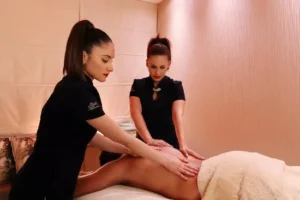
If you’ve never been to a session, this is an approximation of what to expect. It can be a little unnerving walking in completely unaware of what’s going to happen. The first thing is that you’ll be clothed and sitting or lying on a massage-style table. The practitioner may lead you through some sort of intention-setting exercise, asking you what you’re there to work on or release. Then you’ll actually do the technique-it may be hands-on (physically touching your body) or hands-off, and music and scent may be involved. Afterward, there is sometimes a little talk about what was brought up, emotionally or physically. People sometimes cry. People sometimes fall asleep. People sometimes have a nothing-happens experience, and report being “lighter” feeling for a couple of days afterward. There is no “right” way to respond, which took me a while to internalize.
Who Tends To Benefit Most From These Practices?
The kinds of energy healing that I practice seem to be most appealing to folks who are carrying around long term struggles with stress, anxiety, unresolved grief, or chronic pain that hasn’t responded too well to traditional healthcare interventions. I also find people who have recently recovered from an illness or health crisis, those experiencing a major life transition, or even folks who are just looking for a pace slower and more deliberate to be more aware of themselves. That said, there is no cookie cutter for this work. The same person might come in for a Reiki treatment one time and never feel anything and drop out of the process versus someone who makes it to over a decade of sound bath treatments because it’s the only thing that settles their mind long enough for them to get some sleep. The bottom line is you kind of have to try a few options to know, and I mean really know, what sticks for you. There is no formula for this, and if someone tells you there is then they likely have some sort of financial interest in your agreement to it.
Finding A Practitioner You Can Actually Trust
And here’s the part where some of you may decide to skip ahead but really shouldn’t. This industry has no licensing, no regulation, no requirements for anyone to learn or adhere to standards in order to use the title ‘energy healer’. What you want to look for are training certificates that show at least a year or two in the field, how long they’ve been working and a real review by a real person of their service that hasn’t been obtained as a false testimonial on their website. Trust your first impression in the first five minutes of an appointment or meeting with this person, if they are impatient, unwilling to answer your questions or give you facts and information then you are better off seeking out someone new. Any real energy practitioner will be able to tell you why they’re doing what they’re doing during a session and if they complain about your boundaries or tell you to take yourself off your medication so you can perform more energy work you want to find someone else immediately. If it doesn’t feel right, it isn’t.

Final Thoughts on Chakra Healing and Meditation
At the end of the day, chakra healing and meditation is less about believing in something mystical and more about giving yourself structured time to actually check in with your own body and mind. Whether you’re drawn to it for the spiritual framework or just want a repeatable stress relief practice, it delivers on both fronts if you stick with it. Start small, be consistent, don’t overthink the “correct” way to do it because honestly there isn’t one rigid version. Just show up for yourself regularly and the rest tends to sort itself out over time.
FAQs
What is chakra healing and meditation used for?
Mostly stress relief, emotional balance, and reconnecting with parts of yourself that feel blocked or numb. People use it for anxiety, focus issues, and general burnout too.
How long does it take to see results from chakra meditation?
Most people notice small shifts within two to four weeks of consistent daily practice, though it varies a lot person to person.
Do I need special tools for chakra healing?
No. Crystals and sound bowls can enhance the experience but they’re not required. Breath and attention are the real tools here.
Can chakra healing and meditation replace therapy?
No, and it shouldn’t be treated that way. It works well alongside professional mental health support, not as a substitute for it.