In a competitive retail environment, packaging does more than protect a product. It communicates a brand’s identity, creates a first impression, and can influence how customers perceive the quality of what is inside. For businesses of all sizes, one practical way to add branding to packaging is through logo sticker printing.
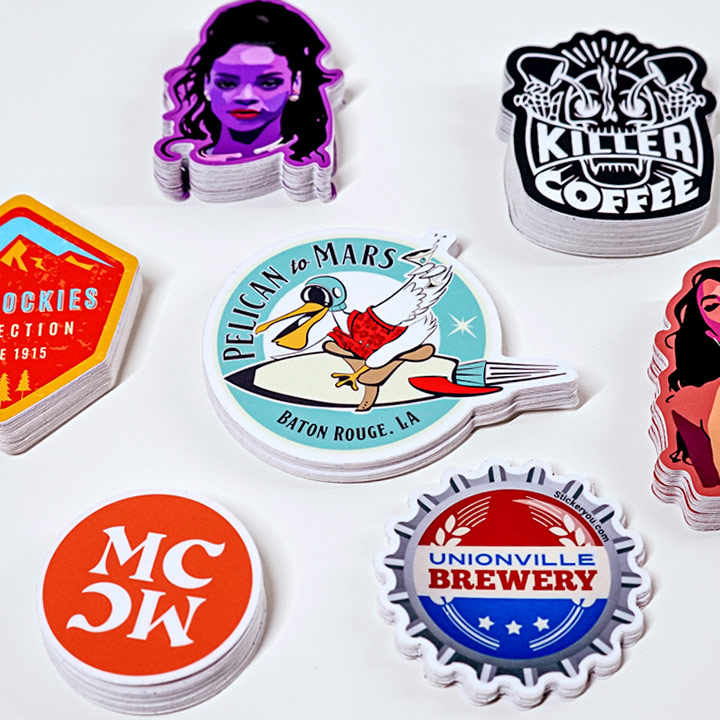
Logo stickers can transform plain boxes, bags, jars, envelopes, bottles, and other packaging into recognizable brand touchpoints. They are particularly useful for small businesses and growing retailers because they can provide a professional appearance without requiring completely custom-printed packaging for every product.
Why Logo Stickers Matter for Modern Packaging
Packaging is often the first physical interaction a customer has with a brand. Even a simple parcel can become part of the overall customer experience when it features consistent visual branding.
A well-designed sticker can communicate several things at a glance, including the company name, logo, product information, website, social media details, or a short brand message. This makes stickers useful for both practical packaging purposes and brand recognition.
For smaller businesses, logo labels can also offer flexibility. Instead of ordering large quantities of fully printed boxes, a company can use standard packaging and apply branded labels according to its product range.
This approach can be particularly useful for:
- Independent retailers
- Handmade product businesses
- Food and bakery brands
- E-commerce stores
- Subscription businesses
- Cosmetic and beauty companies
- Craft businesses
- Promotional product suppliers
- Start-up brands
The versatility of adhesive labels allows businesses to adapt their packaging as products, campaigns, or branding requirements change.
Choosing the Right Sticker Material
One of the most important decisions when creating branded packaging stickers is selecting the appropriate material. A sticker that works well on a cardboard mailer may not perform equally well on a glass jar or a refrigerated food container.
Common materials include paper and synthetic films, each with different characteristics.
Paper stickers are widely used for boxes, envelopes, paper bags, and indoor packaging. They can provide a natural or premium appearance and are available in finishes such as matte and gloss.
Vinyl stickers are generally more resistant to moisture and handling. They can be suitable for bottles, containers, outdoor applications, and products that may encounter condensation or occasional exposure to water.
Transparent labels can create a minimal appearance because the packaging material remains visible around the printed design. They can work particularly well on glass, clear plastic, and certain premium product packages.
The choice should consider the packaging surface, storage conditions, handling requirements, and desired appearance rather than simply focusing on the lowest production cost.

Design Principles for Effective Logo Labels
A sticker does not need to contain extensive information to make an impact. In many cases, simplicity improves readability and recognition.
The logo should remain clear at the intended sticker size. A design that looks excellent on a computer screen may become difficult to read when reduced to a small label.
Important design considerations include:
1. Maintain Brand Consistency
Use colors, typography, symbols, and visual elements that correspond with the wider brand identity. Consistency across packaging, websites, social media, and printed materials can make a company easier to recognize.
2. Consider Sticker Size
The sticker should be proportional to the packaging. A very small label may disappear on a large box, while an oversized sticker can overwhelm a small product.
3. Prioritize Readability
Avoid unnecessary design elements that compete with the logo. Strong contrast and clear typography can make labels easier to recognize from a distance.
4. Think About the Application Surface
Curved bottles, textured cardboard, kraft paper, and smooth plastic can require different sticker specifications. The adhesive and material should be compatible with the intended surface.
5. Prepare High-Quality Artwork
Vector-based artwork is often preferable for logos because it can be resized without losing sharpness. Businesses should also check dimensions, color settings, bleed requirements, and final artwork specifications before production.
Current Trends in Branded Packaging Stickers
Packaging trends continue to evolve alongside consumer expectations. One notable development is the growing interest in more thoughtful and environmentally conscious packaging.
Many businesses are exploring recyclable packaging materials, reduced packaging layers, water-based inks, and paper-based labeling solutions where appropriate. However, sustainability claims should be based on the actual material and disposal conditions rather than simply using terms such as “eco-friendly.”
Another trend is minimalist branding. Rather than covering an entire package with graphics, some brands use a simple logo sticker against kraft paper, white cartons, or other neutral packaging.
QR codes are also increasingly used on packaging labels. A small code can direct customers toward a product guide, website, digital menu, social media profile, authenticity information, or other online resources. When using QR codes, they should be large enough to scan reliably and tested on the final printed sticker.
Personalized and seasonal labels are another practical option. Businesses can create variations for holidays, limited editions, promotions, or special events without changing their entire packaging system.
Common Challenges and How to Solve Them
Although stickers are relatively straightforward packaging components, several issues can affect their performance.
Problem: The sticker peels away
This can happen when the adhesive is incompatible with the surface, the packaging is dusty or oily, or the product is exposed to unsuitable temperatures or moisture.
Solution: Test the adhesive and sticker material on the actual packaging before placing a large production order.
Problem: The logo looks blurry
Low-resolution artwork can produce poor results, particularly when a logo contains small text or fine details.
Solution: Use professionally prepared artwork and confirm the required resolution and file format with the printer.
Problem: Colors look different from the digital design
Screen colors and printed colors do not always appear identical because displays use light while printing relies on physical inks.
Solution: Review print specifications and, where color consistency is important, request an appropriate proof before full production.
Problem: Labels are difficult to apply
Uneven application can result in wrinkles, bubbles, or crooked branding.
Solution: Establish a simple application process and train staff to position stickers consistently. For high-volume packaging, automated or semi-automated labeling equipment may also be worth considering.
Practical Applications Across Retail and E-Commerce
The flexibility of branded stickers makes them suitable for a wide variety of packaging formats.
A bakery might use a round logo label to close a kraft paper box or paper bag. A handmade cosmetics company could place a waterproof label on a bottle or jar. An online retailer might apply a branded sticker to shipping cartons or tissue paper.
Subscription businesses can also use stickers to create consistent branding across monthly packages. Meanwhile, event companies and promotional businesses can use customized labels for temporary campaigns.
For businesses operating across different product categories, stickers can provide a modular branding system. A single packaging format can be adapted for multiple products using different labels containing product names, sizes, flavors, or collection details.
Providers such as Sky Custom Box, operating from locations in Kington and Birmingham, can be considered when businesses are developing coordinated packaging and branding solutions that combine boxes with customized labeling elements.
How to Build a Consistent Packaging Strategy
Effective packaging is rarely based on one individual component. Boxes, bags, tissue paper, stickers, inserts, and labels should work together as part of a recognizable visual system.
Before producing branded stickers, businesses should establish:
- Primary brand colors
- Approved logo versions
- Preferred typography
- Standard sticker shapes and sizes
- Packaging surfaces
- Required adhesive strength
- Product information requirements
- Storage and handling conditions
- Sustainability considerations
- Application procedures
Creating these standards can reduce inconsistencies and make future packaging projects easier to manage.
It is also useful to test packaging with real products before committing to a large print run. A small trial can reveal issues with sticker placement, adhesive performance, color reproduction, sizing, and overall presentation.
The Long-Term Value of Branded Packaging
Packaging provides repeated opportunities for customer recognition. A customer may see a logo on a delivery box, product container, shopping bag, or promotional package several times throughout their relationship with a business.
This repetition can contribute to stronger visual recognition, particularly when the design remains consistent.
The value of logo sticker printing therefore extends beyond decoration. A well-planned label can help identify products, reinforce brand presentation, provide useful information, and adapt standard packaging to different products or campaigns.
For small and growing businesses, this flexibility can be particularly valuable because packaging requirements often change as product ranges and sales channels develop.
Conclusion
Logo stickers are a practical packaging tool that combines branding, flexibility, and functionality. From e-commerce parcels and retail boxes to jars, bottles, bags, and promotional products, customized labels can help businesses create a more consistent customer experience.
Read More:
https://www.skycustombox.com/logo-sticker-printing/