As modern communication networks continue to expand, businesses need fiber infrastructure that can handle growing data requirements without creating unnecessary complexity. FSG Network supports advanced fiber connectivity solutions for environments where performance, organization, and efficient space utilization are important. One component that plays an important role in high-density fiber systems is the MPO Optical Connector, which brings multiple fiber connections together within a compact interface.
What Is an MPO Optical Connector?
An MPO Optical Connector is a multi-fiber connector designed to connect several optical fibers through one connector assembly. MPO stands for Multi-fiber Push-On, describing the push-on connection mechanism used by this connector family. Instead of requiring a separate connector for every fiber, an MPO interface can accommodate multiple fibers within a single ferrule.
This configuration makes the technology particularly useful in environments where large numbers of optical connections need to be managed within limited physical space. Data centers, telecommunications facilities, enterprise networks, and structured cabling systems can all benefit from organized multi-fiber connectivity.
The connector uses precision alignment components to position the fibers correctly during mating. Proper alignment is essential because optical signals must pass efficiently from one fiber end to another. The compact design also helps create cleaner and more manageable cabling arrangements.
How Multi-Fiber Connectivity Improves Network Design
Traditional fiber installations can require many individual connections, especially when network equipment is deployed at high density. As the number of connections increases, cable management can become more difficult. A multi-fiber approach provides a way to consolidate several optical pathways into a single connection point.
An MPO Optical Connector can therefore contribute to a more organized network architecture. Multiple fibers can be terminated together, reducing the physical footprint of certain connections and making distribution areas easier to structure.
For network planners, this can be particularly useful when designing patching environments where equipment, racks, fiber enclosures, and backbone cables must work together efficiently. However, the connector should always be selected according to the complete system design rather than simply its physical size.
Applications Across Modern Fiber Networks
High-density fiber connectivity is used in many types of communication infrastructure. Data centers are a prominent example because they contain large quantities of networking equipment within concentrated spaces. Fiber connections may run between switches, servers, patch panels, distribution frames, and other network components.
An MPO Optical Connector can be incorporated into trunk assemblies, backbone connections, modular patching systems, and other structured cabling applications. The exact arrangement depends on the equipment and transmission architecture being used.
Telecommunications networks can also benefit from multi-fiber solutions. Service providers often need organized fiber distribution systems that can accommodate current connections while leaving room for future expansion. Properly designed multi-fiber infrastructure can help support this requirement.
Important Connector Specifications
Choosing the correct connector requires attention to several technical characteristics. Fiber type is one of the first considerations. Multimode and single-mode fiber serve different applications and transmission requirements, so the connector and cable assembly should be compatible with the intended optical system.
Polishing style is another specification that may affect compatibility and performance. Depending on the application, connectors can be manufactured with different end-face configurations. The selected design must match the equipment and optical requirements of the network.
Connector gender and key orientation should also be checked before installation. These characteristics determine how components mate and help maintain the intended fiber positions. Incorrect component selection can create installation problems even when the connector appears physically compatible.
The Importance of Polarity
Fiber polarity determines how optical signals are routed between transmitting and receiving equipment. In a multi-fiber system, maintaining correct polarity becomes particularly important because several fibers are managed within the same connector assembly.
A well-designed MPO Optical Connector system should follow a defined polarity method from one end of the link to the other. Network designers and installers need to understand the polarity scheme used by their equipment, cables, and patching components before deployment.
Careful planning can prevent situations where a link is physically connected but the transmit and receive paths do not correspond correctly. Documenting fiber positions during installation can also make future troubleshooting and maintenance more efficient.
Cleanliness and Connector Care
Fiber optic connections are sensitive to contamination. Dust, particles, oils, and other debris on a connector end face can affect optical performance. Even when a connector appears clean, microscopic contamination can interfere with light transmission.
For this reason, technicians should follow appropriate inspection and cleaning procedures before mating fiber connectors. Protective caps should remain in place whenever connectors are not being used. Proper handling also helps reduce the possibility of damaging the polished surfaces.
Routine inspection is especially valuable in large network installations where connectors may be handled several times during deployment, testing, upgrades, or maintenance. Good connector care supports consistent network performance and can reduce avoidable troubleshooting.
Why Cable Management Matters
A reliable fiber system depends not only on the connector itself but also on how the complete cabling environment is designed. Fiber cables should be routed carefully and protected from excessive bending, pulling, crushing, or other mechanical stress.
Using suitable cable management systems can make dense installations easier to maintain. Proper routing also makes it simpler for technicians to identify individual connections when equipment needs to be replaced or additional links need to be installed.
With an MPO Optical Connector integrated into a structured fiber architecture, installers can organize multiple optical pathways while maintaining a cleaner distribution environment. This becomes increasingly valuable as the number of network connections grows.
Testing Before Network Activation
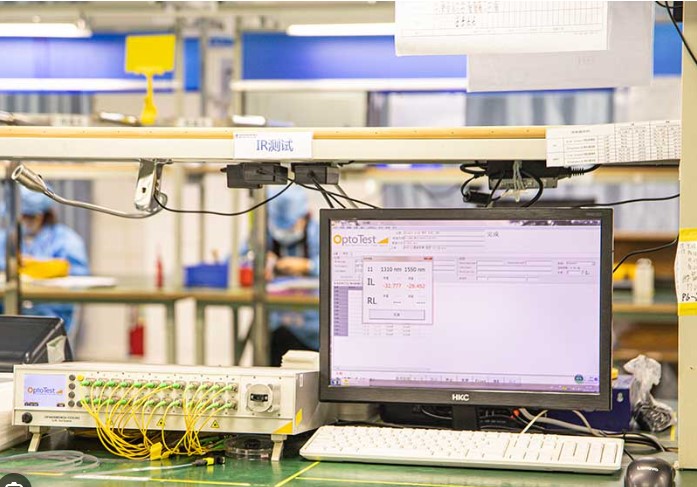
Testing is an important stage of fiber installation. Once a multi-fiber link has been assembled, technicians can inspect connector end faces and perform appropriate optical measurements to verify that the connection meets the expected requirements.
Testing may help identify problems such as contamination, damaged connector surfaces, excessive insertion loss, incorrect polarity, or poor component compatibility. Identifying these issues before a network goes into full operation can reduce interruptions later.
Documentation should also be maintained after testing. Recording cable routes, connector configurations, polarity arrangements, and test results can provide useful information for future maintenance and network expansion.
FSG Network for Modern Fiber Infrastructure
FSG Network focuses on fiber connectivity solutions that support the evolving requirements of high-density communication systems. The company works within a field where reliable passive components are essential for building organized and scalable optical infrastructure.
A well-selected MPO Optical Connector can form part of a broader fiber system that includes trunk cables, adapters, patch panels, breakout assemblies, and other connectivity components. When these elements are selected as a coordinated system, network operators can achieve a more structured approach to installation and maintenance.
The objective is to create fiber infrastructure that supports present requirements while remaining practical for future changes. Careful component selection, installation, testing, and documentation all contribute to that goal.
Planning for Future Network Expansion
Network infrastructure is rarely static. Businesses may add servers, upgrade switches, increase bandwidth, or expand their data center footprint over time. Fiber connectivity should therefore be considered with future requirements in mind.
High-density multi-fiber solutions can help network planners organize connections in a way that makes expansion more manageable. Before selecting components, it is useful to review expected fiber counts, equipment interfaces, transmission speeds, cable routes, and available rack space.
This planning approach can reduce unnecessary modifications later and help create a more predictable infrastructure environment.
Conclusion
The MPO Optical Connector provides a practical way to manage multiple optical fibers through a compact and organized connection system. Its application across data centers, telecommunications environments, enterprise networks, and structured fiber installations demonstrates the value of multi-fiber connectivity in modern infrastructure.
For dependable results, connector selection should be based on fiber type, polarity, gender, polishing requirements, equipment compatibility, cleanliness, cable management, and testing procedures. FSG Network can support organizations seeking structured fiber connectivity solutions by providing components suited to the technical demands of modern optical networks. With thoughtful planning and proper installation practices, multi-fiber connectivity can contribute to an efficient, organized, and scalable network foundation.