When it comes to home renovations, installing a central air conditioning system is a major and beneficial one since it will give the whole house a more comfortable atmosphere, plus the indoor air will be of better quality, and the property’s market value will be enhanced. Nevertheless, this task raises uncertainty among homeowners regarding the installation process and the duration of the job. Knowing each phase of the central AC installation will not only prepare your home but also help you to have realistic expectations and consequently enjoy a hassle-free experience.
Initial Home Evaluation and Load Calculation
Home installation is initially staged so that the HVAC professional can visit to appraise the residence. The expert examines various factors during the time, such as the home’s dimensions, design, thermal resistance of the walls, windows’ orientation, and the presence of ducts. A precision load calculation, which is referred to as a Manual J calculation, is done to set the needed system cooling capacity for the area to be air-conditioned.
It is very crucial to select the correct unit size. A system that is not adequately sized will have a hard time cooling your place, while a larger one may often turn on and off, which in turn will cause higher electricity bills and unequal heating/cooling.
Preparing the Home for Installation Day
The cleaning of the spaces around the installation areas may be requested from the homeowners, which includes the outdoor unit and the indoor access points, like the furnace or air handler. By doing this, the technicians will be able to work safely and efficiently.
The duct adjustments or improvements will be scheduled in advance if necessary. The situation may arise that the older houses need to have their ducts sealed or even replaced to bring the new system’s efficiency to the maximum. Furthermore, the electrical requirements will be assessed, and, if necessary, local building code permits will be applied for.
The Indoor and Outdoor Units Installation
On the installation day, the employees begin with the installation of the major components of the central air-conditioning system. The outdoor condenser unit is put on a stable and even surface, usually a concrete pad or a wall-mounted bracket. This unit is located in such a manner that it will receive good airflow, and maintenance will be easy.
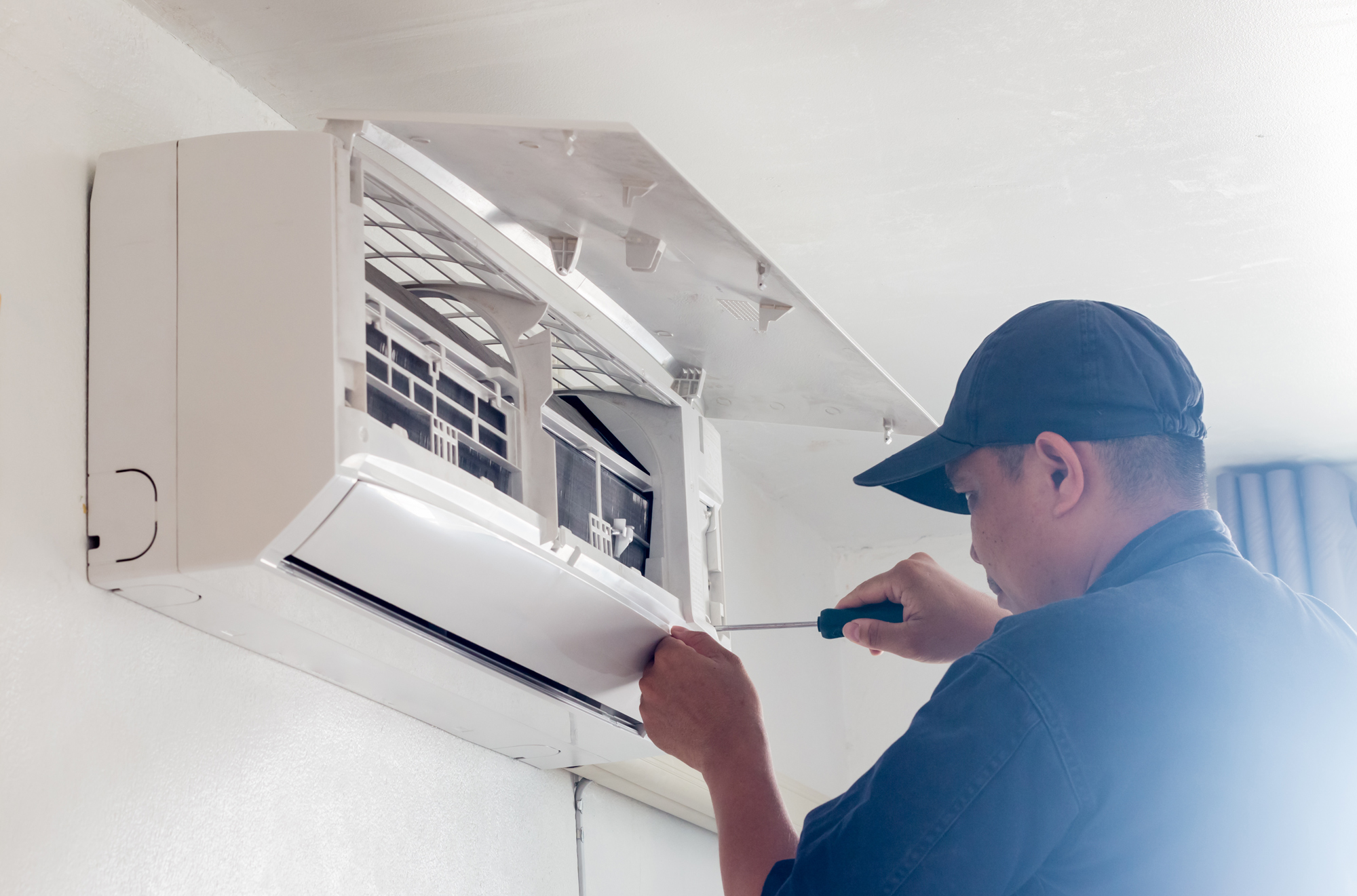
The evaporator coil is installed inside the house, next to the furnace or air handler. The technicians connect the indoor with the outdoor units by means of refrigerant lines, electrical wiring, and a condensate drain line. It is crucial that the details are given at this stage to prevent the future occurrence of problems like refrigerant leaks and water damage.
Connecting Ductwork, Electrical Systems, and Thermostat
Once all the major components of the AC system have been installed, the technician connects the new system to your existing HVAC equipment. It typically means that the ductwork has to be fitted together so that there are no gaps or leaks, allowing air to escape. During this time, the technician will often check and adjust the ducts to ensure proper airflow. As an additional benefit, sealing the ductwork helps improve home comfort and energy efficiency.
The AC installer will install an electric disconnect box next to the outside unit and wire this box into the homeowner’s electrical panel. The next step includes installing or upgrading the thermostat. Many homeowners decide to install a programmable or smart thermostat to allow for more sophisticated control over the temperatures in their house, which helps reduce energy costs.
System Testing, Calibration, and Final Walkthrough
Following these installations, the technician will inspect that the levels of refrigerant are appropriate, measure the airflow from the ducts, and verify that all the electrical components of the system are functioning. Then the technician will turn on the AC system and monitor the system to ensure that the AC is cooling effectively and maintaining consistent temperatures. Once the technician has completed the testing, he/she will provide a final overview of the operations of the system, including how to adjust the thermostat, change the air filter when necessary, and identify problems that may require maintenance. Warranty information, recommendations for maintenance, and energy-saving suggestions will be provided at this time.
The Last Words
The central air conditioning system installation in Aledo is not a simple task; it is a complex, step-by-step process that has to be done carefully and requires the support of skilled personnel. Every stage in the selection of the system, the evaluation of the house, installation, testing, and final inspection is important for the optimal performance and long-term efficiency. Moreover, homeowners who have an idea of the installation process will feel more ready, the stress will be less, and they will have the opportunity to make better choices.