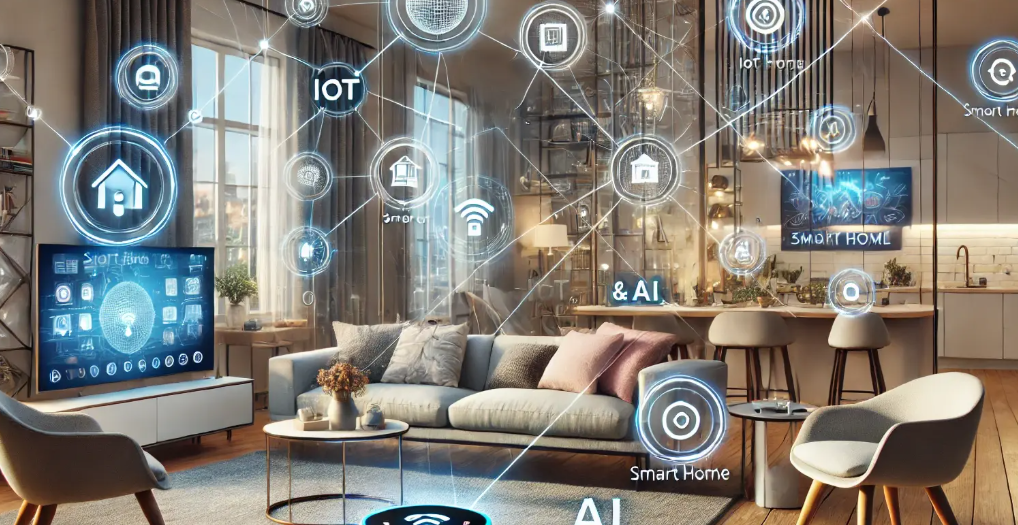
The idea of living in a smart home once felt futuristic. People imagined houses that could respond to voice commands, automatically adjust lighting, or lock doors without human effort. Today, that future has already become reality. But smart homes are now evolving far beyond basic automation. With the rise of artificial intelligence, homes are becoming more intelligent, adaptive, and personalized than ever before.
AI in smart homes is changing how people interact with technology in their everyday lives. Instead of simply following commands, modern smart home systems are learning user behavior, predicting preferences, improving security, optimizing energy usage, and creating highly connected living experiences.
From voice assistants and smart thermostats to AI-powered surveillance systems and intelligent appliances, artificial intelligence is rapidly transforming modern households into responsive digital ecosystems.
As technology continues advancing, AI is becoming one of the biggest driving forces behind the future of connected living.
Understanding AI in Smart Homes
AI in smart homes refers to the use of artificial intelligence technologies within connected household devices and systems to automate tasks, improve efficiency, and personalize user experiences.
Traditional home automation systems mainly worked through fixed rules and manual programming. For example, lights could turn on at a specific time, or thermostats could follow pre-set schedules. While these systems offered convenience, they lacked intelligence and adaptability.
Artificial intelligence changes this completely.
AI-powered smart home systems can analyze user behavior, understand patterns, process voice commands, and make decisions based on real-time information. Instead of relying only on fixed instructions, these systems continuously learn from interactions and improve over time.
For instance, an AI-powered thermostat may learn when family members usually return home and automatically adjust room temperatures before they arrive. Similarly, AI-based lighting systems can adapt brightness levels depending on time of day, occupancy, or personal preferences.
This creates a much more personalized and efficient living environment.
Why AI in Smart Homes Is Growing Rapidly
The demand for smart homes has increased significantly in recent years because people are looking for greater convenience, energy efficiency, and security. Artificial intelligence is making smart home technology more practical and useful for everyday life.
One major reason for this growth is the increasing popularity of connected devices. Smart speakers, connected appliances, intelligent cameras, and IoT devices are becoming common in households around the world. AI helps these devices communicate and function together more effectively.
Another reason is changing consumer expectations. Modern homeowners want seamless experiences where devices work together automatically instead of requiring constant manual control. AI enables homes to become more proactive rather than reactive.
The growing focus on energy conservation is also driving AI adoption. Smart systems can optimize electricity usage, reduce energy waste, and lower utility bills by learning household consumption patterns.
At the same time, advances in machine learning, cloud computing, and voice recognition technologies have made AI-powered smart homes more accessible and affordable than before.
The Role of AI in Home Automation
Home automation is one of the most visible applications of AI in smart homes. Artificial intelligence allows devices to work together intelligently and automate daily household activities.
AI-powered home automation systems can control:
- Lighting
- Air conditioning
- Heating systems
- Entertainment devices
- Curtains and blinds
- Kitchen appliances
- Smart locks
- Cleaning robots
What makes AI different from traditional automation is adaptability. Instead of following fixed schedules, AI systems learn user habits and optimize operations automatically.
For example, smart lighting systems may detect occupancy patterns and switch lights off when rooms are empty. Smart kitchen appliances can recommend cooking settings based on previous usage patterns. AI-powered robotic vacuum cleaners can learn room layouts and clean more efficiently over time.
This level of intelligent automation improves convenience while reducing manual effort in everyday household management.
AI-Powered Voice Assistants Are Becoming Household Hubs
Voice assistants have become one of the most recognizable examples of AI in smart homes. Devices powered by conversational AI allow users to interact with their homes using natural language commands.
Voice assistants can:
- Play music
- Control smart devices
- Provide reminders
- Answer questions
- Manage schedules
- Set alarms
- Control appliances
However, modern AI voice assistants are becoming much smarter than simple command-response systems. They can now understand context, recognize individual users, and provide more personalized interactions.
For example, AI assistants may recognize different family members based on voice patterns and provide customized responses according to personal preferences.
As conversational AI technologies improve, voice assistants are expected to become central control systems for future smart homes.
Enhancing Home Security With Artificial Intelligence
Security is one of the biggest reasons homeowners invest in smart home technology. AI-powered security systems are making homes safer by improving surveillance, threat detection, and real-time monitoring.
Traditional security systems often rely on simple motion detection, which can generate false alarms. AI-based systems are much more intelligent because they can analyze visual data and identify suspicious activity more accurately.
AI-powered smart security systems can:
- Recognize familiar faces
- Detect unusual behavior
- Identify unauthorized access
- Send instant alerts
- Monitor activity patterns
- Analyze security footage automatically
For example, AI surveillance cameras can distinguish between a family member, delivery person, pet, or potential intruder. This reduces unnecessary alerts and improves response accuracy.
Some advanced systems can even predict unusual activity by analyzing behavioral patterns over time.
This combination of automation and intelligent monitoring is significantly improving home security capabilities.
Energy Efficiency and Sustainability in Smart Homes
Energy management has become one of the most important applications of AI in smart homes. Many households waste electricity because of inefficient usage patterns and lack of monitoring.
AI-powered smart systems help reduce energy consumption by continuously analyzing how energy is used throughout the home.
Smart thermostats, for example, can automatically optimize heating and cooling based on occupancy patterns, weather conditions, and user preferences. AI lighting systems can reduce unnecessary energy usage by adjusting brightness levels or turning off lights when rooms are unoccupied.
Some smart home systems can even provide energy usage reports and recommend ways to improve efficiency.
This not only lowers electricity costs but also supports sustainability goals by reducing overall energy waste.
As environmental awareness grows, AI-driven energy optimization is likely to become a major priority for homeowners and businesses alike.
Personalized Living Experiences Through AI
One of the most exciting aspects of AI in smart homes is personalization. Artificial intelligence allows homes to adapt according to the preferences and lifestyles of individual users.
AI systems can learn:
- Preferred room temperatures
- Lighting preferences
- Daily schedules
- Entertainment choices
- Sleep patterns
- Appliance usage habits
For example, a smart home may automatically play preferred music in the morning, adjust lighting for relaxation in the evening, or prepare room settings based on user routines.
This creates living environments that feel more intuitive and responsive.
Over time, AI systems continue learning and improving personalization accuracy, making homes more comfortable and user-friendly.
Challenges and Concerns Around AI in Smart Homes
Despite the advantages, AI in smart homes also raises important concerns related to privacy, security, and data management.
Smart home systems collect large amounts of personal information, including voice recordings, usage patterns, camera footage, and behavioral data. Many users worry about how this information is stored, processed, and protected.
Cybersecurity risks are another major concern. Connected devices can become potential targets for hackers if proper security measures are not implemented.
There are also concerns about over-dependence on automation. As homes become increasingly AI-driven, technical failures or system outages could disrupt everyday activities.
Additionally, some users remain uncomfortable with the idea of AI systems continuously monitoring household behavior.
These challenges highlight the importance of building secure, transparent, and ethically designed smart home ecosystems.
The Future of AI in Smart Homes
The future of AI in smart homes is expected to become far more advanced and interconnected. Smart homes will likely evolve into fully intelligent environments capable of predicting user needs before commands are even given.
Future AI systems may combine:
- Predictive automation
- Emotional AI
- Advanced voice recognition
- Computer vision
- Context-aware intelligence
- Autonomous home management
For example, future homes may automatically adjust environments based on stress levels, health conditions, or mood detection. AI systems could coordinate appliances, entertainment, lighting, security, and climate control simultaneously to create highly personalized living experiences.
The integration of AI with smart cities, connected vehicles, and wearable devices may further expand the capabilities of smart homes in the coming years.
As technology continues evolving, smart homes may become increasingly autonomous, adaptive, and energy-efficient.
Final Thoughts
AI in smart homes is transforming the way people experience everyday living. What once began as simple automation has evolved into intelligent systems capable of learning, adapting, and responding to human behavior in real time.
From home automation and voice assistants to security monitoring and energy optimization, artificial intelligence is making homes more convenient, efficient, and personalized than ever before.
While challenges related to privacy and security still exist, the potential benefits of AI-powered smart homes continue driving rapid innovation across the industry.
As artificial intelligence becomes more advanced, smart homes are expected to move beyond convenience and become intelligent living ecosystems that actively improve comfort, sustainability, safety, and overall quality of life.
The future of modern living is becoming increasingly connected, and AI is at the center of this transformation.