Artificial intelligence is evolving faster than most businesses expected. A few years ago, enterprises were experimenting with AI chatbots and automation tools mainly to improve customer service or reduce manual work. Today, companies are looking for something much bigger. They want AI systems that can understand business context, retrieve accurate information, make decisions, and even perform tasks across different enterprise systems. This growing demand is what is driving the rise of agentic RAG implementation in enterprise environments.
Many organizations are now realizing that traditional AI systems are no longer enough for complex business operations. Enterprises deal with huge volumes of data, multiple software platforms, changing workflows, and customer expectations that continue to grow every year. In such situations, businesses need AI that does more than just answer questions. They need AI systems that can think, reason, analyze, and act intelligently.
This is exactly where agentic RAG is transforming enterprise AI.
Understanding the Meaning of Agentic RAG
To understand agentic RAG, it is important to first understand Retrieval-Augmented Generation, also known as RAG. Traditional RAG systems combine large language models with external knowledge sources. Instead of relying only on pre-trained information, these systems retrieve data from company databases, documents, or knowledge repositories before generating a response.
This approach helps improve response accuracy and reduces the chances of AI hallucinations. For example, if an employee asks an AI assistant about company policies, the system retrieves the latest policy documents and then generates an answer based on real organizational data.
However, traditional RAG systems still have limitations. They mainly focus on retrieving information and generating responses. They cannot independently plan tasks, analyze multiple workflows, or make decisions based on changing enterprise situations.
Agentic RAG takes this concept much further.
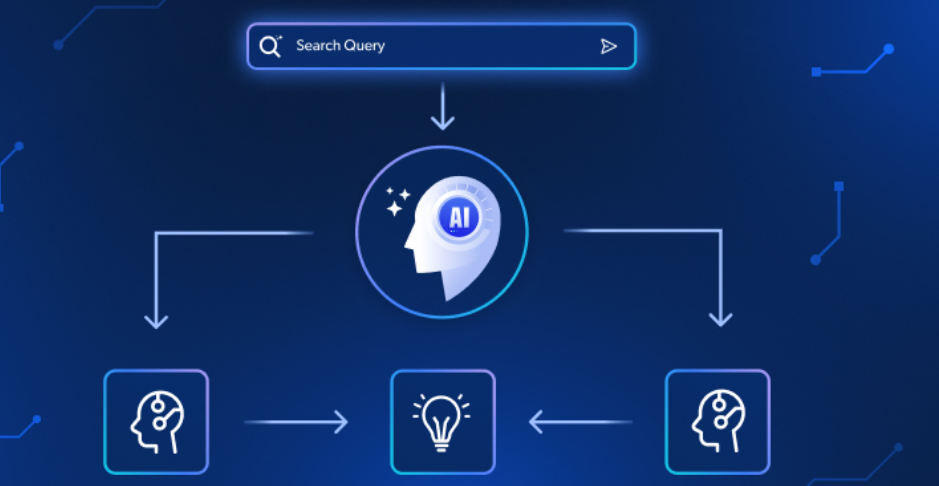
In an agentic RAG implementation, AI systems behave more like intelligent agents rather than simple assistants. These AI agents can reason through problems, break large tasks into smaller actions, decide which tools to use, verify retrieved information, and even coordinate with multiple systems to complete business operations. Instead of only answering queries, agentic RAG systems can actively solve enterprise problems.
Why Enterprises Are Showing Interest in Agentic RAG
Businesses today operate in highly data-driven environments. Every department generates large amounts of structured and unstructured information. Employees often struggle to find the right information quickly because company knowledge is spread across emails, documents, dashboards, cloud storage, CRM systems, and internal applications.
Traditional automation systems are not flexible enough to handle these complexities. This creates delays, inefficiencies, and operational bottlenecks across organizations.
Agentic RAG solves many of these challenges by combining intelligent retrieval with autonomous reasoning. It allows enterprises to create AI systems that can understand workflows, retrieve business data, and make contextual decisions in real time.
For example, a customer support AI agent can access customer history, retrieve relevant troubleshooting guides, analyze previous interactions, and generate personalized solutions without requiring human agents to manually search for information. Similarly, finance departments can use agentic RAG systems to analyze reports, identify anomalies, and prepare compliance summaries automatically.
This shift is making enterprise AI more operational and less dependent on human intervention for repetitive tasks.
How Agentic RAG Works Inside Enterprise Systems
An enterprise agentic RAG system is usually built using multiple interconnected layers. At the center of the system is a large language model that acts as the reasoning engine. This model understands queries, interprets instructions, and generates responses.
Connected to the language model is a retrieval system. This retrieval layer allows the AI to access enterprise knowledge stored in vector databases, cloud repositories, CRMs, ERPs, internal documentation systems, and other data platforms. The retrieval system ensures that the AI always works with updated and relevant information.
The most important layer is the agent framework itself. AI agents can independently decide how to complete a task. They may retrieve data, compare information, trigger APIs, analyze workflows, or even ask follow-up questions before completing an action.
For example, if an enterprise executive asks an AI system to generate a quarterly business summary, the agentic RAG system may retrieve sales reports, analyze customer feedback data, compare financial metrics, identify business trends, and generate a complete report automatically.
This level of intelligence is what differentiates agentic RAG from traditional enterprise AI systems.
The Role of Agentic RAG in Enterprise Automation
One of the biggest reasons businesses are investing in agentic RAG is enterprise automation. Companies are constantly looking for ways to reduce manual workloads and improve operational efficiency.
Traditional automation tools follow predefined workflows. They work well for repetitive tasks but struggle when business situations change. Agentic RAG systems are different because they can adapt dynamically based on context.
For instance, in supply chain management, an AI agent can monitor inventory levels, analyze logistics delays, retrieve supplier information, and suggest procurement decisions based on real-time operational data. Instead of following rigid instructions, the AI continuously evaluates changing business conditions.
This flexibility makes agentic RAG highly valuable for enterprises operating in unpredictable or fast-moving industries.
Improving Enterprise Knowledge Management
Knowledge management has become one of the biggest operational challenges for large organizations. Employees waste significant time searching for information scattered across departments and platforms.
Agentic RAG systems help solve this problem by creating intelligent enterprise knowledge assistants. These systems can retrieve relevant documents, summarize reports, compare policies, and answer complex questions using contextual understanding.
For example, an HR employee may ask the AI assistant about remote work policies for international employees. Instead of providing generic responses, the system can retrieve the latest HR guidelines, regional compliance rules, and internal documentation before generating a highly accurate answer.
This improves employee productivity while reducing dependency on manual searches and internal communication delays.
Enhancing Customer Experience Through Agentic AI
Customer experience is another major area where agentic RAG implementation is delivering strong enterprise value. Modern customers expect quick, personalized, and accurate support across multiple channels.
Traditional chatbots often fail when customer issues become complex because they lack contextual understanding. Agentic RAG systems improve customer interactions by combining retrieval intelligence with autonomous reasoning.
For example, if a customer reports a technical issue, the AI system can retrieve product documentation, analyze previous tickets, identify common failure patterns, and generate troubleshooting recommendations in real time. If necessary, it can also escalate the issue to the correct department automatically.
This creates faster resolution times and significantly improves customer satisfaction.
Security and Compliance Considerations
While agentic RAG offers significant advantages, enterprises must also address important security and compliance concerns. Since these systems access sensitive organizational data, businesses need strong governance frameworks.
Enterprises must ensure proper access control, data encryption, authentication mechanisms, and audit tracking. AI agents should only retrieve information based on user permissions and organizational policies.
Industries such as healthcare, banking, and insurance require especially strict compliance measures because of sensitive customer data and regulatory obligations.
This is why many enterprises are building private AI infrastructures or deploying hybrid cloud environments to maintain better control over enterprise data security.
Challenges Enterprises Face During Implementation
Implementing agentic RAG systems is not always simple. Many organizations face technical and operational challenges during deployment.
One of the biggest challenges is poor data quality. Enterprise data is often fragmented, outdated, or inconsistent. If the retrieval system accesses low-quality information, AI outputs may become unreliable.
Integration complexity is another common issue. Large enterprises use multiple software platforms that may not easily connect with modern AI systems. Building smooth integrations between CRMs, ERPs, APIs, cloud systems, and internal tools requires significant planning and technical expertise.
Cost management also becomes important because enterprise-scale AI systems require computational infrastructure, vector databases, continuous retrieval pipelines, and model inference resources. Without optimization strategies, implementation costs can rise quickly.
Despite these challenges, many enterprises still see agentic RAG as a long-term strategic investment because of its potential to transform operations.
The Future of Agentic RAG in Enterprise AI
The future of enterprise AI is moving toward autonomous intelligence. Businesses no longer want AI systems that simply respond to commands. They want systems that can collaborate, reason, automate workflows, and support strategic decision-making.
Agentic RAG is expected to become one of the foundational technologies behind next-generation enterprise operations. In the coming years, enterprises may deploy specialized AI agents for finance, customer service, compliance, operations, sales, HR, and supply chain management.
These systems will likely work together across enterprise ecosystems, creating connected AI environments capable of handling highly complex business processes with minimal human involvement.
As large language models continue improving and enterprise AI infrastructure becomes more mature, agentic RAG implementation will likely become a competitive necessity rather than an optional innovation.
Final Thoughts
Agentic RAG implementation in enterprise environments represents a major shift in how businesses use artificial intelligence. Instead of relying on static chatbots or isolated automation systems, enterprises are now building intelligent AI agents capable of retrieving knowledge, reasoning through problems, and executing tasks across business workflows.
This technology is helping organizations improve operational efficiency, enhance customer experiences, strengthen knowledge management, and automate complex enterprise processes in ways that were previously difficult to achieve.
Although implementation comes with challenges related to security, integration, and infrastructure, the long-term potential of agentic RAG is enormous. Businesses that successfully adopt this technology early may gain significant advantages in productivity, scalability, and intelligent decision-making.
As enterprise ecosystems continue evolving, agentic RAG is rapidly becoming one of the most important innovations shaping the future of enterprise AI.