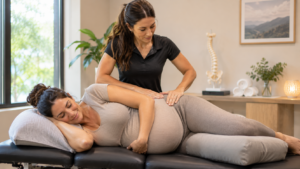
The daily habits that help arthritis most are regular joint-friendly movement, strengthening the muscles that support sore joints, good posture at work and at home, smart use of heat and cold, steady sleep and a healthy weight. Hands-on care can help, but what you do the other 23 hours of the day usually matters more.
I say that to almost everyone who asks me about arthritis. People often come in hoping for one treatment that makes the stiffness disappear. What actually changes how they feel, week after week, is a handful of small habits repeated consistently.
This guide walks through those habits from morning to night: how to handle morning stiffness, how to move safely, how to set up your workspace, how to protect joints during chores, how to handle flares, and where a chiropractor for arthritis in Charlotte, NC fits in. If your arthritis is tangled up with slouching at a desk or stiffness after long drives, it’s worth understanding how posture correction in Charlotte works too, because posture and arthritis affect each other more than most people realize.
How common is arthritis?
Arthritis is one of the most common chronic conditions in the United States. According to CDC arthritis FastStats from the National Center for Health Statistics, 21.3% of adults aged 18 and older had diagnosed arthritis in 2024. That’s roughly one in five adults.
Those numbers matter because they show you’re far from alone, and because the habits that help are well studied. Arthritis isn’t something you just have to put up with. In my experience, people who build a few good routines often feel more capable within weeks, even when the arthritis itself hasn’t changed.
Mornings: getting past the stiffness
Morning stiffness is one of the most common arthritis complaints, and the best way to ease it is to warm up gently before you ask your joints to do much. Many people with osteoarthritis notice stiffness that fades within a short time of moving. Stiffness that lasts much longer, especially with swollen joints, is worth discussing with your doctor because it can point to inflammatory arthritis.
A simple five-minute morning routine
- Before you get up: Lying on your back, gently bend and straighten your knees, rotate your ankles and open and close your hands ten times.
- Knees to chest: Hug one knee toward your chest, then the other, holding each for a few breaths.
- Roll to your side: Push up with your arms instead of sitting straight up, which is easier on the lower back.
- Seated neck turns: Sitting on the edge of the bed, slowly turn your head left and right, then tip each ear toward your shoulder.
- Warm water: A warm shower loosens stiff muscles and joints for many people.
Give your body a few minutes before rushing into the day. A morning that starts with a sprint to the car often ends with a sore back by lunchtime.
Movement: the most important habit
Regular joint-friendly movement is the single most effective self-care habit for arthritis. CDC guidance on physical activity for arthritis says joint-friendly activity can improve arthritis pain, function, mood and quality of life. It recommends adults with arthritis aim for at least 150 minutes a week of moderate-intensity activity such as brisk walking, plus at least 2 days a week of muscle-strengthening activity, and balance work. If you can’t reach that yet, CDC advises staying as active as your health allows, because some activity is better than none.
That sounds like a lot, but it breaks down to about 30 minutes, five days a week. You can split it into 10-minute pieces.
Joint-friendly activities to try
- Walking. Free and easy to fit in. Charlotte’s greenways, like Mallard Creek and Little Sugar Creek, offer flat, paved paths.
- Swimming and water exercise. Water supports your weight, which takes pressure off sore hips and knees.
- Cycling. A stationary bike or a gentle ride is easy on the joints and builds leg strength.
- Yoga and tai chi. Good for flexibility, balance and calm. Look for beginner or gentle classes.
- Strength training. Light weights, resistance bands or bodyweight exercises like sit-to-stands help support joints.
How to start safely
- Start with 5 to 10 minutes and add a few minutes each week.
- Warm up with gentle movement first.
- Mild soreness that fades within a day or so is usually fine. Sharp pain or swelling that lasts is a sign to back off.
- Talk with your doctor before starting if you have heart, lung or other serious health conditions.
A chiropractor for arthritis in Charlotte, NC can help you choose exercises that fit your joints, check how you’re moving and suggest changes when something hurts.
Posture at work and at home
Good posture reduces strain on arthritic joints in the neck and back by keeping the head balanced over the shoulders and the lower back supported. Many people with spinal arthritis feel worse after long hours slumped at a desk or on the couch.
Desk setup
- Screen at eye level. Raise your laptop on books or a stand, and use a separate keyboard.
- Feet flat. Use a footrest if your feet don’t reach the floor.
- Lower back support. A small cushion or rolled towel behind your lower back helps.
- Elbows close. Keep the keyboard and mouse near your body so your shoulders stay relaxed.
- Move often. Stand up and walk for a minute or two every 30 to 60 minutes.
Phones and tablets
Looking down at a phone for long periods puts extra load on the neck. Hold your phone closer to eye level, and take breaks. If shoulder stiffness is part of your arthritis picture, Trinity Family Chiropractic has a page on shoulder pain treatment in Charlotte that explains how shoulder problems are evaluated.
Driving
Charlotte traffic can mean long stretches in the car. Sit fairly upright, keep your seat close enough that your knees are slightly bent, and use lumbar support. On longer trips, stop to stretch every hour.
Protecting your joints during daily tasks
Joint protection means doing everyday tasks in ways that spread the load across stronger joints and muscles, so sore joints don’t take all the stress. Small changes make a big difference over a day.
- Lift with your legs. Bend your knees, keep objects close and avoid twisting.
- Use bigger joints. Carry bags on your forearm or shoulder instead of gripping with your fingers.
- Use tools. Jar openers, thick-handled utensils, long-handled reachers and rolling carts reduce strain.
- Pace yourself. Break big chores like yard work into shorter sessions with rest in between.
- Sit for some tasks. Use a stool while cooking or folding laundry.
- Wear supportive shoes. Cushioned, supportive footwear helps knees, hips and the lower back.
- Consider supports. Braces, canes or splints can help, especially during flares. Ask your provider which is right for you.
Heat, cold and other home comfort tools
Heat usually helps stiffness and tight muscles, while cold usually helps a joint that feels sore or irritated after activity. Many people use both at different times of day.
- Heat: Warm showers, heating pads on a low setting, or warm packs for 15 to 20 minutes. Great before activity or first thing in the morning.
- Cold: Ice packs wrapped in a towel for 10 to 15 minutes after activity or when a joint feels sore.
- Gentle massage: Light self-massage or a massage ball for tight muscles around sore joints.
- Topical creams: Some people find over-the-counter creams helpful. Ask your doctor or pharmacist which is safe for you.
Never apply extreme heat or cold directly to skin, and be extra careful if you have reduced sensation, diabetes or circulation problems.
Food, weight and inflammation
A healthy weight takes pressure off weight-bearing joints like the knees, hips and lower back, and a diet built around whole foods supports overall health. You don’t need a perfect diet. Small, steady changes add up.
- Fill half your plate with vegetables and fruit.
- Choose whole grains, beans and lentils.
- Include omega-3 foods like fish, walnuts and flaxseed.
- Cut back on sugary drinks, sweets and heavily processed snacks.
- Drink plenty of water.
If you’re thinking about supplements or a big diet change, talk with your doctor or a registered dietitian first, especially if you take medications.
Sleep and arthritis
Poor sleep makes pain feel worse, and pain makes sleep harder, so protecting your sleep is one of the most useful things you can do for arthritis. Many people with spinal arthritis wake up stiff because of their sleeping position or an unsupportive mattress.
- Side sleepers: Put a pillow between your knees to keep your hips and lower back aligned.
- Back sleepers: A pillow under your knees eases pressure on the lower back.
- Neck support: Choose a pillow that keeps your head level with your spine, not propped up or dropping down.
- Avoid stomach sleeping if you have neck arthritis, since it forces your neck to stay turned for hours.
- Wind down. Put screens away before bed and keep a regular sleep schedule.
Handling flare-ups
During an arthritis flare, scale back activity rather than stopping completely, use heat or cold for comfort, protect the sore joint, and call your doctor if the flare comes with major swelling, redness, fever or symptoms that are new for you. Flares are frustrating, but having a plan makes them easier to get through.
- Ease off, don’t stop. Swap your usual walk for gentle range-of-motion exercises.
- Use your comfort tools. Heat for stiffness, cold for soreness.
- Rest the joint without immobilizing it. A few days of lighter use, then gradually return.
- Protect your sleep. Adjust pillows and positions.
- Track what happened. Note what might have triggered the flare: overuse, poor sleep, stress, weather or a missed medication.
- Call your doctor for flares that are severe, unusual or not settling, especially with rheumatoid or psoriatic arthritis.
When arthritis affects your nerves
Arthritis in the spine can sometimes narrow the spaces where nerves leave the spine, causing pain, tingling or numbness that travels into the arms or legs. In the lower back, that can feel like sciatica running down the back of the leg.
If leg pain is part of your arthritis picture, it’s worth understanding how sciatica relief in Charlotte is approached, since spinal arthritis and sciatica often overlap. Numbness, weakness or changes in bladder or bowel control need a medical evaluation right away.
Where a chiropractor for arthritis fits in
A chiropractor for arthritis in Charlotte, NC can support these daily habits with gentle care that keeps stiff joints moving, soft tissue work for tight muscles, and coaching on exercise, posture and joint protection. It works best alongside your doctor’s care, not instead of it.
Here’s what that usually includes:
- A thorough history and exam, with imaging only when the exam calls for it
- Gentle, low-force adjustments or mobilization for stiff spinal joints
- Soft tissue therapy for tight muscles
- Exercise and stretching advice matched to your joints
- Posture and workspace suggestions
- Regular check-ins to see what’s working
Trinity Family Chiropractic, for example, uses Torque Release Technique, a gentle method without twisting or cracking, which suits many people with stiff, arthritic joints. You can see the full range of family chiropractic services in Charlotte the practice offers, from prenatal to auto injury care.
Chiropractic care can’t reverse joint damage or cure arthritis, and inflammatory types like rheumatoid arthritis need medical treatment first. People with rheumatoid arthritis in the neck should avoid forceful neck adjustments. A careful chiropractor will ask about your diagnosis and coordinate with your doctor when needed.
Five beginner strength exercises for arthritis
Strengthening the muscles around arthritic joints helps them share the load, so the joint itself takes less stress. These five beginner exercises need no equipment. Start with one set of 5 to 10 repetitions, move slowly, and stop if anything causes sharp pain. Check with your doctor or physical therapist first if you’ve had a joint replacement or recent surgery.
- Sit-to-stand. Sit on a sturdy chair, cross your arms or rest them on your thighs, and stand up slowly, then sit back down with control. This builds the thighs and hips that support your knees and lower back.
- Wall push-ups. Stand an arm’s length from a wall, place your hands on it at shoulder height, and bend your elbows to bring your chest toward the wall. Push back out. Good for shoulders and arms without loading the wrists too much.
- Glute bridge. Lie on your back with knees bent and feet flat, then lift your hips gently off the floor and lower them. This supports the lower back and hips.
- Heel raises. Holding a counter for balance, rise onto your toes and lower slowly. Helps calves and balance.
- Seated leg extensions. Sitting tall, straighten one knee, hold for a breath, then lower. Strengthens the front of the thigh, which supports the knee.
Do these two or three days a week, with a rest day in between. As they get easier, add a few repetitions or a second set. A chiropractor for arthritis in Charlotte, NC or a physical therapist can check your form and suggest the right next steps for your joints.
Stress, mood and arthritis pain
Stress and low mood can make arthritis pain feel worse, and living with ongoing pain can increase stress, so caring for your mental health is part of caring for your joints. Many people notice their stiffness and aches are harder to cope with during busy, stressful weeks.
- Breathe slowly. A few minutes of slow breathing, in for four and out for six, can calm a tense body.
- Stay connected. Walk with a friend, join a class or find a local arthritis support group.
- Do something you enjoy every day, even if it’s small.
- Talk to your doctor if you feel down, anxious or hopeless for more than a couple of weeks. Help is available, and treating mood often makes pain easier to manage.
Arthritis habits through Charlotte’s seasons
Charlotte’s chilly winter mornings and hot, humid summers can both affect how arthritic joints feel, so it helps to adjust your routine with the seasons rather than letting the weather knock you off track.
- Winter: Warm up indoors before going out, dress in layers, and keep hands and knees warm. Mall walking or an indoor pool can keep you moving on cold, wet days.
- Spring and fall: These are great seasons for greenway walks and yard work. Pace big outdoor projects, and stretch before and after.
- Summer: Exercise early in the morning or in the evening, drink plenty of water, and try water exercise when it’s hot.
- All year: Keep a simple diary of weather, activity, sleep and pain. It helps you spot your own patterns.
Building your arthritis support team
The people who manage arthritis best usually have a small team: a primary care doctor, a specialist such as a rheumatologist or orthopedist when needed, and supportive providers like a physical therapist, a chiropractor or a dietitian. Each plays a different role, and they work best when they know what the others are doing.
- Primary care doctor: Diagnosis, overall health, medications and referrals.
- Rheumatologist: Essential for rheumatoid, psoriatic and other inflammatory arthritis.
- Orthopedist: For advanced joint damage, injections or surgery decisions.
- Physical therapist: Strength, mobility and exercise programs.
- Chiropractor: Gentle care for stiff spinal joints, soft tissue work, and posture and movement coaching.
- Dietitian: Support with weight and eating habits.
When you choose a chiropractor for arthritis in Charlotte, NC, look for one who asks about your diagnosis and medications, uses gentle methods, gives you exercises to do at home and is happy to coordinate with your doctor. Those details tell you a lot about whether care will fit into your bigger plan.
Staying productive at work with arthritis
Many people with arthritis are of working age, and small changes at work, like adjusting your workstation, building in movement breaks and planning demanding tasks for the times your joints feel best, can make a full workday much more manageable. You don’t have to choose between your job and your joints.
- Know your best hours. If mornings are stiff, schedule focused desk work for later and save lighter tasks for early in the day.
- Set movement reminders. A quick stretch or a walk to refill your water every 30 to 60 minutes keeps joints from locking up.
- Ask about equipment. An adjustable chair, a sit-stand desk, an ergonomic mouse or a headset can reduce strain on the neck, shoulders and hands.
- Break up repetitive tasks. Alternate typing, phone calls and standing tasks rather than doing one for hours.
- Protect your commute. Use lumbar support in the car, and stretch for a minute before you start driving home.
- Talk to your employer if you need reasonable changes. Many workplaces are open to small adjustments.
For people who work long hours at a desk in Uptown, South End or University City, I often see the same pattern: a stiff neck and lower back by mid-afternoon that feels much worse than the arthritis itself. Fixing the setup and adding movement breaks usually helps more than people expect. A chiropractor for arthritis in Charlotte, NC can look at how you sit and move at work and suggest changes that suit your joints, while a physical therapist or occupational therapist can help with more detailed workplace adaptations.
The goal is simple: finish the workday with enough energy and comfort left to enjoy your evening. When that starts happening regularly, it’s a strong sign your habits and any support from a chiropractor for arthritis in Charlotte, NC are working together.
A simple daily checklist
If all of this feels like a lot, start with a short checklist and add more as it becomes routine:
- Five minutes of gentle movement before getting out of bed
- A 10-minute walk, at least once a day
- One posture check every hour at work
- Heat in the morning, cold after activity if needed
- Two strength sessions this week
- Screens off 30 minutes before bed
- One healthy swap in your meals each day
Tick off what you did each day. After a month, look back and notice what changed. Most people are surprised by how much easier everyday tasks become when these habits stack up.
Frequently asked questions
1. How can a chiropractor for arthritis in Charlotte, NC help with daily stiffness?
Gentle adjustments, joint mobilization and soft tissue work can help stiff joints move more comfortably, while exercise and posture coaching help you keep that progress at home.
2. How much exercise should I do with arthritis?
CDC recommends at least 150 minutes a week of moderate activity plus two days of strength training for adults with arthritis, but any amount helps. Start small and build up.
3. What is the best exercise for arthritis?
Low-impact activities like walking, swimming, cycling, yoga and tai chi, plus light strength training. The best one is the one you enjoy and will keep doing.
4. Should I rest or move during an arthritis flare?
Ease off rather than stopping completely. Gentle range-of-motion exercises help keep joints from stiffening. Call your doctor for severe or unusual flares.
5. Does posture affect arthritis pain?
Yes, especially in the neck and lower back. Long periods of slouching or looking down can increase strain on arthritic spinal joints.
6. Is heat or cold better for arthritis?
Heat usually helps stiffness, especially in the morning. Cold usually helps a joint that feels sore after activity. Many people use both.
7. Can losing weight help arthritis?
For many people, a healthier weight reduces pressure on the knees, hips and lower back. Talk with your doctor about a safe approach.
8. What sleeping position is best for spinal arthritis?
Side sleeping with a pillow between your knees, or back sleeping with a pillow under your knees, usually works well. Avoid stomach sleeping if your neck is affected.
9. Are joint braces helpful for arthritis?
They can be, especially for knees, wrists and thumbs during flares or demanding tasks. Ask your provider which support fits your needs.
10. When should I see a doctor about arthritis symptoms?
See a doctor for hot, swollen joints, long morning stiffness, fever, weight loss, night pain, numbness, weakness or bladder and bowel changes.
Final thoughts
Living well with arthritis isn’t about one big fix. It’s about small, steady habits: moving most days, strengthening the muscles that support your joints, sitting and sleeping in ways that reduce strain, using heat and cold wisely and getting through flares with a plan.
Start with one or two habits from this guide and build from there. Pay attention to what helps, and share your notes with your doctor and any other providers you see. The goal isn’t perfection. It’s being able to do more of what you enjoy with less stiffness and pain.
If you’d like support building those habits, a gentle, careful chiropractor for arthritis in Charlotte, NC can be a helpful partner alongside your doctor. When you’re ready, learn how Trinity Family Chiropractic approaches arthritis care in Charlotte, NC and book a visit to talk through your goals and your daily routine.