Everyone has a different learning pattern. In a workplace, the L&D team is responsible for ensuring a consistent level of understanding of content and skill development across workers.
For personalised training, L&D relies on mobile-based programs, such as augmented reality solutions and m-learning. These two services work in a similar setup but still provide very distinct experiences for learners.
For the effective use of one of these technologies or the combination of both. We need to have complete knowledge of its properties, advantages, disadvantages, and career uses.
What are augmented reality solutions?
This process entails scanning a real object with a smartphone, AR glasses, or headsets. The screen of the device will show the needed information about the object. This is used for gaming, virtually trying clothes or makeup, and efficient learning.
Learning in augmented reality solutions takes place by showing all the relevant information on the screen. The learner does not have to look away and understand any extra diagram by themselves, and it has been researched that content is more retainable when the learner is presented with the surroundings with the right equipment rather than just watching lectures.
The advantages and disadvantages of AR
Advantages
- Augmented reality solutions give real-world practice opportunities without any real risk or threatening consequences.
- Better engagement and retention for learners due to quality visuals and precise information on a single command.
- The course is self-paced, which gives learners an opportunity to revisit the same module more than once for better retention.
- One can scan an object and have a clear manual about its operation and working, or any other information, supporting on-the-go learning.
Disadvantages
- The program needs 3D visuals, many tools, and specialised developers, which makes it expensive to design.
- Augmented reality solutions are a new technology, and older devices were not made to support it. Older generations of mobiles may lag when using AR.
- This technology brings a fascinating change in learning formats. Learners might get distracted by results instead of learning.
- Most of the AR programs do not support SCORM and xAPI, which makes tracking improvements significantly harder.
What are mobile learning solutions?
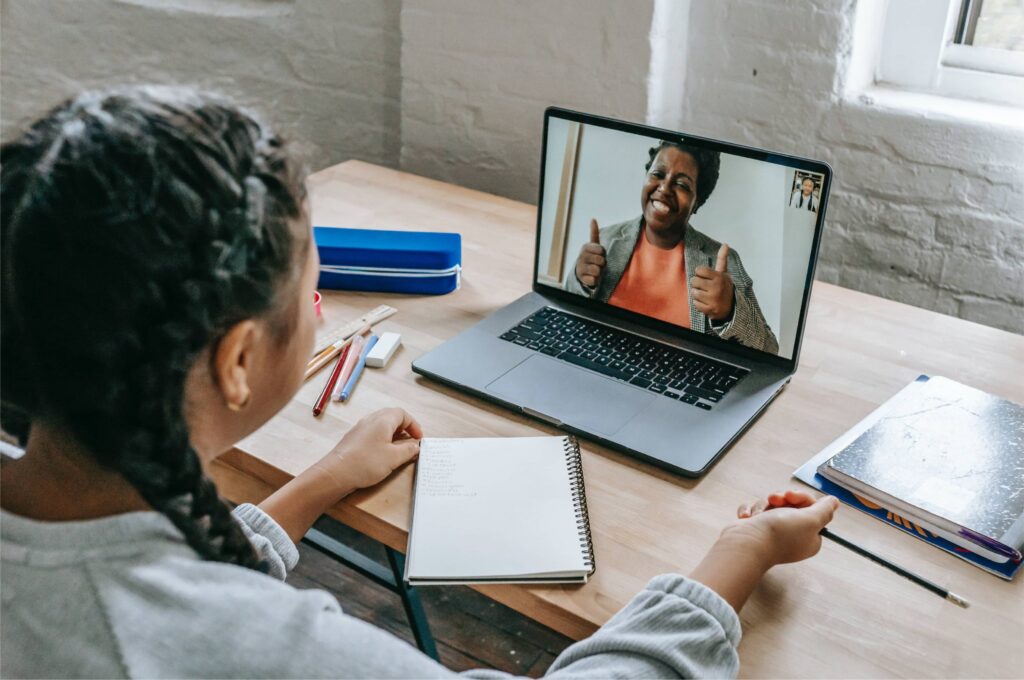
M-learning solutions provide learning through video explanations, short quizzes, and microlearning, all on a portable device such as a mobile, laptop, or tablet. The learner can access the program on the LMS or any other platform chosen by the vendor.
Learners should start by attending a session and testing their knowledge in assessments, and gradually build their disciplined schedule around the learning journey. It provides flexibility to learners and affordability to the organisation.
The advantages and disadvantages of ML
Advantages
- Learners do not need to travel and reach any specific venue. The classes are available on mobile.
- Shifts the weight of sitting through long lectures, which was common in traditional desktop programs.
- The learners can watch a quick how-to session for minor tasks such as LMS guidelines. This improves performance.
- The program entails video lectures, audio options, PPTs, gamification elements, and AR to support the complete needs of learners in different industries.
Disadvantages
- Mobile has a limited screen space that cannot support detailed information and diagrams.
- Phones are mostly used for entertainment purposes; learners might get distracted during learning.
- People living in remote areas do not have stable internet services, and that becomes the reason for the delay in training.
- Mobile phones are more traceable and easier to hack than a desktop. In bringing your own device system, workers might face data breaches.
Difference Between Augmented Reality and M-learning
| Purpose | Augmented reality solutions | M-learning solutions |
| Learners’ view | They see the real instructions and knowledge through the screen. | In this, learners watch video lectures and complete quizzes on screen. |
| Device required | A smartphone with a camera and tools for operating. | Any portable device, such as a mobile or tablet. |
| Affordability | AR is generally expensive due to its high-quality build. | In comparison, this is more cost-effective. |
| Operating location | Learners need to be close to the object for scanning and working. | This can take place anywhere and anytime on a mobile. |
| Scalable | Augmented reality solutions’ content is not scalable for workplaces. | One course can be shared among different teams. |
| Tracking and analytics | Many vendors are still trying to find ways to track activities. | Both SCORM and xAPI are pre-built for detailed analytics. |
| Learning goals | Mainly used by on-site workers for physical understanding. | Best for critical thinking tasks and knowledge acquiring. |
| Type of content | Skills focused, product handling, and surgical | Knowledge-based: compliance training and soft skills |
AR and ML for training workforce
Augmented reality solutions and mobile learning have excelled in training in multiple fields, independent of each other. Both of these technologies are meant to provide distinct qualities. One is for guiding a worker or learner through the process with on-the-go instructions, while the other follows spaced repetition and is more reliable for building skills over time.
Combining them for different practices can be beneficial for learners and the organisation since each format can take an area of expertise. For example,
- Field technician: the worker can complete the basic compliance training with m-learning, and when they are providing services to customers, for better results the can scan the object and have clear solutions.
- For retail companies: when launching a new product, the staff can learn to pitch and sell the product, and customers can scan the product, and then augmented reality solutions will provide a virtual view of how the piece will look in any surrounding.
Final Thought
For each learner, the way of learning something new varies; one could choose either augmented reality solutions or m-learning, but the work requires both the precision of AR technology and the repetitive learning properties of mobile learning. The organisations should blend both features to create an optimal working program for their team.