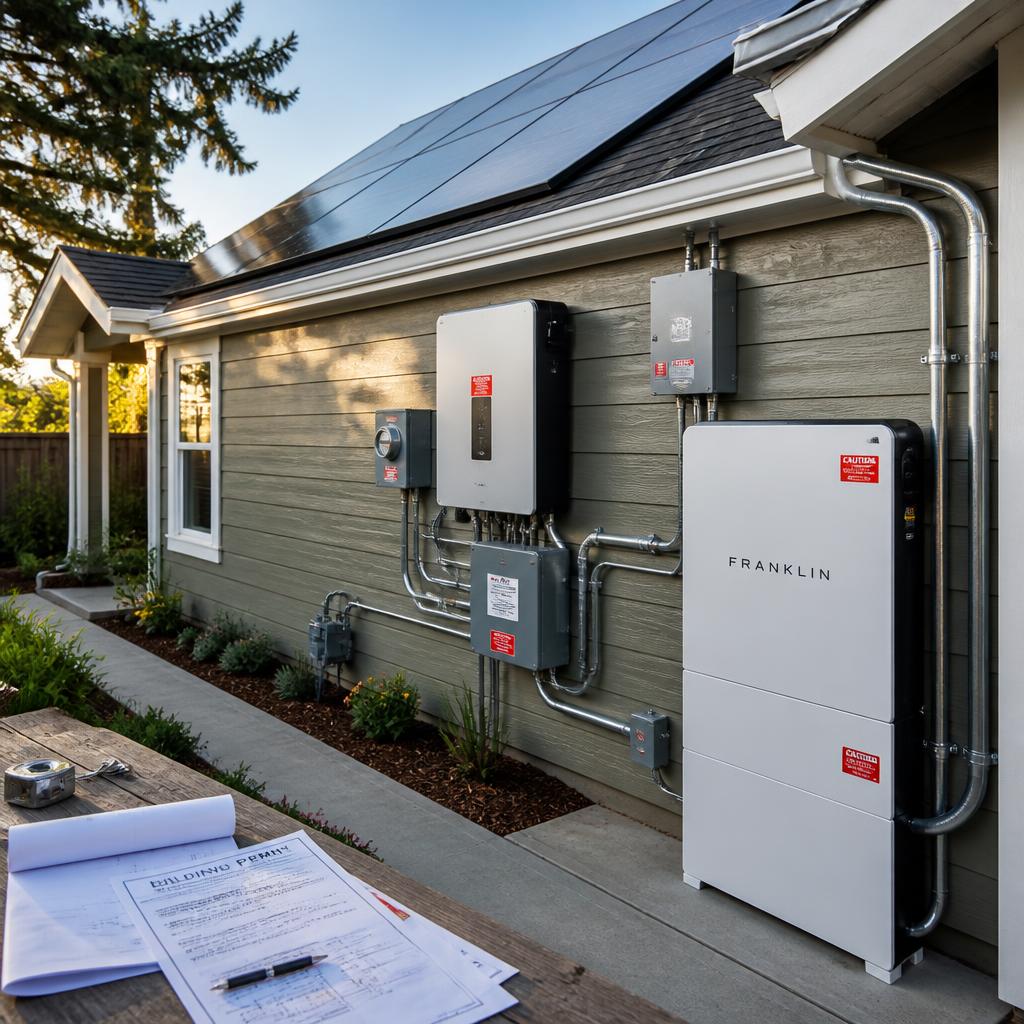
Battery energy storage permitting is one of the most overlooked steps in a solar project, yet it often determines whether an installation moves forward on schedule or stalls for weeks. As battery storage becomes a standard add-on to residential and commercial solar systems, installers are discovering that permitting for storage equipment involves its own set of rules, structural checks, and utility requirements. Consequently, treating permitting as an afterthought can quietly derail an otherwise well-planned project. This is exactly the gap that PTOEdge was built to close, offering installers a dependable partner for documentation, design, and approval support so projects keep moving instead of sitting in a queue.
Because every jurisdiction interprets fire codes, setback requirements, and equipment listings differently, a plan that sails through approval in one city can be rejected outright in another. Therefore, installers who want predictable timelines need more than good intentions; they need accurate paperwork, correct engineering, and a clear understanding of what each authority having jurisdiction actually expects. Additionally, homeowners and business owners rarely see this behind-the-scenes work, yet it directly affects how quickly their system gets turned on. Getting these details right the first time is what separates a smooth installation from a frustrating back-and-forth with plan reviewers.
Ready to stop losing weeks to permit rejections? Talk to the PTOEdge team about your next project and see how a properly prepared submission package can move faster through review.
Why Accurate Solar Plan Sets Matter
Every solar and storage project begins with paperwork long before a single panel goes on the roof. Plan sets are the technical drawings that show inspectors and utility reviewers exactly how a system will be built, wired, and mounted. Because these documents carry legal and safety weight, even small errors — a mislabeled disconnect, an incorrect setback measurement, or a missing placard — can trigger a rejection. As a result, installers who invest in precise, code-compliant solar plan sets tend to see far fewer resubmissions and shorter overall timelines.
Battery Energy Storage Permitting and Design Accuracy
Battery energy storage permitting specifically demands attention to ventilation, clearances, and fire separation distances that standard solar-only permits don’t typically require. Since battery systems store significant energy in a compact footprint, most jurisdictions now reference fire codes alongside electrical codes when reviewing submissions. Consequently, a plan set that fails to address these overlapping requirements is likely to bounce back from the reviewer’s desk. Working with a team that understands both the electrical and fire-safety sides of storage design, such as PTOEdge, helps installers submit packages that anticipate these questions instead of reacting to them after a rejection.
Navigating City-Specific Solar Permit Rules
One of the more frustrating realities of solar work is that no two cities apply the rules identically. A jurisdiction just twenty miles away may require different documentation, different fee structures, or an entirely different inspection process. For installers who operate across multiple counties, this inconsistency can turn scheduling into a guessing game. However, teams that specialize in solar permit services San Diego and beyond track these local nuances closely, which means fewer surprises when a submission lands on a plan checker’s desk. Building a repeatable process around pv permit services also gives installers a reference point for what documentation each city typically expects before work begins.
Furthermore, mistakes in this stage rarely stay small. A missing structural calculation or an outdated code reference can add days or even weeks to a timeline, especially in jurisdictions with backlogged review queues. Because of this, careful, city-aware preparation is not optional if a company wants to keep its install calendar predictable. Reviewing a general solar permit service checklist before submission can catch avoidable errors early, saving both time and reviewer goodwill.
Battery Energy Storage Permitting Timelines Explained
Timelines for battery energy storage permitting vary considerably depending on the authority having jurisdiction, but most delays trace back to incomplete documentation rather than the technology itself. When a submission includes clear equipment specifications, correct clearances, and properly labeled diagrams, reviewers can move through it efficiently. On the other hand, missing details almost always mean a second round of corrections, which pushes installation dates further out. For a deeper look at what storage-specific documentation should include, installers can reference this guide on solar battery backup permits.
The Role of PTO Services and Utility Approval
Once a system passes inspection, it still isn’t ready to produce power for the homeowner. Utilities require their own review and sign-off before granting permission to operate, and this step is frequently where projects lose additional time. Reliable PTO services manage the utility-facing paperwork, track submission status, and follow up when applications sit idle. Because utility companies often have different portals, forms, and interconnection agreements, installers benefit from a team that already knows each utility’s quirks.
Additionally, permission to operate services typically include verifying that meter information, system size, and equipment details match exactly what was permitted and inspected. Any mismatch between these records can stall an application indefinitely. For installers managing high volumes of projects, outsourcing this tracking to a dedicated pto solar partner frees up internal staff to focus on new installs rather than chasing utility status updates.
Solar Sales Proposals and Plan Sets: Setting Projects Up for Success
Long before permitting begins, the foundation for a smooth project is laid during the sales process. A well-structured solar sales proposal sets accurate expectations for system size, production estimates, and pricing, which reduces the chance of costly design changes later. Because customers rely on this document to make their decision, accuracy here protects both the homeowner’s trust and the installer’s reputation.
From there, translating that proposal into buildable, code-ready pv plan sets is where technical precision becomes essential. Design teams need to account for roof structure, shading, electrical panel capacity, and any storage equipment before drawings ever reach a plan reviewer. Consequently, companies that treat the proposal and the plan set as connected steps — rather than separate silos — tend to catch discrepancies earlier, when they’re far easier and cheaper to fix.
Understanding Net Metering and HOA Guidelines
Beyond permitting and utility approval, two additional factors frequently affect how quickly a solar or storage system delivers value: net metering policy and homeowners association rules. Solar panels net metering programs determine how much credit a homeowner receives for excess energy sent back to the grid, and these programs vary significantly by state and utility. Because policy changes can affect system sizing decisions, installers should confirm current solar net metering terms before finalizing a proposal.
Similarly, many homeowners live in communities governed by an HOA, and these organizations often have specific placement and aesthetic requirements for solar equipment. Ignoring hoa solar panel guidelines can lead to disputes that delay installation even after permits are approved. Reviewing HOA documentation early, alongside utility and city requirements, helps installers avoid last-minute surprises that have nothing to do with code compliance but still hold up a project.
Key Industry Terms Every Solar Installer Should Know
As storage adoption grows, installers increasingly encounter a specific vocabulary tied to permitting and utility approval. Understanding these terms helps teams communicate more clearly with reviewers, customers, and each other.
- PTO application – the formal request submitted to a utility company seeking permission to operate a completed solar or storage system.
- Solar Installer Growth – a measure of how efficiently a company scales its operations, often tied to how well it manages sales proposals and repeatable design processes.
- Solar stamping service – professional engineering review and certification of plan sets, commonly referred to as a solar stamping service, required by many jurisdictions before permit approval.
- Permit Design & AHJ Compliance – the practice of tailoring plan sets to match the specific expectations of a given Permit Design & AHJ Compliance process, since requirements shift from one authority to the next.
Because these processes overlap so heavily, installers who understand the full chain — from proposal, to plan set, to stamped engineering, to permit, to PTO — are better positioned to spot bottlenecks before they cause real delays.
Tired of chasing plan reviewers and utility reps for status updates? Get your project details in front of the PTOEdge team today and let a dedicated crew handle the follow-up for you.
Frequently Asked Questions
What is battery energy storage permitting? It’s the formal review process jurisdictions use to approve battery storage installations for fire safety, structural, and electrical compliance.
Why do solar plan sets need to be so precise? Because plan reviewers and utilities rely on them to verify code compliance, and even small errors can trigger a rejection and rework cycle.
How long does permission to operate typically take? Timelines vary by utility, but complete, accurate applications generally move through review faster than incomplete submissions.
Do HOA rules affect solar permitting timelines? Yes, HOA approval is often a separate requirement from city permitting and can add delays if not addressed early.
What does net metering mean for a solar customer? It determines how much credit a homeowner earns for excess solar energy sent back to the grid, which varies by state and utility.