Introduction
In modern construction and industrial maintenance, completing tasks safely and efficiently at high altitudes is a top priority. Whether you are installing intricate electrical wiring, maintaining industrial piping, or erecting a skyscraper, traditional scaffolding and ladders simply cannot cut it anymore. This is where a boom lift becomes an indispensable asset on the job site. Designed to provide maximum flexibility and reach, these mobile elevating work platforms (MEWPs) have transformed how industries handle high-altitude challenges.
However, not all aerial platforms are created equal. To optimize your operational efficiency and maintain a strict project timeline, it is essential to understand the different types of lifts available and how to select the right one for your specific needs.
Understanding Your Options: Telescopic vs. Articulating
When exploring high-altitude access solutions, you will primarily encounter two major types of machinery: the telescopic boom lift and the articulating model.
1. Telescopic Boom Lifts (Straight Booms)
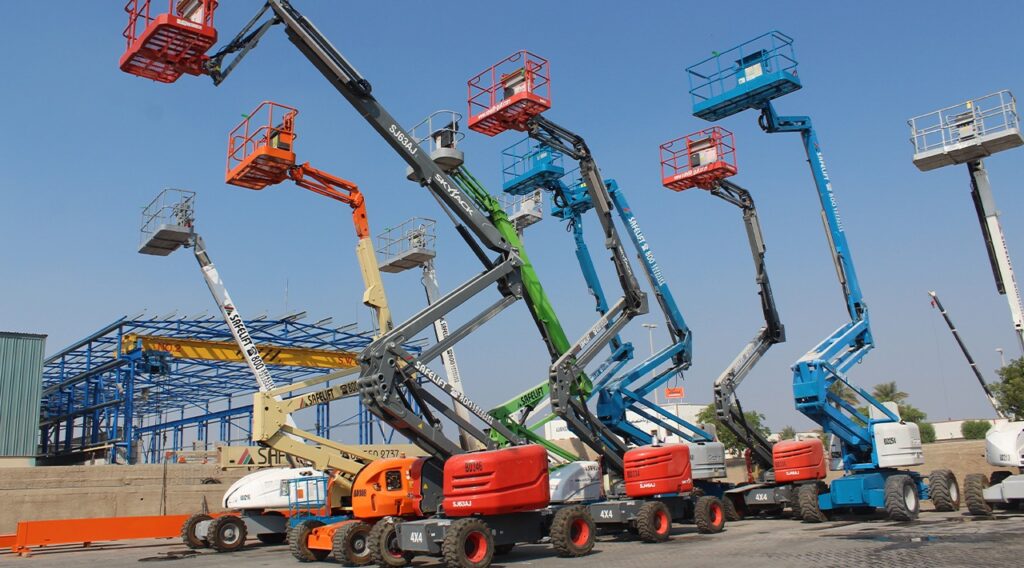
If your project requires maximum vertical height and extreme horizontal outreach, a telescopic boom lift is the ultimate tool. Often referred to as “stick booms,” these machines extend straight out using a telescopic mechanism. They are engineered to offer incredible stability on open construction terrains, shipyards, and oil and gas fields. For tasks that demand direct, long-range elevation without any structural obstructions in the way, straight telescopic lifts are the industry benchmark.
2. Articulating Boom Lifts (Knuckle Booms)
On the other hand, many job sites present complex spatial challenges, such as tight corners, overhead piping networks, or existing architectural structures. In these scenarios, an articulating boom lift is the perfect choice. Featuring multiple pivot points or “knuckles” in the boom arm, these lifts allow operators to navigate “up and over” obstacles. They offer unmatched maneuverability in confined spaces, making them highly popular for mechanical, electrical, and plumbing (MEP) works inside commercial complexes.
Why Choose a Boom Man Lift?
Safety and platform capacity are two major reasons why project managers prefer a boom man lift over other temporary access setups. These machines feature robust guardrails, heavy load capacities, and precise control panels right inside the basket. This ensures that a technician can lift heavy tools, replacement parts, and materials straight to the point of work without worrying about stability. Furthermore, modern rough-terrain models handle uneven ground seamlessly, reducing the risk of tipping or site accidents.
Streamlining Costs: The Benefits of Rental
For many contracting companies, buying a massive piece of heavy machinery permanently is not always the most practical financial move. Fluctuating project demands and high maintenance costs make a boom lift hire strategy much more efficient.
Opting for professional rental services allows you to match the exact machinery type—whether it is an electric articulating unit for indoor painting or a massive diesel telescopic unit for outdoor steel erection—to the specific phase of your project. Additionally, outsourcing your fleet requirements to a trusted rental partner ensures you receive fully compliant, certified, and thoroughly inspected machinery, eliminating unexpected maintenance downtime and shielding your budget from heavy upfront capital expenditures.
Conclusion
Selecting the perfect access platform requires a careful assessment of your job site layout, required height, and budget. From the direct power of a telescopic mechanism to the flexible agility of an articulating arm, integrating the right mobile elevate platform into your workflow guarantees faster project execution and absolute safety. Assess your upcoming site parameters today, choose the right machine, or consult with a reliable supplier to elevate your operational efficiency to new heights.
Frequently Asked Questions (FAQs)
Q1: What is the main difference between a telescopic boom lift and an articulating boom lift?
The primary difference lies in their extension mechanism and maneuverability. A telescopic boom lift (straight boom) extends in a straight line, offering maximum vertical height and extreme horizontal outreach. Conversely, an articulating boom lift (knuckle boom) features multiple pivot points in its arm, allowing it to bend “up and over” structural obstacles to access tight or confined spaces.
Q2: Why should a company choose a boom lift hire option instead of buying?
Opting for a boom lift hire strategy eliminates heavy upfront capital expenditures (CAPEX) and ongoing maintenance costs. It also gives project managers the flexibility to choose the exact type of machinery needed for specific project phases—such as zero-emission electric lifts for indoor tasks or powerful diesel units for outdoor construction—while ensuring access to a fully certified fleet.
Q3: Can a boom man lift be used safely on rough or uneven terrain?
Yes. Specialized rough-terrain boom man lift models are engineered specifically for challenging environments. Equipped with powerful diesel engines, heavy-duty foam-filled tires, four-wheel drive (4WD) capabilities, and active oscillating axles, these machines maintain optimal traction and stability on unpaved or uneven construction sites.
Q4: What safety certifications are required to operate a boom lift?
To legally and safely operate an aerial platform, operators must undergo professional training. The global gold standard for access platform operation is the IPAF (International Powered Access Federation) certification. Completing this training awards operators a PAL Card (Powered Access Licence), proving they are qualified to conduct pre-use inspections and handle the machinery safely.
Q5: Which industries benefit the most from using a boom lift?
Any industry that requires working safely at significant heights relies on a boom lift. They are heavily utilized in Commercial Construction, infrastructure development, MEP (Mechanical, Electrical, and Plumbing) installations, industrial facility management, shipyards, oil & gas refineries, and commercial exterior painting works.
Visit Now: viralsocialtrends.com