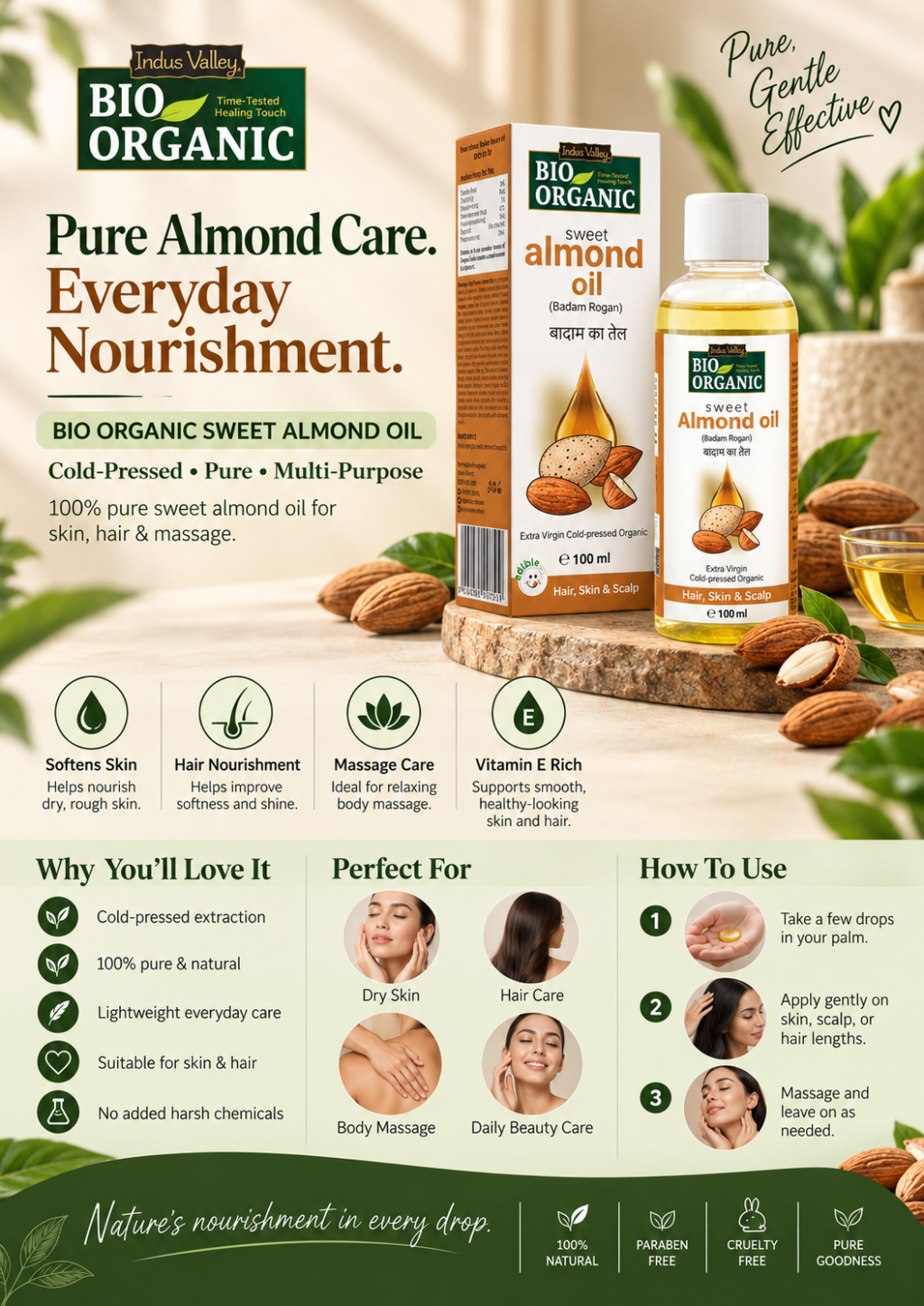
A bottle of coconut oil has been part of many homes for years—used before a hair wash, massaged into dry legs or reached for when hair feels rough and difficult to manage.
Its appeal is easy to understand. You don’t need a complicated routine or several ingredients to use it. A small amount can help condition dry hair and soften dry body skin.
But does coconut oil help hair grow? Should you apply it to your face? And how much is too much? Here’s a practical guide to coconut oil for hair and skin, including ways to use Bio Organic Extra Virgin Coconut Oil.
Quick Overview of the Blog
Coconut oil can help condition hair, reduce protein loss from existing strands and soften dry body skin. This guide explains its benefits, how to use it before shampooing and where it may fit into your body-care routine. It also covers Bio Organic’s single-ingredient coconut oil and precautions for oily or acne-prone skin.
What Is Coconut Oil?
Coconut oil for hair and skin has been part of home-care routines for generations. From pre-wash hair oiling to moisturising dry legs and elbows, a small amount can serve several everyday needs. But how should you use it, and does it suit everyone? This guide explores its benefits, practical application tips and ways to include Bio Organic Extra Virgin Coconut Oil in your routine.
Benefits of Coconut Oil for Hair
Using coconut oil for hair and skin can be simple: start with a small amount, apply it where needed and notice how you respond. Bio Organic Extra Virgin Coconut Oil offers a single-ingredient option for pre-wash conditioning, body moisturising and massage. Let softer hair and comfortable skin guide how often you use it.
1. Helps Reduce Protein Loss from Hair
One of the better-supported coconut oil benefits for hair is its ability to reduce protein loss from existing strands.
A study comparing coconut, sunflower and mineral oils found that coconut oil reduced protein loss in both damaged and undamaged hair under the study conditions. This supports its use as a conditioning oil, particularly around washing. It does not establish that coconut oil grows new hair.
2. Helps Dry Lengths Feel Softer
If your ends feel rough even when your roots look oily, you can concentrate the oil on the lengths rather than covering your whole head.
Start with a light coating before shampooing. Afterwards, notice whether your hair feels easier to handle without looking weighed down.
3. Can Make Frizz More Manageable
A little oil can help smooth the appearance of dry, flyaway strands. The amount matters: too much can leave fine hair looking greasy or flat.
For a first attempt, use coconut oil as a pre-wash treatment. This gives you a chance to assess its conditioning effect after washing it out.
4. Adds Shine to Dry-Looking Hair
A thin coating can make hair look shinier and feel smoother. You don’t need to saturate every strand to achieve this.
If your hair already feels soft and manageable, adding more oil may offer little benefit. Let the condition of your lengths guide how much you use.
5. Makes Hair Oiling a Simple Routine
You can use coconut oil on its own without adding onion juice, essential oils or several powders.
Keeping the first application simple also makes it easier to judge whether the oil suits you. If you enjoy a scalp massage, use gentle fingertips and avoid scratching or pulling.
Does Coconut Oil Help Hair Growth and Thickness?
Coconut oil is better supported as a conditioning ingredient than as a treatment for faster hair growth.
Hair that breaks less may retain its length more successfully, but that is different from increasing the number of hairs growing from your scalp.
If you notice a widening parting, sudden shedding or patchy hair loss, oiling alone is unlikely to address the cause. Seek appropriate advice rather than repeatedly changing oils.
How to Use Coconut Oil Before Washing Your Hair
1. Start with a Small Amount
Warm a little oil between your palms. If it has solidified, place the closed container in comfortably warm water to soften it. Avoid applying hot oil.
2. Apply Where Your Hair Feels Dry
Divide your hair into sections and work a light layer through the mid-lengths and ends. Apply to the scalp only if it feels comfortable and suits your routine.
3. Follow the Product’s Directions
Use the recommended contact time. An overnight application isn’t necessary to make every oiling session worthwhile.
4. Shampoo and Condition
Wash the oil out gently, then condition as needed. Avoid vigorous rubbing or aggressive detangling.
5. Assess the Result
Once your hair is dry, ask:
- Do the ends feel softer?
- Is detangling easier?
- Does the hair feel coated or flat?
Use those answers to adjust the amount next time.
Coconut Oil for Different Hair Needs
| Hair Concern | How to Approach Oiling? |
|---|---|
| Fine hair that becomes flat easily | Use a few drops on the ends before washing. |
| Thick or coarse lengths | Apply section by section for an even, light coating. |
| Oily roots with dry ends | Focus on the lengths and leave the roots alone. |
| Rough, tangled hair | Try a pre-wash application and continue using conditioner. |
| An itchy or flaky scalp | Get the cause assessed rather than assuming more oil will help. |
Benefits of Coconut Oil for Skin
Helps Reduce Moisture Loss
Coconut oil forms an oily layer on the skin that can help limit water loss. For some people, this makes dry body skin feel more comfortable.
Softens Dry Areas
Elbows, knees and legs may benefit from a small amount after bathing. Apply lightly so the skin feels comfortable rather than slippery.
Provides Slip for Body Massage
Coconut oil spreads easily, making it convenient for a gentle body massage. Use enough to reduce friction, without leaving excess oil on the skin.
These uses are most appropriate for areas that tolerate the oil. Pure Coconut oil can clog pores and worsen breakouts, particularly on acne-prone facial skin, the chest or back.
How to Use Coconut Oil on Your Body?
After bathing, pat your skin so it remains slightly damp. Spread a small amount over dry areas and allow it to settle before getting dressed.
You can also use a little over your usual body moisturiser if that combination feels comfortable.
Avoid getting oil on the floor or the soles of your feet before walking, as it can make surfaces slippery.
Should You Apply Coconut Oil to Your Face?
Coconut oil isn’t the best facial moisturiser for everyone. If you have oily skin, frequent pimples or clogged pores, a non-comedogenic facial moisturiser is generally a more suitable starting point.
Even if your face feels dry, introduce new products cautiously. Body skin and facial skin may respond differently to the same oil.
Why Choose Bio Organic Extra Virgin Coconut Oil?
Bio Organic Extra Virgin Coconut Oil is a single-ingredient oil made from organically grown coconuts and cold processed at room temperature.
It can fit into a straightforward routine as a pre-shampoo hair oil, body moisturising oil or massage oil. You can use it on its own rather than preparing a mixture each time.
Start with one use—such as conditioning your hair ends before washing—then assess the result before adding it elsewhere.
Bio Organic Coconut Oil vs. Other Coconut Oils
| Feature | Bio Organic Extra Virgin Coconut Oil | Other Coconut Oils |
|---|---|---|
| Ingredients | Single-ingredient extra virgin coconut oil | Pure oils may also contain one ingredient; blended products contain others. |
| Processing | Cold processed at room temperature | Processing methods vary by product. |
| Coconut source | Made from organically grown coconuts | Growing and sourcing practices vary. |
| Intended uses | Hair, skin and body care | Check the intended uses of each product. |
| How to compare | Consider ingredients, processing, quantity and suitability | Use the same checks across brands. |
Precautions Before Using Coconut Oil
- Test a small area before applying it widely.
- Avoid it if you have a known coconut allergy.
- Stop if itching, redness or breakouts develop.
- Keep hair oil away from acne-prone areas around your hairline.
- Avoid treating persistent scalp or skin problems with oil alone.
- Keep the container clean and store it according to its directions.
Final Thoughts
Coconut oil works best when you use it for a clear purpose: conditioning dry lengths, softening body skin or adding slip to a massage. Try a small amount of Bio Organic Extra Virgin Coconut Oil before your next hair wash and assess the result once your hair is dry. Softer ends and easier handling are useful signs that the routine suits you.
Frequently Asked Questions
Can I use coconut oil on my hair every day?
Daily application isn’t necessary for everyone. Adjust the amount and frequency to your hair’s condition and washing routine. Reduce use if your hair feels coated or flat.
Can I leave coconut oil in my hair overnight?
Follow your product’s directions. Overnight use may feel inconvenient or heavy, and a shorter pre-wash routine may suit you better.
Does coconut oil remove dandruff?
Coconut oil is not an established stand-alone dandruff treatment. Persistent flakes or itching may need a suitable anti-dandruff product or professional advice.
Is coconut oil good for dry skin?
It can help soften dry body skin and reduce moisture loss. Avoid applying it to areas where it triggers clogged pores or breakouts.
Does coconut oil repair split ends?
It may temporarily smooth their appearance, but it cannot permanently join split ends back together. Trimming removes the damaged ends.
Why has my coconut oil turned solid?
Coconut oil naturally solidifies in cooler temperatures. You can soften it gently in warm water before use.