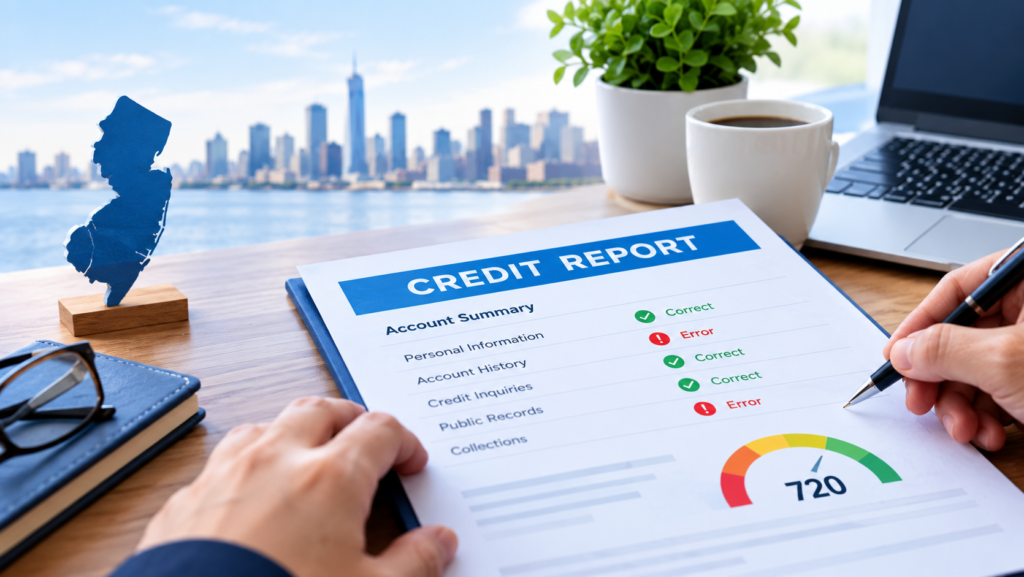
Your credit report plays an important role in your financial life. Whether you are applying for a mortgage, financing a vehicle, opening a credit card, or renting a home, inaccurate credit information can create unnecessary challenges. Understanding how to handle a credit report error dispute in New Jersey can help you protect your consumer rights and work toward your financial goals.
Credit reports may contain errors such as incorrectly reported late payments, duplicate collection accounts, inaccurate balances, or accounts that do not belong to you. Even a single reporting mistake may affect how lenders evaluate your creditworthiness.
The good news is that consumers have rights under federal law to challenge inaccurate or incomplete credit reporting. By reviewing your credit reports, gathering supporting documentation, and following the appropriate dispute process, you can take steps toward correcting these issues.
If you need professional assistance, Better Qualified offers credit repair services designed to help consumers understand their credit profiles and challenge potentially inaccurate information.
What Is a Credit Report Error Dispute in New Jersey?
A credit report error dispute is a formal request asking a credit reporting agency or the company that supplied information to investigate potentially inaccurate, incomplete, or unverifiable details on your credit report.
New Jersey consumers can dispute errors with three major nationwide credit reporting agencies:
- Equifax: Maintains consumer credit information used by lenders and other authorized parties.
- Experian: Collects and reports information about consumer credit accounts and payment histories.
- TransUnion: Maintains credit information that may be used to evaluate credit applications.
If an error appears on multiple credit reports, you may need to dispute it separately with each agency reporting the incorrect information. You can also contact the creditor or company responsible for supplying the information.
The Fair Credit Reporting Act (FCRA) provides important protections for consumers who identify inaccurate or incomplete credit reporting.
Common Credit Report Errors in New Jersey
Before filing a dispute, identify the specific information you believe is incorrect. Understanding the type of error can help you gather the right documentation and explain your concerns clearly.
Incorrect Late Payment Reporting
A credit report may incorrectly show a late payment even when you paid on time. In other cases, a payment history may not accurately reflect the status of your account.
Compare your credit report with bank statements, payment receipts, and creditor records. If the reported payment history is incorrect, submit a dispute with supporting evidence.
Accounts That Do Not Belong to You
An unfamiliar credit card, loan, or collection account may indicate a reporting mix-up, a mixed credit file, or potential identity theft.
Review the account carefully before taking action. If you suspect identity theft, consider visiting IdentityTheft.gov for official guidance.
Duplicate Collection Accounts
Sometimes, the same debt appears more than once on a credit report. However, an original creditor and a collection agency may both report information about the same debt under circumstances permitted by law.
Check the account details, balances, dates, and reporting status to determine whether the entries are genuinely duplicative or otherwise inaccurate.
Incorrect Account Balances
Your credit report may show a balance that differs from your records. This could happen when a payment or account adjustment has not been reflected correctly.
Compare the reported amount with your latest account statement and payment confirmations. If the balance is inaccurate, explain the discrepancy and provide supporting documents.
Outdated Negative Information
Negative information is generally subject to legal reporting periods. Many negative items can typically be reported for up to seven years, while certain other items have different reporting limits.
If an entry appears to exceed the applicable reporting period, verify the relevant dates and rules before filing your dispute.
Accurate negative information cannot generally be removed simply because it affects your credit score.
Unauthorized Hard Inquiries
Hard inquiries may appear when lenders review your credit in connection with applications for credit. If you notice an inquiry you do not recognize, investigate which company requested your report and whether it had a permissible purpose.
If an inquiry is inaccurate or was made without a permissible purpose, you can challenge it with the credit reporting agency and the relevant company.
How to Dispute a Credit Report Error in New Jersey
Following a structured process can help you present your dispute clearly and keep track of the investigation.
Step 1: Obtain Your Credit Reports
Request your credit reports from Equifax, Experian, and TransUnion. You can access them through AnnualCreditReport.com.
Review each report separately because the information may differ between agencies.
Check your account balances, payment histories, collection accounts, personal information, and credit inquiries.
Step 2: Identify and Document the Error
Once you find a questionable entry, record exactly what appears to be wrong and why you believe it is inaccurate.
Supporting documentation may include:
- Bank statements and payment receipts.
- Account statements from creditors.
- Letters confirming that a debt was paid or settled.
- Correspondence with collection agencies.
- Identity theft documentation, when applicable.
- Other records that establish the correct information.
Keep copies of your documents and avoid sending original records unless specifically required.
Step 3: Submit a Dispute to the Credit Bureau
File a dispute with each credit reporting agency displaying the error. Depending on the agency, you may be able to submit it online, by mail, or through another available method.
Your dispute should identify the account, explain the inaccurate information, state why you believe it is wrong, and describe the correction you are requesting.
Providing clear evidence may help the agency and information provider investigate the issue.
Step 4: Contact the Company Reporting the Information
You can also dispute the information directly with the creditor, lender, or collection agency that supplied it.
For example, if a paid account continues to show an incorrect outstanding balance, contact the credit bureau and the company reporting the balance.
Keep copies of your correspondence and any confirmation numbers for future reference.
Step 5: Allow Time for the Investigation
Credit reporting agencies generally have 30 days to investigate qualifying disputes under the FCRA. Certain circumstances may allow additional time.
After the investigation, you should receive the results. If the information is found to be inaccurate, the agency should correct or remove it as appropriate.
An investigation does not guarantee that an account will be deleted. Accurate and properly reported information may remain on your credit report.
Step 6: Review the Results
Once the investigation is complete, review your updated credit report to confirm whether the error was corrected.
If the information remains and you believe the result is incorrect, examine the investigation findings and consider submitting additional relevant evidence or contacting the information provider.
How Credit Report Errors Can Affect Your Credit Score
The effect of an inaccurate entry depends on the type of information involved and the credit scoring model used.
For example, an incorrectly reported late payment, an inaccurate collection account, or an overstated credit card balance may influence your credit profile differently from an incorrect address.
Correcting inaccurate information helps ensure that lenders have a more accurate picture of your credit history.
However, correcting a credit report error does not guarantee a specific increase in your credit score. Your score may also depend on payment history, credit utilization, the age of your accounts, and other factors.
Why Choose Better Qualified for Credit Report Dispute Assistance?
Reviewing credit reports, identifying possible errors, gathering evidence, and following up on disputes can be time-consuming. Professional assistance may help you understand your options and organize the process.
Better Qualified provides credit-related services designed to help consumers review their credit information and address potential reporting inaccuracies.
Personalized Credit Report Analysis
A detailed review can help identify questionable account information, inaccurate balances, duplicate entries, and other reporting concerns that may warrant further investigation.
Assistance With Credit Bureau Disputes
A well-prepared dispute should identify the specific information being challenged and explain why it is inaccurate or incomplete.
Better Qualified helps consumers navigate the credit repair process and challenge potentially inaccurate information through appropriate channels.
Communication With Creditors and Credit Bureaus
Some issues require communication with both the credit reporting agency and the company that supplied the information.
Depending on the circumstances, the process may involve preparing correspondence, reviewing responses, and following up on outstanding concerns.
Support for Long-Term Credit Improvement
Correcting errors is only one part of maintaining a healthy credit profile. Responsible payment habits, manageable credit balances, and regular credit report reviews can also support long-term financial goals.
Explore our guide to credit repair services in New Jersey to learn more about the credit repair process.
Credit Reporting Rights for New Jersey Consumers
New Jersey residents benefit from federal protections under the Fair Credit Reporting Act. These protections generally allow consumers to dispute inaccurate or incomplete information and receive the results of qualifying investigations.
Keep these important points in mind:
- You can generally dispute inaccurate information without hiring a credit repair company.
- You should provide relevant supporting documentation whenever possible.
- You can generally contact both the credit reporting agency and the company that supplied the information.
- Credit reporting agencies generally must investigate qualifying disputes within the applicable legal timeframe.
- Accurate negative information is not automatically removable simply because it affects your credit score.
Understanding your rights can help you make informed decisions when addressing errors on your credit report.
Frequently Asked Questions About Credit Report Error Disputes in New Jersey
1. How do I dispute a credit report error in New Jersey?
Obtain your credit reports, identify the inaccurate entry, gather supporting documents, and file a dispute with each credit reporting agency reporting the error. You can also contact the company that supplied the information.
2. Is disputing a credit report error free?
Consumers can generally dispute credit report errors directly with credit reporting agencies without paying a fee. Hiring a credit repair company is optional, and professional services may involve fees.
3. How long does a credit report dispute take?
Credit reporting agencies generally have 30 days to investigate qualifying disputes, although certain circumstances may extend the period.
4. Can I dispute a collection account in New Jersey?
Yes. You can dispute a collection account if you believe its balance, ownership, payment status, or other reported details are inaccurate or incomplete.
5. Can disputing an error improve my credit score?
Correcting inaccurate information may improve your credit profile, but the effect on your score depends on the nature of the error and the scoring model used. No particular increase is guaranteed.
Take the Next Step Toward a More Accurate Credit Report
Inaccurate credit reporting can create unnecessary challenges when you are working toward important financial goals. Reviewing your reports, gathering supporting evidence, and following the appropriate dispute process can help you address these concerns.
Better Qualified helps consumers understand their credit profiles, identify potential reporting inaccuracies, and navigate the credit repair process.
If you are dealing with incorrect payment histories, unfamiliar accounts, duplicate entries, or inaccurate balances, take the first step toward understanding your options.
Explore our credit repair services or contact Better Qualified to learn more about the assistance available.