Not every digging job needs the same bucket. That sounds obvious, but it is easy to overlook when one bucket is already sitting on the machine and the job needs to get done. Soil, clay, gravel, rock, trenching, grading and cleanup can all call for a different approach.
When contractors start looking at excavator buckets for sale, the first question should not always be “Which one is the biggest?” It should be “What am I actually going to do with it?” Bucket shape, width, teeth, capacity and construction can all change how the excavator works once it gets into the ground.
General Purpose Buckets for Everyday Digging
A general purpose bucket is usually the starting point for everyday excavation.
It is the bucket most people think of when they picture an excavator digging. Soil, loose dirt, clay and general material handling are common jobs for this type of bucket.
For contractors who deal with different types of excavation instead of one very specific application, a general purpose bucket can be a practical choice. You can dig, scoop, load and move material without constantly changing attachments.
That doesn’t mean it is the right bucket for everything.
Once the ground gets harder or the job becomes more specialized, another bucket may make more sense.
Heavy Duty Buckets for Tougher Ground
Some ground does not want to cooperate.
Hard-packed soil, gravel and abrasive material can put more stress on a bucket than normal digging. This is where heavier-duty bucket construction becomes useful.
These buckets are generally built with stronger components and are intended for more demanding digging conditions.
Contractors working on construction sites, utility projects or excavation jobs where the material is rough may prefer a heavier bucket rather than pushing a standard bucket beyond what it was designed to handle.
The teeth matter here, too. A bucket that can get a good bite into the material will usually make more sense than simply using a larger bucket and hoping the machine powers through.
Rock Buckets for Rocky Material
Rock is a different problem altogether.
Trying to dig through rocky ground with a bucket that is not made for it can turn into a frustrating job. The bucket has to deal with hard material, repeated impact and plenty of abrasion.
Rock buckets are designed with that kind of work in mind.
Depending on the design, they may have reinforced construction and tooth arrangements intended to break into tougher ground. Some excavator buckets are also designed around sorting or handling larger rocks after excavation.
The important thing is matching the bucket to the material. A bucket that works well in loose soil does not automatically become a rock bucket just because the machine has enough hydraulic power.
Trenching Buckets Keep Narrow Work Narrow
Digging a trench with a bucket that is wider than necessary means moving more material than you need to.
That is where trenching buckets come in.
They are narrower and designed to create more controlled trenches for applications such as utility lines, drainage work and similar projects.
For contractors, trench width can matter more than bucket capacity. You want to remove enough material to create the trench without making the excavation unnecessarily wide.
A properly sized trenching bucket can help with that.
It is one of those cases where using a smaller attachment is not about having less equipment. It is about doing the particular job correctly.
Grading and Cleanup Buckets
Digging is not the only thing an excavator does.
After excavation, someone still has to clean up the site. That’s where grading or cleanup buckets can earn their place.
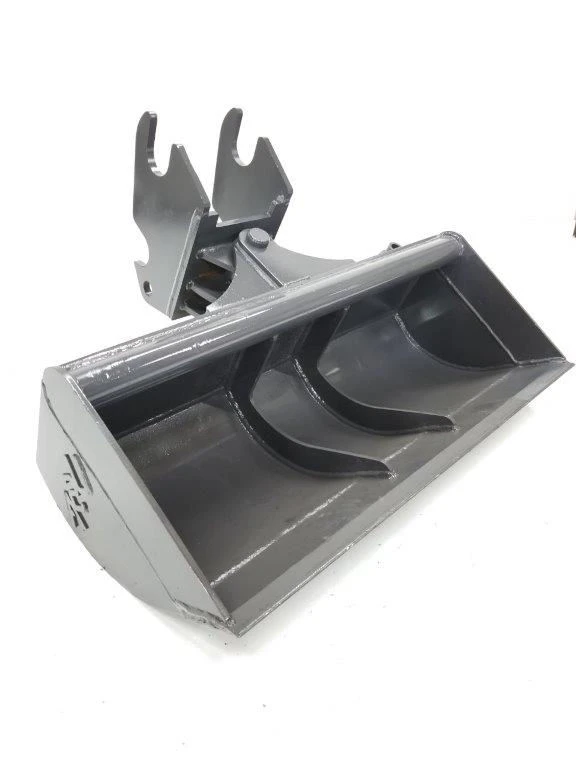
These buckets are typically wider and have a design that makes them useful for spreading, leveling and cleaning material. They are not necessarily the first choice when you need to dig deep into hard ground.
But ask someone who has spent half a day trying to clean up a site with a narrow digging bucket, and they’ll tell you why the right bucket matters.
The wider profile can cover more ground and make finishing work less frustrating.
Bucket Width Is More Important Than It Looks
It is tempting to think that a wider bucket is automatically better because it can carry more material.
Not always.
A wider bucket requires the machine to handle a larger load. It can also make some digging jobs less precise.
Think about a narrow trench. A wide bucket is simply going to create more excavation than you need.
Now think about cleaning a large flat area. In that situation, a wider bucket might save time.
So bucket width should be based on the job, not just capacity.
Teeth Can Change How the Bucket Digs
Bucket teeth are another detail that gets overlooked.
The teeth are what make the initial contact with the ground. They need to be suited to the type of material being excavated.
In softer soil, standard teeth may be enough. Tougher ground may call for a more aggressive setup.
This also affects maintenance. Teeth eventually wear, especially when the bucket is used in abrasive material. Keeping an eye on them matters because worn teeth can change how the bucket enters the ground.
A bucket itself can be perfectly solid, but worn cutting components can still make digging harder than it needs to be.
Choosing a Bucket for a Mini Excavator
Smaller excavators have their own limitations.
You cannot simply put the largest bucket available on a mini excavator and expect better production. The bucket needs to match the machine’s size, lifting capacity and operating requirements.
This is where choosing the right mini excavator attachment becomes important.
For smaller contractors, landscapers and property maintenance crews, a mini excavator may handle several different types of work. One day it may be digging a trench. The next, it could be cleaning up a property or preparing an area for landscaping.
Having a bucket that actually fits the job lets the machine do more without pushing it beyond its limits.
Don’t Forget the Mounting Connection
Compatibility goes beyond bucket size.
The attachment needs to connect properly to the excavator. Contractors should verify the mounting setup, pin dimensions or quick attach system, depending on the machine.
This sounds basic, but it is worth checking before buying.
A bucket can have the right width and look perfect for the job, but if the mounting connection does not match, none of that matters.
It is also worth checking the excavator’s specifications against the attachment. The machine needs to be able to handle the bucket safely and effectively.
Which Bucket Makes Sense for Your Work?
Start with the material.
If you mostly dig loose soil, a general purpose bucket may cover most of your work. Harder ground may call for a heavier construction. Rocky jobs can require a bucket built for abrasive material.
Then look at the shape of the excavation.
Need a narrow trench? Look at a trenching bucket.
Need to level or clean up an area? A wider grading bucket may be more useful.
There is no reason to make the bucket decision more complicated than it needs to be. Think about the jobs your crew actually gets. The right bucket is the one that matches those jobs.
FAQ About Excavator Buckets
What is the most common excavator bucket?
A general purpose bucket is commonly used for everyday digging and material handling, particularly in soil, clay and loose ground.
Are excavator buckets interchangeable?
Not automatically. The bucket must match the excavator’s mounting system, dimensions and operating requirements.
What bucket is used for trenching?
A narrow trenching bucket is generally used when contractors need to create controlled, narrow excavations for utilities, drainage and similar work.
What excavator bucket is best for rocky ground?
A bucket designed for tougher, abrasive ground is generally more appropriate for rocky conditions. The exact choice depends on the material, machine and application.
Can a mini excavator use different bucket sizes?
Yes, as long as the bucket is compatible with the machine and within its operating specifications. Different bucket widths can be useful for different digging and cleanup tasks.
Final Thoughts
There is no single excavator bucket that is perfect for every digging application. That’s really the point.
A bucket built for everyday soil may not be the right choice for rock. A wide cleanup bucket is not what you want when you’re trying to dig a narrow utility trench. And putting an oversized bucket on a small excavator doesn’t automatically make the machine more productive.
When comparing excavator buckets for sale, start with the work. Look at the material, digging conditions, required trench or excavation size, machine specifications and the kind of work your crew handles most often.
For smaller equipment, the same thinking applies. The right mini excavator attachment can make a compact machine much more useful without asking it to do something it was never designed to do.
Spartan Equipment supplies attachments built around real equipment applications, from everyday excavation and cleanup to more demanding digging work.
SEPTEMBER SALE — Free Shipping + Save 15% On Orders Over $2,500 With Code SPARTAN15