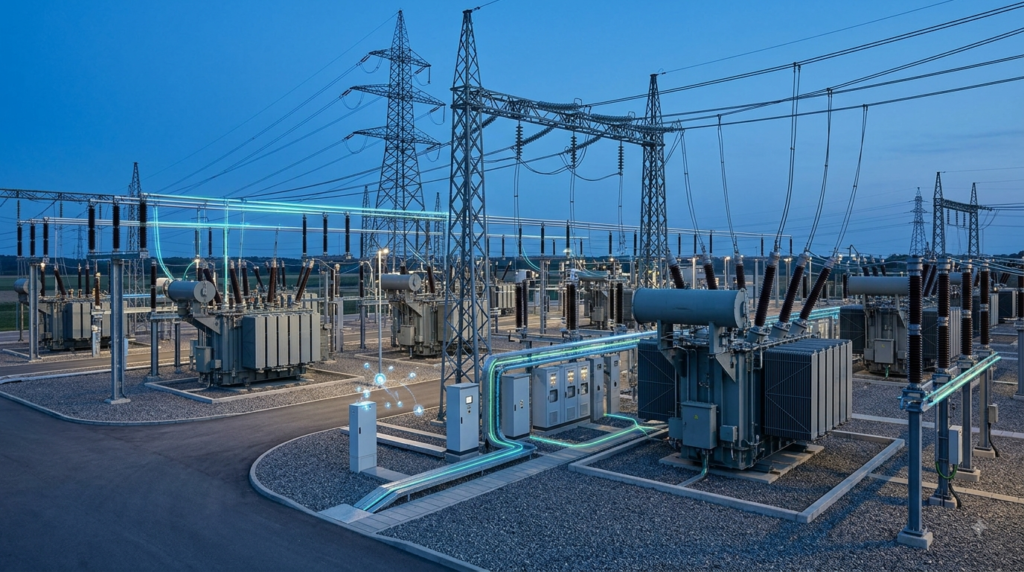
Modern power grids are becoming more complex as electricity demand increases, renewable generation expands, and utilities integrate advanced digital technologies. In this changing environment, substations play a critical role in maintaining a stable and dependable flow of electricity.
A well-designed substation does much more than connect transmission and distribution networks. It provides voltage transformation, switching, protection, monitoring, and control while helping operators respond to faults and changing system conditions.
This is why professional electrical substation design has become an essential part of modern power infrastructure. Through advanced engineering practices, accurate system studies, and carefully selected equipment, utilities can build substations that deliver reliable performance throughout their operating life.
1. Designing Substations Around Grid Requirements
Every substation has different operational requirements. Its design depends on factors such as voltage level, power capacity, fault levels, network configuration, environmental conditions, future expansion, and the role the facility plays within the wider grid.
Modern substation engineering begins by understanding these requirements before equipment or layouts are finalized. Engineers evaluate how the substation will interact with connected transmission lines, transformers, generators, distribution networks, and other substations.
This system-level approach helps ensure that equipment is correctly rated and that the overall facility can perform safely under normal, abnormal, and emergency operating conditions.
Planning for future expansion is equally important. Providing space for additional transformers, feeders, or switchgear during the initial design phase can make future upgrades easier and more cost-effective.
2. Protection and Control Improve System Resilience
One of the most important functions of a modern substation is protecting electrical equipment and limiting the impact of faults.
Protection systems continuously monitor electrical parameters and can identify abnormal conditions such as short circuits, equipment failures, or excessive currents. When a fault occurs, protection devices can isolate the affected section quickly, helping prevent damage from spreading across the network.
Modern substation design services incorporate coordinated protection schemes based on detailed power system studies. Engineers assess fault currents, relay coordination, breaker performance, and system operating conditions to develop effective protection strategies.
Digital protection relays also provide advanced monitoring and communication capabilities. When integrated properly, these technologies allow operators to obtain valuable information about system conditions and respond more quickly to potential problems.
3. Advanced Layout and Equipment Selection
Physical substation layout has a direct impact on safety, reliability, maintenance, and operational efficiency.
Modern electrical substation design considers equipment clearances, electrical insulation requirements, grounding, cable routing, access roads, maintenance areas, control buildings, and emergency access. High-voltage equipment must be positioned carefully to maintain required clearances and reduce operational risks.
Equipment selection is also based on more than initial cost. Engineers consider reliability, environmental conditions, loading requirements, maintenance needs, expected service life, and compatibility with the wider power system.
Depending on project requirements, substations may use air-insulated switchgear, gas-insulated switchgear, power transformers, instrument transformers, circuit breakers, disconnect switches, surge arresters, protection systems, and advanced control equipment.
Selecting and coordinating these components correctly creates a more dependable and maintainable facility.
4. Digital Technology and Substation Automation
Digitalization is transforming how modern substations are operated and maintained. Intelligent electronic devices, remote terminal units, supervisory control systems, and communication networks provide operators with greater visibility into electrical assets.
Substation automation can help collect real-time information about voltage, current, transformer conditions, breaker status, and other important parameters. This information can support faster decision-making and improve operational awareness.
Modern engineering also considers communication architecture and interoperability during the design stage. A reliable automation system must allow different devices and systems to exchange information effectively while maintaining appropriate cybersecurity and operational controls.
Remote monitoring can be particularly valuable for large utility networks because operators can identify abnormal conditions without relying entirely on physical inspections.
5. Grounding, Safety, and Reliability
A reliable substation must also provide a safe environment for personnel and equipment. Grounding design is therefore a fundamental part of professional substation engineering.
Engineers evaluate fault currents, soil characteristics, touch voltage, step voltage, and grounding conductor requirements to develop an appropriate grounding system. The objective is to provide effective fault-current paths while keeping hazardous voltage differences within acceptable limits.
Other safety considerations include fire protection, equipment spacing, fencing, lighting, emergency access, oil containment, signage, and safe maintenance practices.
These details may not always be visible when looking at a completed substation, but they are essential to dependable operation and personnel safety.
6. Engineering for Long-Term Grid Performance
Substation reliability should be considered throughout the entire asset lifecycle rather than only during construction.
Professional substation design services can support utilities and project developers from early planning and feasibility studies through detailed engineering, equipment selection, construction support, testing, and commissioning.
Engineers can also use power system analysis to evaluate how a proposed substation will perform under different operating scenarios. Load flow, short-circuit, protection coordination, grounding, and other studies can identify potential issues before construction begins.
This proactive approach can reduce redesign risks, improve equipment coordination, and support more predictable project outcomes.
As electricity networks continue to evolve, substations must also be capable of adapting to new generation technologies, changing load patterns, energy storage systems, and increasingly automated grid operations. Designing with flexibility in mind helps infrastructure remain useful as network requirements change.
Conclusion
Modern substations are essential building blocks of a reliable electrical grid. Their performance depends on much more than individual pieces of equipment; it requires careful planning, coordinated protection, intelligent automation, effective grounding, appropriate layouts, and comprehensive engineering analysis.
By investing in professional electrical substation design, utilities and power developers can create infrastructure that is safer, more efficient, easier to maintain, and better prepared for future demands.
At Keentel Engineering, a strong engineering approach can help transform complex power infrastructure requirements into practical and reliable solutions. With thoughtful substation engineering and specialized substation design services, modern power networks can be designed to deliver dependable performance today while remaining ready for tomorrow’s energy challenges.