There’s an old rule that refuses to die and spend two months’ salary on an engagement ring. It sounds authoritative, like a real financial guideline someone tested and proved out. It isn’t. That number came from a 1980s De Beers advertising campaign, not from any actual research into what makes a ring purchase reasonable or sustainable. It’s marketing, dressed up as tradition, and it’s a genuinely bad way to set up a budget.
So, what should you spend? There’s no single right number, but there is a real, sensible process for landing one that fits your actual finances, not an advertiser’s decades-old suggestion.
Why the “Two Months’ Salary” Rule Doesn’t Hold Up

Beyond its marketing origins, the rule falls apart for a simple reason: it ties ring spending to income alone, ignoring debt, savings goals, other financial obligations, and what the couple values. Someone with student loans and no savings shouldn’t spend the same percentage of income as someone debt-free with a healthy emergency fund, even at identical salaries.
A budget based on a marketing slogan from four decades ago isn’t a financial plan. It’s a number designed to sell more diamonds, and it’s worth setting aside entirely in favor of an approach based on your actual situation.
What People Actually Spend, and Why Averages Are Misleading
Industry surveys consistently show average engagement ring spending somewhere in the low thousands of dollars, though this figure varies significantly by region, and the range around that average is enormous. Some couples spend a few hundred dollars on a meaningful, simple piece. Others spend well into five figures.
Averages get quoted constantly in this conversation, but they’re not a useful target. An average blends every budget level together, and knowing that number tells you almost nothing about what’s right for your specific circumstances. Treat published averages in general context, not a benchmark to hit.
A Better Way to Set Your Budget

Instead of starting with a percentage of income or an industry average, start with a direct, honest look at your actual finances.
- Review your savings and debt first. A ring purchase shouldn’t derail an emergency fund or add to high-interest debt that outweighs the purchase itself.
- Decide what else matters financially right now. A wedding, a home down payment, or other near-term goals might reasonably take priority over ring spending.
- Set a number you’re fully comfortable with, not the maximum you could technically afford. Comfortable and maximum are very different numbers, and the gap between them matters.
- Built at the full cost, not just the diamond. Setting, metal, taxes, shipping, insurance, and potential resizing all add to the final total beyond the number on a single price tag.
This process takes longer than reciting a rule of thumb, but it produces a number you can stand behind, rather than one borrowed from an old ad campaign.
How Diamond Choices Affect the Final Number
Once you have a budget, diamond choices are where most of that number gets allocated, and a few decisions meaningfully change how far your budget stretches.
- Carat weight has the single biggest effect on price, and price increases disproportionately at certain round-number thresholds, like exactly 1.00 carat, since demand spikes there. A diamond at 0.90 or 0.95 carats often costs noticeably less while looking nearly identical.
- Cut quality matters more than carat for visible impact. A smaller, excellently cut diamond frequently looks more brilliant than a larger, poorly cut one, which means prioritizing cut over size often delivers better visual results per dollar.
- Lab-grown diamonds significantly change math. Since lab-grown diamonds share identical hardness, brilliance, and grading standards with mined diamonds, choosing lab-grown often allows for a larger stone or higher grade within the same budget.
- Fancy shapes can stretch a budget further, since round diamonds typically cost more per carat than shapes like oval, cushion, or pear, due to less material waste during cutting.
Setting Choices Also Move the Total
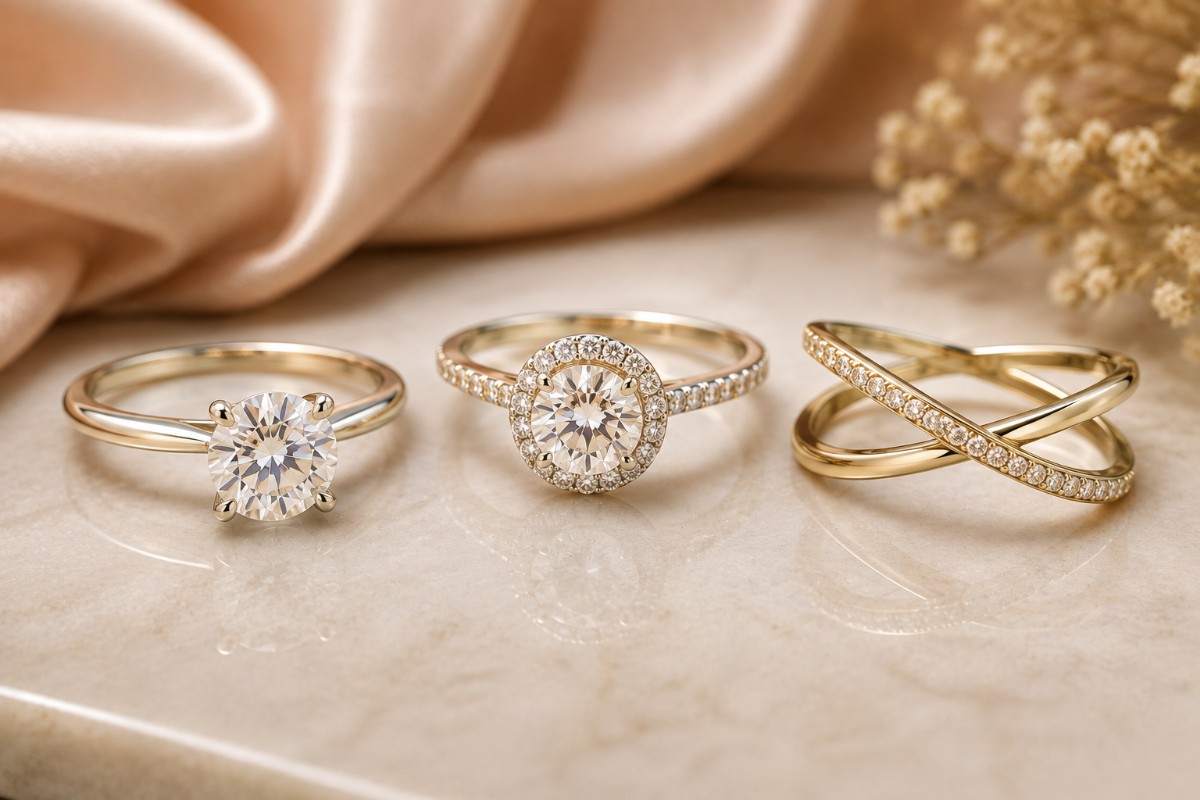
Diamonds aren’t the only factor. Setting style adds real, variable cost on top of the stone itself.
A simple solitaire keeps costs concentrated almost entirely on the diamond, which is often the most efficient way to maximize stone quality within a fixed budget. A design with a more visual presence, like something from the engagement ring for women collection built around a halo or detailed band, trades some of that diamond-focused budget for additional brilliance and design complexity instead.
Distinctive designs can also offer a different kind of value entirely. A piece like a criss cross diamond ring deliver a more unique, memorable look through design rather than sheer carat weight, which is worth considering if personal style matters more to you than maximizing size for the price.
Questions Worth Asking Before You Set a Final Number
A few honest questions help clarify what actually matters most to you, beyond any general rule or average.
- Does size matter more than brilliance to you, or the reverse? This shapes whether budget should prioritize carat weight or cut quality.
- Are you open to lab-grown diamonds? This single decision can meaningfully expand what’s possible within the same budget.
- Is a distinctive design more important than the maximum size? Some buyers prioritize a piece that feels different and personal over one that’s simply as large as possible.
- What financial goals come right after this purchase? A wedding, honeymoon, or major life expense soon after should reasonably factor into how much feels appropriate to spend now.
The Bottom Line on What to Actually Spend
There’s no universal right number, and anyone offering one with total confidence is likely repeating a marketing rule rather than giving genuinely useful advice. The right amount is whatever you can spend comfortably, without financial strain, that reflects what you and your partner actually value, whether that’s maximum size, exceptional cut quality, a distinctive design, or simply staying well within a modest, sustainable budget.
Frequently Asked Questions
1. Is the two months’ salary rule a real financial guideline?
Ans. No. It originated from a 1980s advertising campaign, not financial research, and doesn’t account for debt, savings, or individual financial circumstances, which is why it’s widely considered outdated advice today.
2. What’s a reasonable way to set an engagement ring budget?
Ans. Start by reviewing your actual savings, debt, and other financial priorities, then set up a comfortable spending number based on your real situation rather than a percentage of income or a published average.
3. Do lab-grown diamonds really cost less than mined diamonds?
Ans. Yes, often significantly less for comparable size and quality, since lab-grown diamonds don’t carry the same scarcity premium as mined diamonds, despite sharing identical hardness and grading standards.
4. Should I prioritize carat weight or cut quality on a limited budget?
Ans. Cut quality often delivers more visible impact per dollar than carat weight, since a well-cut smaller diamond frequently looks more brilliant than a larger, poorly cut one.
5. Does the ring setting affect the overall budget significantly?
Ans. Yes. Simple solitaire settings concentrate spending on the diamond itself, while more detailed designs, like halos or distinctive band styles, add cost through additional labor and materials.