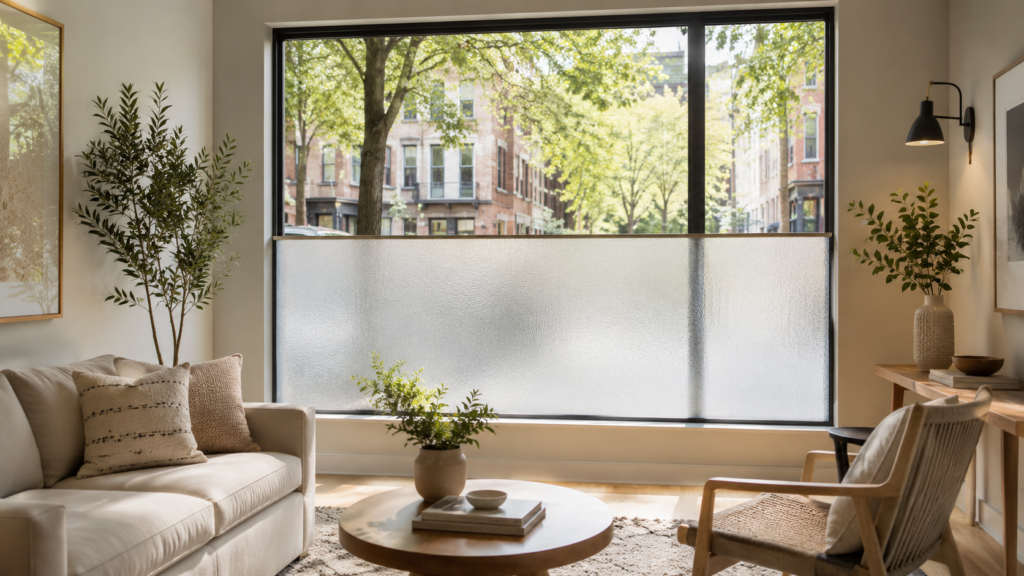
Street-facing windows often bring some of the best daylight into a home. They brighten living rooms, make smaller spaces feel open, and create a connection with the outdoors. The problem is that the same glass can also give pedestrians, neighbours, and passing traffic a direct view inside.
Closing heavy curtains solves the privacy issue, but it can leave a room dark and dependent on artificial lighting. A better goal is to control sightlines while keeping as much natural light as possible.
Fortunately, there are several ways to achieve that balance. The right option depends on the room, the window height, its distance from the street, and how much privacy you need during the day and at night.
Start by Understanding Where Privacy Is Actually Needed
Before covering the entire window, look at the problem from outside the home. In many street-facing rooms, only part of the glass creates a privacy concern.
People walking past a ground-floor living room may be able to see through the lower half of the window, while the upper section sits above normal eye level. A bedroom may need more coverage than a living room, while a bathroom may require permanent screening.
Identifying the real sightline lets you block the exposed area without sacrificing daylight unnecessarily. Consider the distance between the window and sidewalk, nearby building height, street lighting at night, and whether someone can see directly into seating, sleeping, or work areas.
Use Frosted or Translucent Window Film
Frosted window film is one of the simplest ways to reduce visibility through street-facing glass while still allowing daylight to enter.
Unlike blackout coverings, translucent film diffuses incoming light rather than blocking it completely. It works particularly well for bathrooms, entryways, ground-floor windows, and windows close to busy sidewalks.
You do not always need to cover the full pane. Applying film only to the lower half or lower two-thirds can protect the most exposed part of the room while leaving the upper glass clear.
One limitation is that most privacy films reduce the view in both directions. If keeping an outdoor view matters, use partial film or combine it with another privacy method.
Consider Privacy Window Inserts for a More Integrated Solution
If you want privacy without permanently changing the original window, an interior insert can be worth considering. Some retrofit systems can be configured with privacy or solar-control finishes that limit sightlines while still allowing usable daylight into the room.
For example, Magnetite Canada offers privacy window inserts designed to work with existing windows from the interior. The company states that privacy finishes can be added while retaining natural light, with additional benefits such as UV protection, thermal comfort, and noise reduction.
This approach can suit street-facing homes, condos, older properties, or spaces where replacing the original windows would be unnecessary or disruptive. When comparing insert systems, check how the privacy treatment affects visibility, glare, colour, and daylight in real lighting conditions.
Install Top-Down, Bottom-Up Shades
Standard blinds often force you to choose between an open window and a covered one. Top-down, bottom-up shades offer more control.
These shades can be lowered from the top while the bottom remains covered. For a street-level room, the section facing pedestrians stays private while daylight enters through the upper part of the window.
They work well in living rooms, dining rooms, bedrooms, and home offices because coverage can change throughout the day. If daylight is the priority, choose light-filtering fabric rather than blackout material.
Try Café Curtains for Lower-Level Privacy
Café curtains cover only the bottom section of a window and leave the top exposed. They are common in kitchens and dining areas but can also suit casual living spaces and home offices.
Their main advantage is simplicity. They interrupt direct sightlines from the street while allowing sunlight to enter freely above the curtain rod.
Choose light fabrics such as linen-look blends, voile, or cotton. Café curtains can also be paired with full curtains that close at night, when indoor lighting makes the room easier to see from outside.
Use Sheer Curtains Carefully
Sheer curtains soften a street-facing window, diffuse sunlight, and reduce how exposed a room feels during the day. However, they should not be treated as complete privacy protection in every situation.
Their performance changes with lighting conditions. During the day, a brighter exterior may make it harder to see inside. At night, when interior lights are on, the situation can reverse.
For that reason, sheers work best with blinds, shades, or heavier curtains that can be closed after sunset. Mounting curtains wider than the window frame also allows them to stack away from the glass and preserve more daylight when open.
Position Furniture to Break Direct Sightlines
Sometimes privacy can be improved without adding anything to the glass.
If a sofa, desk, bed, or dining table sits directly in line with a street-facing window, even a partially screened window may feel exposed. Moving furniture deeper into the room or changing its angle can make a noticeable difference.
Tall open shelving can also interrupt views without creating a solid wall. This is especially useful when you want to preserve a clear window because of an attractive view, architectural details, or limited daylight.
Add Plants Without Blocking the Whole Window
Plants can create a natural privacy layer, but the goal is to filter views rather than fill the entire window.
A few tall plants near the lower part of the glass can interrupt street-level sightlines while leaving open space for light. Plants with airy foliage often work better than dense indoor screens because they create visual separation without making the room feel closed in.
If you have outdoor space, planters may add another buffer between the sidewalk and the window. Keep the arrangement light enough that both the room and the plants still receive useful daylight.
Think About Daytime and Nighttime Privacy Separately
One of the most common mistakes with window privacy is testing a solution only during the day.
A treatment that looks private at noon may behave differently after sunset. When a room is brightly lit from inside, people outside may be able to see through materials that seemed private in daylight.
The most practical setup often uses two layers: a daytime solution that admits light and a second covering for nighttime. Frosted lower glass plus curtains, café curtains plus a roller shade, or translucent inserts plus drapes are all possible combinations.
Before settling on any option, turn on the room lights after dark and check the window from outside. This quick test can reveal privacy gaps that are easy to miss from indoors.
Choose Window Upgrades That Solve More Than One Problem
Street-facing windows may bring several concerns together, including privacy, traffic noise, glare, heat loss, unwanted solar heat, and UV exposure. If you are already planning an upgrade, it can make sense to consider whether one solution can address more than one issue.
Interior custom window inserts are one example. Magnetite Canada describes its inserts as retrofit panels fitted to existing windows, with options for privacy or solar films along with insulation and sound-reduction benefits. For homeowners who are otherwise satisfied with their existing frames, this can provide another route without a full window replacement project.
Compare the complete performance of any upgrade rather than choosing on privacy alone. Consider daylight, appearance, cleaning, ventilation, window access, installation, and how the treatment looks from both inside and outside.
Match the Privacy Method to the Room
Not every street-facing window needs the same treatment.
Bathrooms usually need strong privacy throughout the day, so frosted film or translucent glazing can be practical. Bedrooms need reliable nighttime coverage, making layered shades or curtains useful. Living rooms often benefit from partial treatments that preserve outside views. Home offices may need glare control as well as privacy, particularly when screens sit near the window.
For rooms with several street-facing windows, use related fabrics, finishes, or colours even if each window uses a slightly different privacy method.
Do Not Block More Glass Than Necessary
Natural light is easiest to preserve when privacy measures are applied only where they are needed.
Start with the most exposed area of the window. Test partial-height solutions before covering the entire pane. Choose light-filtering materials for daytime use and keep upper sections open when the sightline allows it.
It also helps to keep the glass clean and avoid placing bulky furniture directly in front of the brightest part of the window. Small choices around the opening can influence how much daylight reaches the rest of the room.
Finding the Right Balance
A street-facing window does not have to leave you choosing between privacy and daylight. The best solutions control what people can see without making the room feel closed off.
For some homes, a lower-panel film or café curtain will be enough. Others may benefit from adjustable shades, layered curtains, furniture placement, plants, or retrofit inserts with privacy finishes.
Start with the actual sightline, think about how conditions change after dark, and protect only as much glass as necessary. When the privacy method matches the room, you can keep the natural brightness that makes street-facing windows valuable in the first place.