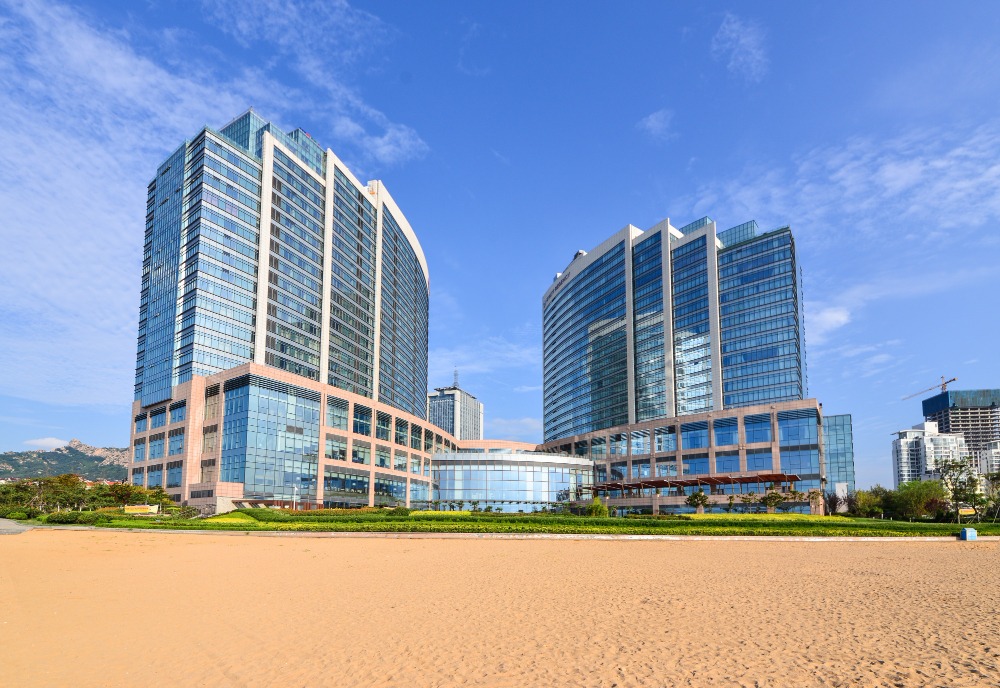
India Commercial Real Estate Market: Outlook
The report titled “India Commercial Real Estate Market Size, Share, Trends and Forecast by Type, End Use, and Region, 2026–2034” comprises the overall market analysis of India, size, growth trends, key drivers, and regional insights of the India commercial real estate market and other important aspects related to the report.
How Big is the India Commercial Real Estate Market?
The India commercial real estate market size reached USD 59.67 Billion in 2025. Looking forward, IMARC Group expects the market to reach USD 281.65 Billion by 2034, exhibiting a massive growth rate (CAGR) of 18.82% during 2026–2034. The market is experiencing unprecedented, structural expansion, aggressively driven by the explosion of Global Capability Centers (GCCs), the rapid financialization of the sector through REITs, a renaissance in premium retail, and the nationwide rollout of digital infrastructure.
What are the Key Developments and Emerging Trends in the India Commercial Real Estate Market?
-
GCC-Driven Large-Format Office Leases:
Global Capability Centres (GCCs) are structurally transforming the office landscape. In the first half of 2026, GCCs accounted for over 40% of the total gross office leasing in India, aggressively securing large, institutional-grade campuses. The shift from pure backend cost centers to advanced AI and global innovation hubs mandates premium, ESG-compliant, tech-enabled workspaces, allowing developers to command significant rental premiums.
-
Rise of SM-REITs and Institutional Capital:
The commercial real estate sector is witnessing rapid formalization and financialization. The democratization of Small and Medium Real Estate Investment Trusts (SM-REITs) and the strong performance of listed office REITs are unlocking massive retail and institutional capital. This fundamentally shifts property ownership models from fragmented individual holdings to professionally managed, yield-generating corporate portfolios.
-
Decentralization into Tier-2 Micro-Markets:
To combat rising operational costs, mitigate talent attrition, and tap into regional engineering pools, multinational firms and hyper-scalers are aggressively decentralizing into Tier-2 cities like Kochi, Coimbatore, Jaipur, and Indore. Improved transit infrastructure and targeted state government incentive programs are driving the formalization of Grade A commercial spaces in these rapidly emerging hubs.
-
Data Centers as an Infrastructure-Led CRE Asset:
Fueled by massive cloud adoption, domestic AI workloads, and stringent data localization laws, data centers have emerged as a high-growth, distinct commercial real estate category. Unlike standard commercial buildings, these assets require highly specialized infrastructure, including robust power availability and disaster resilience, attracting immense private equity and telecom investments.
➤ Request Sample Report (TOC & Charts): https://www.imarcgroup.com/india-commercial-real-estate-market/requestsample
What Factors are Driving Growth in the India Commercial Real Estate Market?
-
Unprecedented Growth of India’s Knowledge Economy:
The aggressive expansion of multinational and domestic IT, BFSI, and engineering firms acts as the absolute foundational growth engine. With over 2,400 GCCs projected to be operational by 2030, the continuous hiring of millions of highly skilled professionals creates a highly sustainable, structural demand for Grade A office spaces that continuously surpasses existing stock capacities.
-
Hybrid Work and Managed Flex Spaces:
The structural pivot toward flexible and managed workspaces heavily drives commercial lease volumes. Enterprises are increasingly partnering with flex-space operators for tailored, “plug-and-play” offices to manage headcount volatility, completely avoid heavy upfront capital expenditures (capex), and swiftly expand their operational footprint across multiple urban business districts.
-
Premiumization of Retail Real Estate:
Consumer spending has aggressively tilted toward experiential, high-end retail. This has triggered a massive renaissance in premium mall developments and mixed-use urban districts (“18-hour destinations”). Integrating retail, hospitality, entertainment, and workspaces within a single precinct drives exceptionally high footfalls and secures strong, diversified rental yields for developers.
-
Infrastructure Development and Connectivity:
Massive federal and state-level investments in metro rail networks, expressways, and new airports are unlocking previously inaccessible land parcels. This transit-oriented development directly catalyzes the construction of sprawling business parks and integrated commercial hubs on urban peripheries, systematically expanding the addressable market boundaries of major metropolitan cities.
How will the India Commercial Real Estate Market Evolve in the Coming Years?
The India commercial real estate market is positioned for explosive and sustained expansion throughout the forecast period, transitioning from a traditionally fragmented sector into a highly organized, institutional-grade asset class. The convergence of unparalleled GCC office demand, robust retail consumption, and the massive influx of alternative asset investments (like data centers and flex spaces) will heavily compound long-term market viability.
The market generated a revenue of USD 59.67 Billion in 2025 and is projected to reach USD 281.65 Billion by 2034, compounding at an exceptional 18.82% annually. While the rental segment will maintain absolute volumetric dominance, the outright sales category (projected to grow at a ~19.8% CAGR) will continuously outpace overall industry growth, driven by strata sales and the aggressive expansion of the domestic REIT ecosystem.
Industry Value Chain Analysis
-
Land Acquisition and Regulatory Approval: The foundational tier involves securing prime land parcels in designated business districts, conducting rigorous environmental and legal due diligence, and obtaining necessary zoning and construction clearances from local municipal authorities.
-
Development and Asset Construction: During this highly capital-intensive phase, prominent real estate developers and EPC contractors construct Grade A offices, retail malls, or data centers. This stage increasingly incorporates sustainable building materials and energy-efficient designs to achieve critical green certifications (LEED/IGBC) demanded by institutional occupiers.
-
Leasing, Property Management, and Monetization: Finished assets are aggressively marketed to prospective corporate tenants and retailers through specialized brokerage networks. Post-occupancy, professional facility management firms handle daily operations, maintenance, and tenant relations. Developers often monetize mature, yield-generating assets by transferring them into REIT portfolios or selling them to private equity infrastructure funds.
➤ Explore the Full Report with Charts, Table of Contents, and List of Figures: https://www.imarcgroup.com/india-commercial-real-estate-market
Competitive Landscape & Key Company Insights:
The India commercial real estate market exhibits a highly consolidated, fiercely competitive landscape at the top tier, dominated by massive, well-capitalized domestic developers and prominent global private equity giants. These market participants compete aggressively through massive land bank acquisitions, rapid project completions, and the relentless pursuit of marquee multinational tenants.
To achieve absolute scale, top companies are heavily prioritizing the launch of REITs to unlock immense institutional capital, integrating advanced prop-tech solutions for highly efficient facility management, and shifting their core portfolios toward highly resilient, mixed-use developments.
Key players actively shaping the competitive environment include major domestic builders and international asset managers who possess the operational capability to deliver millions of square feet of institutional-grade property annually, setting the absolute benchmark for commercial infrastructure nationwide.
Some of the keyplayers in the industry are:
- DLF
- Embassy REIT
- Godrej Properties
- Mindspace Business Parks REIT
- Prestige Estates Projects Ltd.
Deep-Dive Segment Insights
-
By Type: The market is segmented into Rental and Sales. The Rental segment dominates the market, capturing a 64.8% share in 2025. This commanding leadership reflects the strict preference of major multinational corporations, GCCs, and premium retailers to lease rather than own real estate, allowing them to remain asset-light and preserve core capital for primary business operations.
-
By End Use: The market is categorized into Offices, Retail, Industrial, Logistics, and Others. Offices lead the end-user category with a 46.3% market share in 2025. This supremacy is aggressively driven by India’s undeniable position as the global epicentre for technology outsourcing, engineering research and development (ER&D), and backend financial services.
-
By Region: The India commercial real estate market by region is segmented into North India, West and Central India, South India, and East India.
-
West India: Represents the absolute market leader with a 34.5% share in 2025. This regional dominance is heavily fueled by Mumbai’s status as the financial capital, possessing the highest concentration of BFSI corporate headquarters, alongside Pune’s rapidly expanding, massive IT and manufacturing corridors.
-
Recent Developments:
-
Historic Office Leasing High in Q1 and H1 2026: India’s commercial real estate sector reached an unprecedented milestone in the first half of 2026, recording a record 45.5 million square feet of gross office leasing activity. Driven heavily by Global Capability Centres (GCCs)—which accounted for over 43% of the total volume—cities like Bengaluru, Mumbai, and Hyderabad aggressively led the charge, defying broader global economic headwinds and demonstrating the structural strength of the domestic market.
-
Rapid Escalation in Tier-1 Office Rentals (Mid-2026): Driven by severe supply crunches in prime business districts and intense corporate competition for institutional-grade spaces, Tier-1 cities experienced significant year-on-year rental appreciation in 2026. Commercial hubs in Hyderabad witnessed exceptional rental growth exceeding 10%, while Delhi-NCR and Bengaluru recorded robust increases of 7.9% and 6.4%, respectively, reflecting the immense pricing power currently held by premium developers.
-
Mid-Market GCC Democratization (Mid-2026): The commercial real estate market is witnessing a massive democratization of the GCC model. By mid-2026, over 27% of India’s active GCCs were operated by mid-sized global enterprises rather than traditional Fortune 500 companies. This distinct shift is aggressively driving fresh demand for flexible, managed workspaces and highly efficient, sub-100,000 sq. ft. Grade A offices across top metropolitan areas.
-
Decentralization Policies Take Effect (August 2026): State governments began actively rolling out targeted incentive frameworks to push GCC and data center setups beyond saturated capital cities. These aggressive regulatory pushes are successfully accelerating commercial real estate formalization and massive large-format developments in Tier-2 micro-markets like Coimbatore, Kochi, and Indore, drastically expanding the sector’s geographical footprint.
Customization Note: If you require any specific information not covered within this report’s scope, we will provide it as part of the customization.
➤ Request Report Customization: https://www.imarcgroup.com/request?type=report&id=29653&flag=E
Q1. What is the current size of the India commercial real estate market?
The India commercial real estate market size was valued at USD 59.67 Billion in 2025.
Q2. What is the projected market size by 2034 and the CAGR from 2026 to 2034?
The market is projected to reach USD 281.65 Billion by 2034, growing at an explosive compound annual growth rate (CAGR) of 18.82% during the 2026–2034 forecast period.
Q3. Which type segment dominates the India commercial real estate market?
The Rental segment dominates the market with a 64.8% share in 2025, heavily favored by corporations seeking to remain asset-light while occupying premium business infrastructure.
Q4. Which end use commands the highest share in the India commercial real estate market?
Offices command the definitive lead with a 46.3% market share in 2025, propelled by the relentless expansion of domestic technology firms and global capability centers.
Q5. Which region holds the leading position in the India commercial real estate market?
West India represents the absolute market leader with a 34.5% share in 2025, primarily fueled by the massive financial and corporate headquarters concentrated across Mumbai and Pune.
Strategic Insight & Verdict
Through comprehensive data analysis, we observe that the strategic transition toward ESG-compliant, tech-enabled Grade A offices and the aggressive scaling of the domestic REIT ecosystem represent the most lucrative frontiers for stakeholders. Institutional investors and top-tier developers must prioritize capital deployment into developing highly customized, build-to-suit campuses for Fortune 500 GCCs and aggressively expanding mixed-use retail destinations. Leveraging India’s unparalleled knowledge economy growth and actively participating in the rapid formalization of Tier-2 commercial infrastructure will remain the definitive path for securing absolute market dominance through 2034.