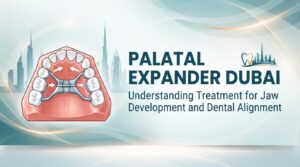
A narrow upper jaw can affect more than the appearance of a person’s smile. It may contribute to crowded teeth, crossbite, and difficulties with the way the upper and lower jaws meet. Palatal Expander Dubai is a commonly searched term among parents and adults looking for orthodontic solutions to these concerns. A palatal expander is a dental appliance designed to gradually widen the upper jaw when additional space or improved jaw width is clinically needed.
The treatment is often considered during childhood and adolescence, when the upper jaw is still developing. However, selected adult patients may also benefit from expansion techniques, depending on their bone maturity and dental condition. Understanding how the appliance works, who may need it, and what treatment involves can help patients make informed decisions about orthodontic care in Dubai.
What Is a Palatal Expander and How Does It Work?
A Palatal Expander Treatment In Dubai is an orthodontic appliance fitted to the upper teeth or supported by other structures, depending on the design. Its purpose is to increase the width of the upper jaw by applying controlled expansion forces.
The upper jaw consists of two halves joined along a central area called the midpalatal suture. In growing children, this area is generally more responsive to orthodontic expansion. The appliance gradually applies pressure to encourage the two halves to separate, allowing new bone to develop in the space.
Many conventional expanders contain a small central screw. The orthodontist provides instructions on how and when to turn it using a specialised key. Each adjustment produces a small amount of expansion rather than an immediate change.
There are several types of appliances, including:
- Hyrax expander: A fixed appliance commonly attached to the upper back teeth.
- Haas expander: A tooth-supported design that also incorporates acrylic support against the palate.
- Removable expander: An appliance that can be taken out, generally used in selected cases requiring limited expansion.
- MARPE: Mini-screw-assisted rapid palatal expansion, which uses temporary anchorage devices to help deliver expansion forces in appropriate patients.
The choice depends on age, jaw structure, dental alignment, and the amount of expansion required. An orthodontist evaluates these factors before recommending a particular appliance.
Who May Need Palatal Expander Treatment in Dubai?
Not every child or adult with crowded teeth needs a palatal expander. The appliance is generally recommended when an examination identifies a narrow upper jaw or a transverse discrepancy that may affect dental function and alignment.
Several orthodontic conditions may lead to consideration of expansion.
Posterior crossbite
A posterior crossbite occurs when some upper back teeth bite inside the corresponding lower teeth rather than outside them. This can be associated with a narrow upper dental arch. Expansion may help correct the underlying width discrepancy.
Dental crowding
When the upper jaw is too narrow, there may be insufficient room for permanent teeth to align naturally. In selected growing patients, widening the upper jaw can provide additional space as part of a broader orthodontic plan.
Narrow upper dental arch
Some patients have an upper arch that is noticeably narrower than the lower arch. This difference can affect how the teeth meet during chewing and may contribute to bite irregularities.
Bite development concerns
A developing bite may require early assessment when the upper and lower jaws do not fit together properly. Timely orthodontic evaluation can help determine whether expansion is appropriate or whether another treatment approach is needed.
For example, a child aged eight or nine may have a posterior crossbite and limited upper arch width. An orthodontist may recommend an expander before all permanent teeth have erupted, taking advantage of the child’s growth stage.
Parents should remember that early treatment is not necessary for every orthodontic problem. The decision should be based on clinical findings rather than age alone.
Understanding Palatal Expander Treatment in Dubai
Palatal Expander Treatment In Dubai generally involves several stages, beginning with an orthodontic examination and continuing through active expansion and a stabilisation period.
1. Initial orthodontic assessment
The orthodontist examines the upper and lower teeth, jaw width, bite, and overall oral health. Dental photographs, scans, and X-rays may be recommended to understand the underlying structure and determine whether expansion is suitable.
The clinician also considers the patient’s age and skeletal development. This is particularly important because the response to conventional expansion differs between growing children and adults.
2. Appliance selection and fitting
Once the treatment plan is established, the appropriate expander is selected. A fixed appliance is usually attached to supporting teeth using dental cement or another suitable attachment method.
The orthodontist explains how the appliance works, how to maintain oral hygiene, and whether adjustments need to be performed at home.
3. Active expansion
During the active phase, the appliance is adjusted according to the prescribed schedule. Patients may notice pressure around the upper teeth, palate, or nose after an adjustment.
Some people also observe a temporary gap between their upper front teeth. This can be a normal part of conventional expansion, although the amount and timing of separation vary.
Patients should never increase the adjustment frequency without professional instructions.
4. Stabilisation period
Once the desired width has been achieved, the appliance is generally kept in place for a period to allow the new bone and surrounding tissues to stabilise.
This stage is important because the jaw needs time to adapt to its expanded position. Removing the appliance too early may increase the risk of relapse.
5. Further orthodontic treatment
In some cases, braces or clear aligners may be recommended after expansion to improve individual tooth positions and refine the bite. Expansion and tooth alignment are related but separate stages of orthodontic care.
What Should Patients Expect During Treatment?
Adjusting to a palatal expander takes time, especially during the first few days. Children may initially notice changes in speech, swallowing, and eating. These effects usually become easier to manage as they become familiar with the appliance.
Temporary pressure is common after adjustments. Some patients experience mild tenderness, while others notice increased saliva production or difficulty pronouncing certain sounds.
Eating habits may also need to change temporarily. Softer foods are often easier to manage during the initial adjustment period.
Suitable food choices include:
- Soft rice and cooked vegetables.
- Eggs and other soft protein sources.
- Yogurt and soft cheese.
- Mashed potatoes.
- Soft fruits cut into small pieces.
Very sticky, hard, or chewy foods should generally be avoided because they may damage the appliance or become trapped around its components.
Oral hygiene requires additional attention. Food particles can collect around the expander, particularly near the roof of the mouth and supporting teeth. Patients should brush carefully and follow their orthodontist’s recommendations for cleaning around the appliance.
If a component becomes loose, causes persistent pain, or develops a sharp edge, the orthodontic practice should be contacted rather than attempting to repair it at home.
AQR Orthodontics is one provider name patients may encounter when researching orthodontic treatment in Dubai. When comparing treatment options, patients should consider the diagnostic process, appliance selection, clinical supervision, and arrangements for follow-up care.
Palatal Expansion for Children and Adults: What Is the Difference?
Age is one of the most important considerations when planning upper jaw expansion. The biological response of the jaw changes as a person grows, which can influence the appliance and technique selected.
Treatment during childhood
Children are often suitable candidates for conventional palatal expansion because the midpalatal suture is generally more responsive during growth. The orthodontist can use this developmental stage to address certain width discrepancies before or during the eruption of permanent teeth.
Early assessment may also help identify crossbites that could otherwise contribute to uneven dental contacts or functional jaw shifts.
Treatment during adolescence
Adolescents may still benefit from conventional expansion, although the degree of skeletal maturity varies. The orthodontist must assess whether a traditional tooth-supported expander is likely to achieve the intended result.
Some patients may require a different approach depending on the maturity of the palatal suture.
Treatment for adults
Adult jaw bones are more mature, making conventional expansion less predictable as a method of skeletal widening. However, treatment is not necessarily impossible.
MARPE may be considered in selected adults because it uses mini-screws to provide additional skeletal anchorage. In more complex cases, surgically assisted expansion may be discussed.
These methods have different indications, limitations, and risks. An adult patient should receive an individual assessment before deciding on treatment.
Benefits, Limitations, and Long-Term Considerations
Palatal expansion can provide important orthodontic benefits when a genuine transverse jaw discrepancy exists. It may help correct posterior crossbites, improve upper arch width, and create additional room for dental alignment in selected patients.
However, expansion should not be considered a universal solution for crowded teeth or breathing difficulties. Although some patients report changes in nasal airflow following treatment, an expander is not a guaranteed treatment for sleep-disordered breathing or other airway conditions.
Potential complications can include temporary discomfort, irritation of the palate, unwanted dental tipping, gum changes, and relapse. The likelihood of these issues depends on the appliance, treatment technique, patient anatomy, and clinical supervision.
Retention is also important. Once active expansion is complete, the appliance or another retention method helps maintain the corrected width while tissues stabilise. Some patients subsequently require braces or other orthodontic treatment to achieve proper tooth alignment.
Regular appointments allow the orthodontist to monitor progress and identify problems early. Parents should also ensure that children follow cleaning instructions and attend scheduled reviews.
Conclusion
Palatal Expander Dubai is an important orthodontic treatment option for patients with a narrow upper jaw, posterior crossbite, or certain dental alignment concerns. The appliance works by gradually increasing upper jaw width, with treatment planning influenced by age, skeletal development, and individual dental needs.
For children, early assessment may provide an opportunity to guide jaw development, while adolescents and adults may require different expansion techniques. A successful outcome depends on accurate diagnosis, appropriate appliance selection, careful monitoring, and adequate stabilisation after active treatment. Understanding these factors helps patients and families approach orthodontic care with realistic expectations and greater confidence.