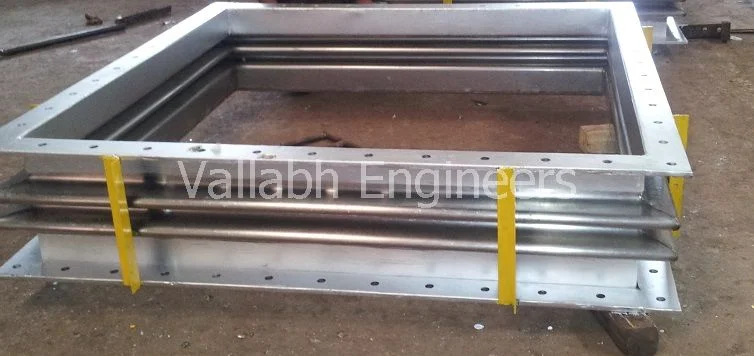
Vallabh Engineers is considered one of the most dependable Rectangular Bellow Manufacturers in Vadodara. We strongly believe that every product reflects the standards that we maintain in our manufacturing unit in terms of both quality and finish
Rectangular Bellow: Design, Types, Benefits and Industrial Applications
Rectangular Bellow is a flexible component used in ducting, exhaust systems and industrial pipelines where a rectangular connection must accommodate movement. Its formed or fabricated construction helps manage thermal expansion, vibration and alignment changes while maintaining a connection between adjoining sections. These components are useful in large air, gas and exhaust systems where round connections may not suit the equipment layout.
Temperature changes, pressure fluctuations and equipment movement can load industrial ducts. A correctly specified Rectangular Bellow helps reduce these loads. Vallabh Engineers provides industrial bellows solutions for varied engineering requirements.
What Is a Rectangular Bellow?
A Rectangular Bellow is an expansion component with a rectangular cross-section and a flexible section, commonly formed from metal or fabricated using suitable materials. Its shape allows it to fit rectangular ducts, flues and equipment connections. Depending on its construction, it can accommodate axial, lateral or angular movement, as well as vibration and minor installation variations.
Designs may include convolutions, reinforced corners, frames, liners or covers. Material and construction depend on temperature, pressure or vacuum, movement and gas composition. Rectangular corners can create different stresses from those in circular bellows, so engineering review is important.
Common Types of Rectangular Bellows
Configuration depends on duct layout, movement and operating conditions.
1. Metallic Rectangular Bellows
Metallic Rectangular Bellow products suit hot air, flue gas and exhaust applications. Stainless steel or suitable alloys may be selected for temperature and corrosion resistance.
2. Fabric Rectangular Bellows
Fabric Rectangular Bellow products use layered materials selected for temperature, pressure and chemical conditions. They are used in large ducts and ventilation systems requiring flexibility.
3. Reinforced Corner Designs
Stresses can concentrate at rectangular corners. Reinforcements and suitable frames help withstand specified movement and operating loads.
4. Insulated or Lined Designs
Some designs use liners, insulation or covers to manage heat and protect flexible elements from gas flow or abrasive particles.
Key Benefits in Industrial Systems
A properly engineered Rectangular Bellow offers practical advantages in duct and piping systems.
Accommodates Thermal Expansion
Ducts expand when heated and contract as they cool. The flexible section absorbs specified movement and limits excessive loads on panels, flanges and machinery.
Helps Manage Vibration
Fans, blowers and turbines transmit vibration through ductwork. A suitable Rectangular Bellow connection can reduce vibration transfer and protect nearby components.
Supports Equipment Alignment
Fabrication tolerances and installation conditions can create alignment differences. The Rectangular Bellow can accommodate defined offsets within its design limits.
Fits Rectangular Duct Layouts
Industrial ventilation and exhaust systems often use rectangular ducts to fit building spaces. A matching cross-section avoids an unnecessary transition to round ducting.
Helps Protect Connected Structures
The assembly can reduce stress on supports, equipment nozzles and adjoining sections. Correct anchors, guides and supports remain essential for safe operation and predictable movement throughout the system’s service life.
Industrial Applications
They are used in facilities handling hot gases, air, exhaust or process ventilation.
Power Generation
Power plants use them in boiler ducting, flue-gas systems and fan connections. Temperature, gas composition and movement guide selection.
Cement and Steel Plants
Kilns, furnaces and dust collection systems face heat, vibration and airborne particles. Construction must suit these conditions.
Chemical and Petrochemical Facilities
Process ventilation may need flexible connections suited to heat and chemical exposure. Material compatibility and pressure matter during final product selection.
HVAC and Industrial Ventilation
Ventilation systems use rectangular connections around air-handling equipment and fans to manage vibration and installation movement.
How to Select the Right Rectangular Bellow
Before specifying a Rectangular Bellow, review these system details:
- Dimensions: Confirm the internal opening, overall length, flange or frame details and corner geometry.
- Temperature: Identify normal, maximum and minimum operating temperatures, including start-up conditions.
- Pressure or vacuum: State the operating range and any pressure fluctuations.
- Movement: Define axial, lateral and angular movement, including combined movement.
- Media: Describe gas or air composition, moisture, chemicals, dust and abrasive particles.
- Material and construction: Select suitable metal, fabric, insulation, liner and reinforcement based on service conditions.
- Installation: Review supports, guides, anchors, alignment and available space.
Provide Rectangular Bellow drawings and operating data for engineering review. Dimensions alone are not enough; movement, temperature, pressure and fatigue requirements matter. A Rectangular Bellow must match the complete operating profile.
Why Choose Vallabh Engineers?
Review technical knowledge, material options, fabrication quality and inspection practices when choosing a manufacturer. Vallabh Engineers offers Rectangular Bellow and other industrial bellows solutions. Equipment drawings and operating details help identify a suitable configuration.
Frequently Asked Questions
1. What is the main purpose of a Rectangular Bellow?
It provides flexibility in rectangular duct or equipment connections and helps accommodate specified thermal movement, vibration and alignment changes.
2. Where are rectangular bellows commonly installed?
They are used in power plants, cement and steel facilities, chemical plants, exhaust systems and industrial ventilation installations.
3. Which materials are used to manufacture them?
Depending on service conditions, manufacturers may use stainless steel, other suitable alloys or specially selected fabric materials.
4. What information is needed before ordering?
Provide dimensions, temperature, pressure or vacuum, movement requirements, media details, connection arrangement and installation drawings.
Conclusion
A Rectangular Bellow supports rectangular duct systems exposed to heat, vibration or movement. Rectangular Bellow performance depends on suitable construction, materials and movement capacity. Engineering, supports and installation are equally important. Vallabh Engineers can discuss requirements using project drawings and operating details.
Contact Vallabh Engineers today to discuss your application, request a quotation and place your order.