Semi-mount vs finished ring is one of the most important inventory decisions a jewelry business makes, and it affects far more than what sits in the display case. It shapes how capital gets allocated, how staff sell, and how customers experience the buying process itself. This guide breaks the decision into seven practical, business-focused lessons every jeweler should understand before deciding how to balance the two.
1. Understand What Separates a Semi-Mount From a Finished Ring

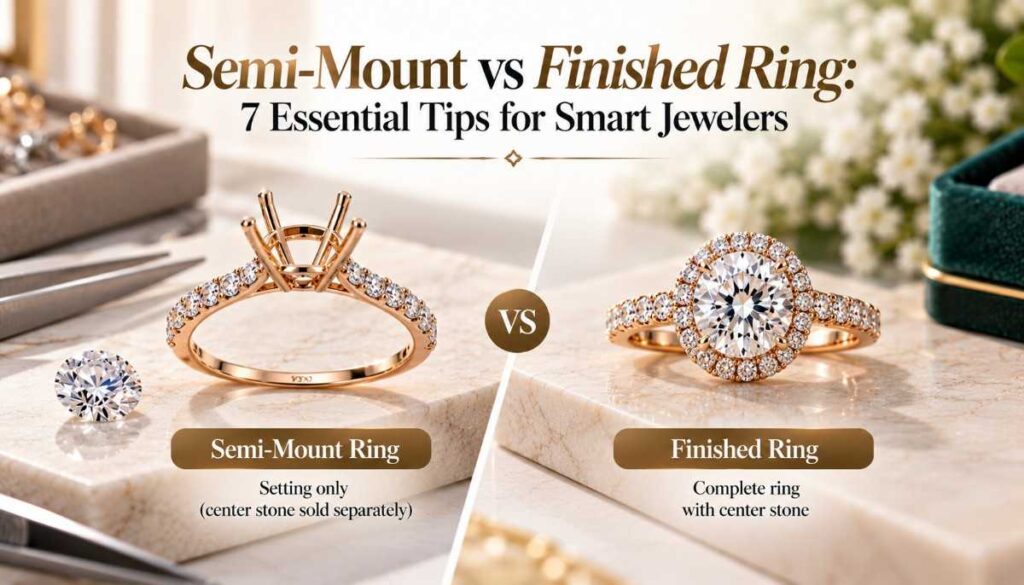
In the semi-mount vs finished ring debate, the starting point is a simple structural difference. A semi-mount is a fully completed setting sold without its center stone. A finished ring already has that stone permanently set and is ready for immediate sale.
This single difference shapes nearly everything else in this comparison, from how each piece is priced to how customers experience shopping for it. Understanding this distinction clearly is the foundation for every decision that follows.
2. Know How Each Option Affects Your Capital
The most consequential part of the semi-mount vs finished ring decision isn’t visible to customers at all. It’s how each option affects your balance sheet.
A finished ring requires full capital investment, metal, labor, and the center stone, before any customer has shown interest in that exact piece. If it doesn’t sell quickly, that capital sits idle.
A semi-mount only requires capital for the setting. The more expensive component, the stone, isn’t purchased until a real order is confirmed. This makes semi-mounts a meaningfully more capital-efficient way to display design variety, particularly for higher-value categories like engagement rings. The Gemological Institute of America offers a helpful overview of how engagement ring settings are structurally built , which is useful background for understanding why this capital difference exists in the first place.
3. Train Staff for Two Different Sales Conversations

Selling a finished ring is simple. The customer evaluates one complete object and decides.
Selling a semi-mount is different. It requires guiding the customer through two decisions, the setting and the stone, which calls for genuine consultative selling skills. Staff need to explain stone quality clearly without overwhelming the customer, while also helping them picture the finished combination.
Jewelers who lean into the semi-mount vs finished ring model without training staff for this more involved conversation often leave real value on the table. This is an area worth investing in directly.
4. Display Each Option the Right Way
Finished rings work well in traditional display cases, since customers see the complete piece immediately. Semi-mounts need a bit more context.
Pairing a semi-mount with sample stones, or clear signage explaining that the center stone is chosen separately, helps customers understand what they’re actually looking at. Without this, some customers mistakenly assume they’re viewing a plain, lower-value piece rather than a customizable foundation.
5. Compare Margin Potential Honestly
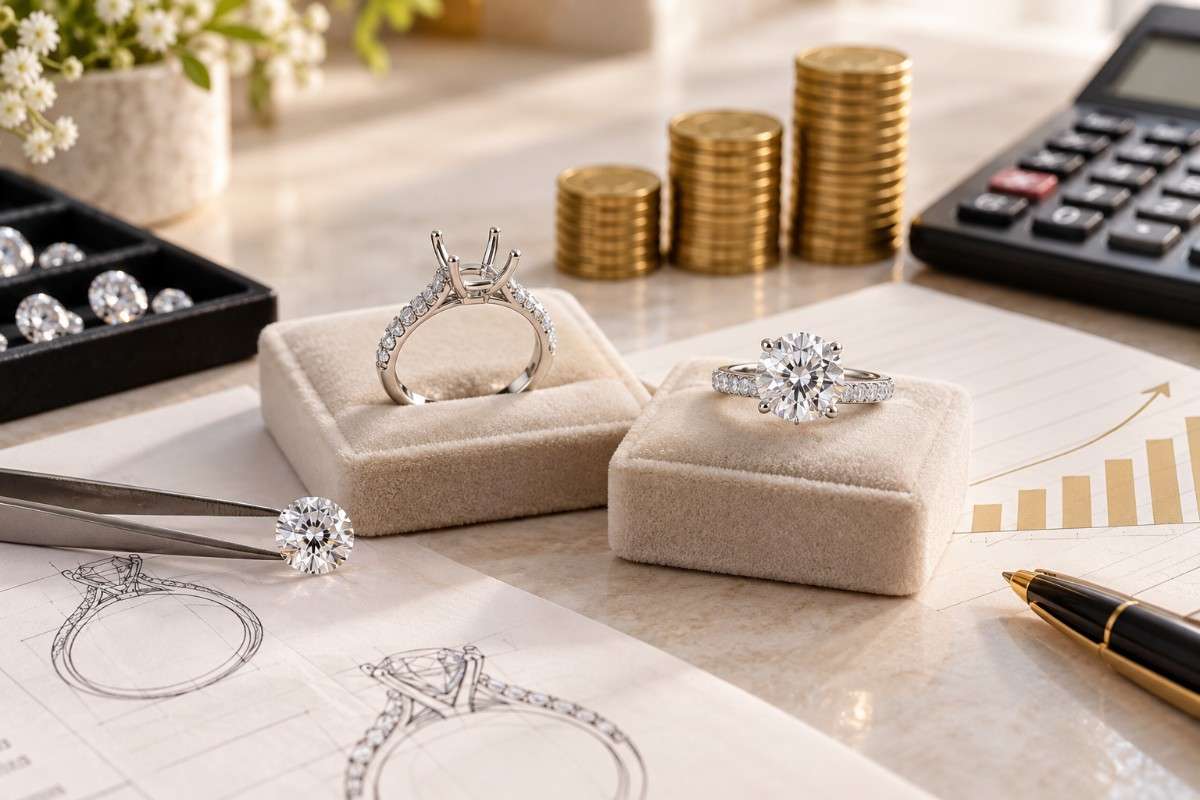
Margin structures often differ between the two models. Semi-mounts frequently carry strong margins on the setting alone, since pricing isn’t bundled the way it is with a finished ring.
Separating setting and stone pricing can also open the door to upselling. A customer drawn to a particular setting may be more willing to invest in a higher-quality stone once they’re emotionally attached to that specific design.
Finished rings, while requiring more upfront capital, can still deliver strong margins on reliably popular styles where demand is predictable enough to justify the investment. Knowing which of your own designs fall into that category is key to making smart semi-mount vs finished ring decisions style by style, rather than applying one rule to your entire catalog.
6. Know When a Finished Ring Still Wins
Despite the capital efficiency of semi-mounts, finished rings remain the better choice in specific situations. A customer shopping on a tight timeline, a last-minute gift or an imminent proposal, is often better served by something ready for immediate purchase.
Simple, reliably popular styles in common sizes may also carry low enough inventory risk to justify finished stock. And some customers simply prefer the ease of evaluating one complete piece rather than navigating a two-part decision.
7. Build the Right Mix for Gents and Ladies Collections
The semi-mount vs finished ring balance plays out differently across gents and ladies inventory. Ladies rings, especially engagement rings, tend to benefit more from the semi-mount model, since stone preferences vary so widely in this category.
A well-built Ring Mounting selection built primarily around semi-mounts gives jewelers strong capital efficiency while still offering real personalization. Gents rings, where stone selection plays a smaller role, often lean more toward finished inventory, though semi-mount options remain valuable for pieces with a prominent stone. A well-rounded Gents Ring Mounting selection that includes both gives jewelers flexibility across this category too.
For more on building out a broader, budget-conscious catalog around this strategy, see our guide on how jewelers can stock ring styles by budget, and our breakdown of how semi-mounts help manage custom orders.
Final Thoughts
The semi-mount vs finished ring decision isn’t just about product presentation, it’s a genuine business strategy question touching capital, staffing, and margin. Jewelers who build an intentional mix, rather than defaulting entirely to one model, consistently see better capital efficiency and stronger sales outcomes. Understanding these seven lessons is what separates jewelers who manage this balance well from those who simply stock what feels familiar.