The Soul of the Cuban Cajita: A Journey Through Comfort and Tradition
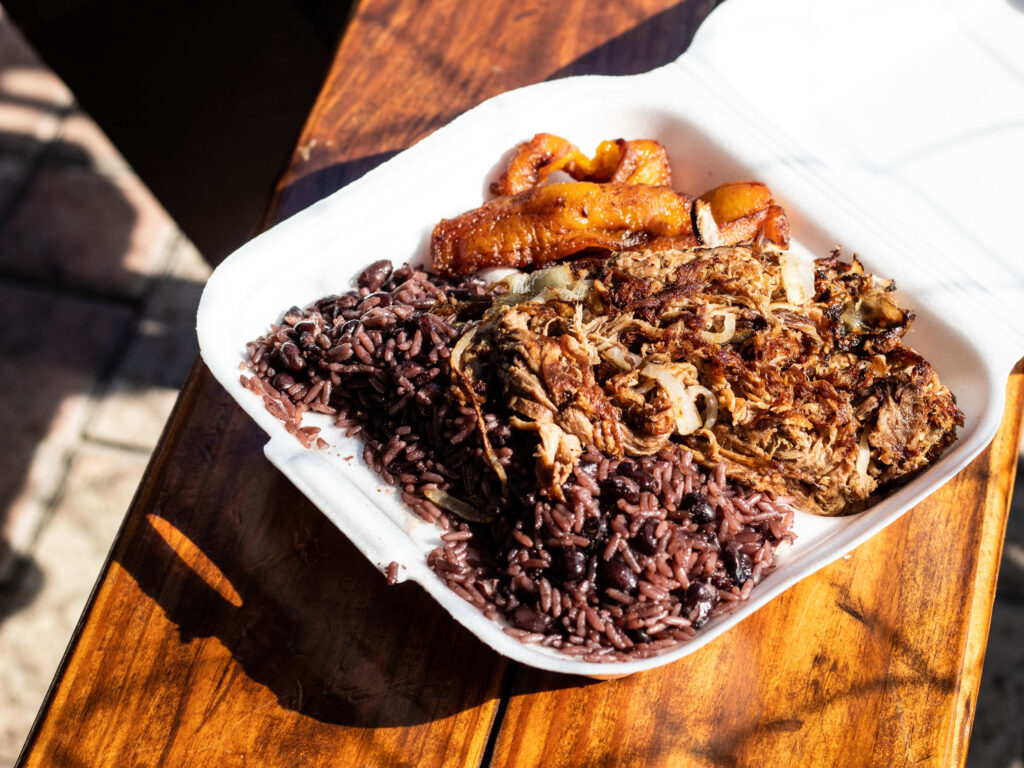
If you find yourself in a bustling corner of Miami or the sun-drenched streets of Havana, you will inevitably encounter the humble “cajita.” More than just a takeout container, this white foam box is a treasure chest of history, culture, and deep, home-cooked comfort. The image above captures the quintessential Cuban lunch: a mountain of savory shredded meat, a foundation of dark rice and beans, and the golden glow of fried plantains. It is a meal that doesn’t just satisfy hunger—it tells the story of a people.
The Main Star: Shredded Perfection and Mojo Onions
The centerpiece of this box is often Lechón Asado (slow-roasted pork) or its crispy cousin, Vaca Frita. Looking at those tender, shredded strands, you can almost taste the “mojo”—a signature marinade of garlic, sour orange, and oregano. In traditional Cuban cooking, the meat is often seared or slow-roasted until it achieves a perfect balance of juicy tenderness and crispy edges.
The onions are not just a garnish; they are essential. Sautéed until soft and translucent, they soak up the rendered fats and citrus juices, adding a sweet, sharp contrast to the rich protein. Whether it’s beef or pork, this shredded style is a hallmark of Cuban resourcefulness, turning tough cuts of meat into a feast fit for a national holiday.
The Foundation of the Island: The History of Congrí
No Cuban box is complete without the dark, aromatic bed of Congrí (also known as Moros y Cristianos). Unlike other cultures that serve rice and beans side-by-side, Cubans often cook them together in one pot. This technique allows the rice to absorb the deep, earthy pigments and flavors of the black beans.
The name Moros y Cristianos (Moors and Christians) is a direct nod to Spain’s history, representing the fusion of African (black beans) and Spanish (white rice) cultures. It is seasoned simply—usually with a “sofrito” of peppers, onions, and garlic—but its importance is massive. It is the literal and metaphorical foundation of the Cuban diet, representing endurance and the ability to create something beautiful from the most basic staples.
A Sweet Island Balance: The Magic of Maduros
Lying across the top are the Maduros—sweet, ripe plantains fried until their natural sugars caramelize into a deep cubanbistrorestaurant bronze. In Cuban cuisine, the balance between salty and sweet is sacred. The soft, almost buttery texture of the maduros provides a necessary counterpoint to the savory meat and the textured rice. For many, a meal without these “platanitos” feels incomplete; they are the golden exclamation point at the end of a flavorful sentence.
The Legacy of the “Cajita” Culture
The box itself carries a unique cultural weight. Historically, the cajita was the standard way to serve food at birthdays, community festivals, and quinceañeros. In a culture where community and sharing are everything, the cajita represents a portion of home that you can take with you. It is “peasant food” elevated to an art form—a testament to the resilience of a people who have navigated scarcity and change by holding onto the flavors of their ancestors.
When you open a box like the one in the image, you aren’t just eating lunch. You are participating in a centuries-old ritual that bridges the gap between the past and the present, one garlicky, savory bite at a time.
Would you like to know the best spots to find a box like this in your area, or perhaps a recipe to recreate that perfect shredded meat at home?