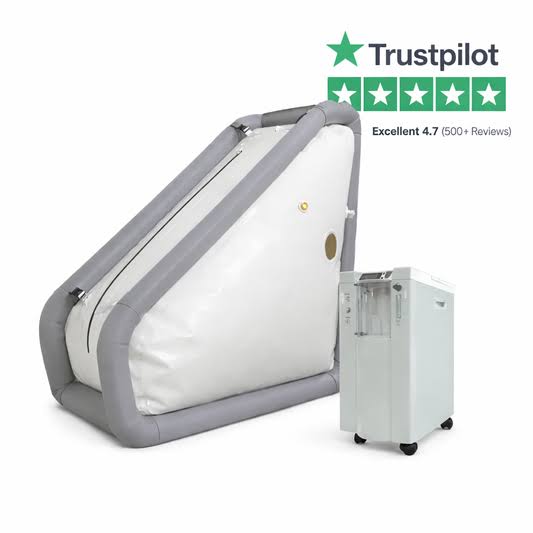
A sitting hyperbaric chamber offers an alternative to traditional lying-style chamber designs. Instead of requiring the user to remain fully reclined, a sitting model is designed around an upright position, which can make the layout more practical for certain spaces and personal preferences.
Warrior Willpower helps buyers explore chamber options by focusing on practical specifications, design, pressure capability, equipment, comfort, and safety. When researching a sitting chamber, it is useful to look beyond the appearance and understand how the complete system is designed to operate.
What Is a Sitting Hyperbaric Chamber?
A sitting hyperbaric chamber is a pressurized chamber designed around an upright seating position. Depending on the model, the user may sit on a chair or use an integrated seating arrangement while the chamber is pressurized. Some designs are compact and vertical, while larger models provide additional interior room.
For example, MACY-PAN’s L1 soft sitting model is listed at 140 × 65 × 160 cm and offers pressure settings of 1.3, 1.4, and 1.5 ATA. The manufacturer describes its vertical configuration as a way to reduce the chamber’s footprint.
Why Choose a Sitting Chamber Design?
One of the main practical reasons to consider a sitting chamber is space. A vertical chamber can fit into areas where a long lying chamber may be less convenient. This can be particularly relevant when planning a dedicated room or home wellness area.
The upright arrangement can also suit people who prefer sitting rather than lying for an extended period. However, comfort depends on the individual chamber’s dimensions, chair configuration, entry system, ventilation, and available interior space, so these specifications should be reviewed before purchasing.
Sitting vs. Lying Hyperbaric Chambers
Lying chambers are generally longer and provide a reclined environment, while sitting chambers are designed around a more vertical footprint. Neither configuration should be selected solely by appearance; the intended use, available space, comfort requirements, and manufacturer’s specifications should all be considered.
A sitting model can be especially interesting for buyers who want to conserve floor length. In contrast, someone who prefers to recline may find a lying configuration more suitable. Comparing the two designs before purchasing can help narrow down the options according to practical needs.
Pressure Options to Consider
Pressure is one of the most important specifications when comparing a sitting hyperbaric chamber. Models can have different maximum pressure ratings, and some soft chambers provide multiple settings. For instance, the MACY-PAN L1 is listed with 1.3, 1.4, and 1.5 ATA pressure options.
A higher pressure rating does not automatically mean that a particular chamber is appropriate for every person or application. The intended use and operating protocol should be considered separately from the maximum specification. Buyers should follow the manufacturer’s instructions and seek appropriate professional guidance where applicable.
Features Worth Checking Before Buying
The chamber capsule is only one component of a complete system. Buyers should examine the supporting equipment, controls, pressure monitoring, emergency features, and maintenance requirements before making a final decision. These details can have a significant impact on everyday operation.
Important features to compare include:
- Maximum and selectable pressure levels
- Chamber dimensions and interior space
- Entry and zipper design
- Internal and external pressure gauges
- Emergency pressure-release system
- Air compressor specifications
- Oxygen delivery equipment
- Cooling and dehumidification options
- Cleaning and maintenance requirements
- Warranty and manufacturer support
Oxygen Equipment and Air Supply
A sitting chamber normally works as part of a larger system that includes equipment for pressurization and oxygen delivery. Depending on the design, this may include an air compressor, oxygen concentrator, tubing, mask or headset, pressure gauges, and cooling equipment.
The MACY-PAN L1 specification lists an air compressor, oxygen concentrator, and optional air cooler as components of its system. The manufacturer also lists an internal pressure gauge and emergency valve among the chamber features. When comparing models, buyers should confirm exactly what equipment is included rather than assuming every chamber package is identical.
Comfort and Interior Space
Comfort matters when considering a chamber intended for repeated use. A sitting configuration should provide enough room for the user’s preferred seating position while allowing appropriate access to the chamber controls and emergency features.
Larger sitting models are also available. MACY-PAN’s ST2200, for example, is listed at 220 × 70 × 110 cm and is designed around an upright seating configuration. This illustrates how sitting chambers can vary considerably in size, so buyers should measure the intended room before selecting a model.
Home Placement and Room Planning
Before purchasing a sitting hyperbaric chamber, measure the area where the system will be installed. Remember that the chamber itself is not the only space requirement. The compressor, oxygen equipment, electrical connections, ventilation, and access around the chamber also need to be considered.
A clear area can make operation and maintenance easier. The FDA recommends following the manufacturer’s instructions for home-use medical devices and paying attention to operating requirements, maintenance, electrical considerations, and safety procedures.
Safety Considerations for Sitting Chambers
Safety should be a major consideration with any hyperbaric oxygen device. The FDA has warned about serious injuries and deaths associated with HBOT devices and emphasizes following manufacturer instructions, fire-prevention procedures, grounding requirements, training, monitoring, cleaning, maintenance, and restrictions on potentially hazardous items.
Oxygen-rich environments can increase fire risk, so users should never improvise operating procedures or introduce items that the manufacturer prohibits. Clothing, electrical devices, personal belongings, cleaning products, and static-producing materials should be handled according to the specific chamber’s instructions.
Sitting Chamber for Different Spaces
A vertical sitting design can be useful when the available room has limited floor length. Instead of requiring a long horizontal footprint, a compact model can make greater use of vertical space. This can be useful for home environments where every part of the room needs to be planned carefully.
Larger sitting chambers can provide additional interior room but naturally require more space. The best approach is to compare the chamber’s external dimensions with the actual room measurements, leaving sufficient access around the equipment for safe operation and maintenance.
Portable Sitting Hyperbaric Chamber Options
Some soft sitting chambers are designed with portability in mind. The MACY-PAN L1, for example, has a listed chamber weight of 15 kg, although its complete system includes additional equipment such as the compressor and oxygen concentrator. This distinction is important when estimating the total weight and space requirements.
Portability should therefore be evaluated as a complete system rather than by looking only at the chamber capsule. Consider where the compressor and oxygen equipment will be placed, how the system will be transported, and whether the intended room provides enough space for setup.
Maintenance and Long-Term Use
Regular maintenance is an important part of owning specialized equipment. Follow the manufacturer’s cleaning instructions, inspect components regularly, and pay attention to filters, hoses, zippers, valves, gauges, and other parts identified in the operating documentation.
The FDA specifically recommends following manufacturer-recommended cleaning procedures, maintenance intervals, and safety checks for HBOT equipment. Keeping documentation available and addressing unusual operating behavior promptly can also help support responsible long-term use.
How to Compare Sitting Chamber Models
When comparing several models, start with the specifications that directly affect your intended setup. Chamber dimensions, pressure range, material, equipment package, entry design, emergency systems, and support should all be part of the comparison rather than focusing on price alone.
A simple comparison can include:
- Chamber size and total system footprint
- Sitting position and interior configuration
- Pressure range
- Oxygen and air-delivery equipment
- Safety and emergency features
- Ease of cleaning and maintenance
- Warranty and technical support
Looking at these factors together gives you a clearer picture of what each model offers and whether it matches your available space and requirements.
Why Explore Warrior Willpower?
Warrior Willpower provides a convenient place to explore hyperbaric chamber options while considering practical factors such as design, pressure specifications, equipment, and home setup. For anyone researching a sitting hyperbaric chamber, understanding these details can make the buying process easier to navigate.
Rather than choosing a chamber based on one specification, consider the complete system and how it will fit into your daily environment. Reviewing manufacturer information and appropriate professional guidance can also help you approach the purchase with realistic expectations.
Conclusion
A sitting hyperbaric chamber provides a vertical alternative to traditional lying-style chamber designs. Its compact footprint, upright configuration, and range of available sizes can make this style worth considering for buyers who prefer a sitting position or have limited floor space.
Warrior Willpower can help you explore different chamber options and the features that matter when comparing models. Before purchasing or operating any HBOT device, carefully review the manufacturer’s instructions and applicable safety guidance. Choosing based on the complete system, rather than one feature alone, can help you make a more informed decision.