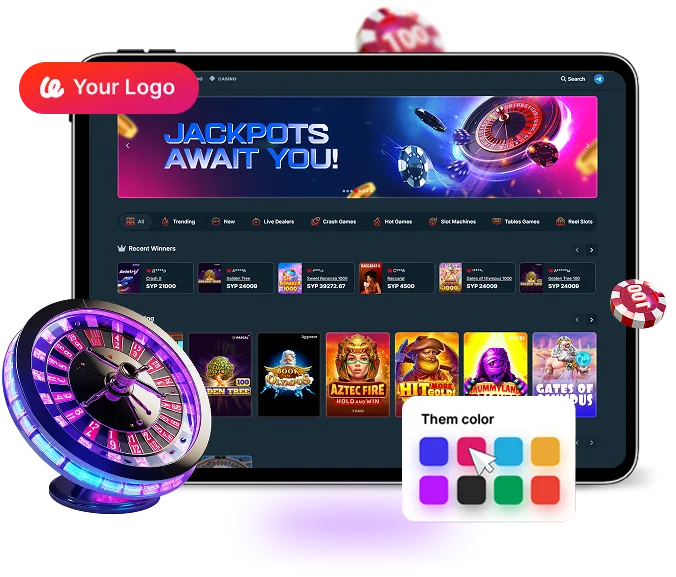
Launching an online casino used to mean years of development, a full engineering team, and a budget most startups couldn’t justify. That equation has changed. Today, a growing share of new operators skip the build-from-zero route entirely and instead partner with a white label casino software provider — a company that supplies the platform, licensing pathway, game catalog, and back-office tools under the operator’s own brand.
The appeal is obvious: faster market entry, lower upfront cost, and a working product from day one. What’s less obvious is how different one provider can be from another once you look past the sales pitch. Two platforms can both call themselves “white label” and still differ enormously in uptime, payment reliability, and how much control you actually retain. Here’s what separates a provider worth partnering with from one that will cost you time later.
Start With What “White Label” Actually Includes
Not every provider bundles the same components. At minimum, a serious white label casino software provider should hand over:
- A branded front-end you can customize (logo, colors, layout)
- A back-office or admin panel for managing players, transactions, and content
- Pre-integrated game content from licensed studios
- Payment processing, including regional and crypto options where relevant
- Player account management (PAM), KYC/AML checks, and fraud controls
If any of these require a separate vendor or a costly add-on later, that’s worth knowing before contract signature, not after.
Ask About the Licensing Arrangement, Specifically
This is where operators run into trouble most often. Some providers operate under their own master license and let you launch as a sub-brand — which is faster but means you’re bound by their jurisdiction and terms. Others expect you to secure your own license (Curaçao, Malta, Isle of Man, and similar jurisdictions each carry different costs and timelines). Neither approach is inherently better, but they lead to very different business structures, so get clarity on which model a provider offers and what it means for your long-term ownership of the brand.
Look at the Game Library the Way a Player Would
A number attached to a game count doesn’t tell you much on its own. What matters more:
- Are the studios behind the games recognizable and reputable in your target markets?
- Is there a mix of slots, live dealer, and fast-play or crash-style titles, or is the catalog weighted toward one category?
- How quickly does the provider add new releases, and is that part of the ongoing service or a separate negotiation?
A thin but well-curated library aligned to your target region often outperforms a massive but generic one.
Understand the Real Cost Structure
White label pricing is rarely a flat number. Providers typically combine setup fees, monthly platform fees, and a revenue share on gross gaming revenue. Before comparing quotes side by side, ask what’s included in each tier — support hours, game integration updates, payment gateway maintenance, compliance monitoring — and what triggers an extra charge. A lower headline price with a wide revenue share can end up costlier over 12–18 months than a provider with transparent, itemized fees.
Test Support Responsiveness Before You Commit
Casino platforms run continuously, and payment or game outages cost real money by the hour. During the evaluation stage, send a technical question to the provider’s support channel and time the response. A provider who takes days to answer a pre-sale query is unlikely to move faster once you’re a paying client with a live issue.
Check How Much You Can Actually Customize
“White label” doesn’t always mean full creative freedom. Some platforms allow only surface-level branding — logo and color swaps — while others let you adjust lobby layout, bonus logic, and localized content per market. If differentiation matters to your business (and in a crowded iGaming space, it usually does), confirm the depth of customization before assuming it’s included.
Weigh White Label Against Turnkey — Honestly
It’s worth pausing on the alternative. A turnkey solution offers deeper ownership and customization but demands more capital, a longer runway to launch, and an internal team to manage compliance and operations. White label suits operators who want to validate a market or launch quickly with lower risk; turnkey suits those building a long-term, fully independent brand. Providers who are upfront about which model fits your stage of growth — rather than pushing whichever is more profitable for them — are usually the ones worth trusting with the rest of the relationship.
The Bottom Line
Choosing a white label casino software provider is less about finding the biggest game catalog or the flashiest demo, and more about matching the provider’s licensing model, cost structure, and support quality to how you actually plan to operate. A short list of pointed questions during evaluation — on licensing, customization limits, and total cost — will tell you more than any feature comparison chart.
Operators researching providers with a track record across multiple regulated markets can look at platforms like PieGaming white label casino software, which combines a pre-integrated game library with built-in PAM, payment, and compliance tooling for operators aiming to launch within weeks rather than months.
Read More: Build white label casino software