Memory changes can be a normal part of aging, but persistent confusion, wandering, poor judgment, difficulty with daily activities, and noticeable behavioral changes may point to something more serious. For families caring for an older adult with Alzheimer’s disease, dementia, or cognitive decline, recognizing when additional memory support is needed can help protect their loved one’s safety, independence, and quality of life.
The need is increasingly common. According to the Alzheimer’s Association, an estimated 7.4 million Americans age 65 and older are living with Alzheimer’s dementia in 2026. Families exploring memory care in Leesburg VA or elsewhere should therefore understand the warning signs that may indicate an older adult needs more consistent supervision and support.
What Are the Signs That Someone May Need Memory Care?
A person may need memory care when changes in memory, thinking, judgment, behavior, or physical functioning begin interfering with everyday life or creating safety concerns. Warning signs can include getting lost, forgetting medications, neglecting personal hygiene, struggling with familiar activities, withdrawing socially, or requiring more supervision than family members can safely provide.
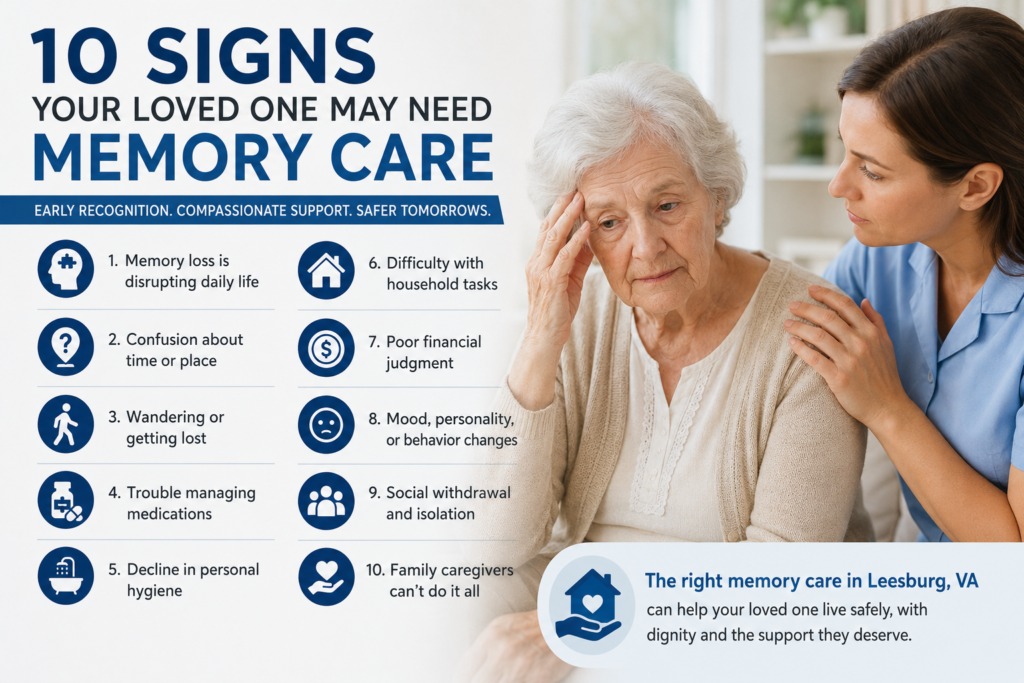
Here are 10 signs families should watch for.
1. Memory Loss Is Disrupting Daily Life
Occasionally forgetting an appointment or someone’s name can happen with normal aging. A greater concern is when memory problems become frequent enough to interfere with everyday routines.
A loved one might:
- Ask the same question repeatedly
- Forget recent conversations or events
- Miss important appointments
- Depend increasingly on reminders
- Forget information they previously knew well
The National Institute on Aging notes that repeating questions and forgetting recently learned information can occur during mild Alzheimer’s disease.
2. They Become Confused About Time or Place
Losing track of the day occasionally is different from regularly becoming confused about dates, seasons, locations, or surroundings.
A senior might wake up unsure of where they are, become confused in a familiar neighborhood, or have difficulty understanding how they arrived somewhere. Increasing disorientation can become a significant safety concern, particularly when the person lives alone.
3. Wandering or Getting Lost Becomes a Concern
Getting lost in previously familiar places is one of the more serious warning signs families should address.
A person experiencing cognitive decline may leave home intending to take a familiar walk but become unable to find the way back. Wandering can occur in people with Alzheimer’s disease, making appropriate supervision and home safety measures increasingly important.
4. Managing Medications Becomes Difficult
Medication routines can become complicated when memory and organizational skills decline. Your loved one may forget whether a medication was taken, skip doses, or accidentally take the same medication more than once.
When these mistakes become frequent, structured reminders and caregiver supervision may help create a safer daily routine.
5. Personal Hygiene Begins to Decline
Changes in bathing, grooming, dressing, or toileting can indicate that a senior is having difficulty completing activities of daily living.
You may notice:
- Wearing the same clothes repeatedly
- Forgetting to bathe
- Difficulty choosing appropriate clothing
- Neglected dental care or grooming
These changes should not automatically be interpreted as unwillingness. Cognitive decline can make a previously simple routine feel confusing or overwhelming.
6. Household Tasks Are No Longer Being Completed Safely
Cooking, cleaning, doing laundry, and maintaining a home involve memory, planning, sequencing, and judgment.
Warning signs may include leaving the stove on, forgetting food in the oven, allowing food to spoil, or becoming unable to complete familiar household tasks. When these problems occur repeatedly, living without assistance may no longer be the safest option.
7. Financial Judgment Has Changed
Unpaid bills, duplicate payments, unexplained purchases, or unusual financial decisions deserve attention. The National Institute on Aging identifies trouble handling money and paying bills as a potential symptom of Alzheimer’s disease. Cognitive impairment can also make an older adult more vulnerable to scams or financial exploitation.
Families may need to become more involved with financial management while preserving as much independence as safely possible.
8. Mood, Personality, or Behavior Changes
Dementia affects more than memory. Some people experience noticeable changes in mood and behavior. A previously outgoing parent might become withdrawn. Someone who was generally calm may become anxious, suspicious, irritable, or easily overwhelmed.
Sudden behavioral changes should also be discussed with a healthcare professional because infections, medication side effects, sleep problems, depression, and other medical conditions can sometimes cause or worsen confusion.
9. Social Withdrawal and Isolation Increase
A loved one may stop attending social activities, visiting friends, participating in hobbies, or engaging in conversations.
Sometimes withdrawal occurs because keeping up with conversations or remembering people has become difficult or embarrassing. Regular companionship and meaningful activities can provide social connection while helping a senior maintain a more predictable daily routine.
10. Family Caregivers Can No Longer Provide Enough Support
Sometimes the clearest warning sign is not a single symptom but the increasing level of care required.
A family caregiver may begin spending more time managing meals, medications, personal care, appointments, nighttime behaviors, or safety concerns. When one person requires near-constant supervision, maintaining that level of support can become difficult for a spouse or adult child. Professional memory support can supplement family involvement and help create a safer, more sustainable care arrangement.
Does Memory Loss Always Mean Dementia?
No. Occasional forgetfulness does not necessarily mean someone has dementia. Memory problems can also be associated with medication side effects, sleep problems, depression, nutritional deficiencies, thyroid disorders, infections, and other potentially treatable conditions.
The National Institute on Aging distinguishes normal age-related forgetfulness from more serious cognitive problems based largely on whether the changes interfere with everyday functioning.
For that reason, noticeable or worsening memory problems should be evaluated by a healthcare professional rather than self-diagnosed.
When Should Families Consider Memory Care?
Families should consider additional memory support when cognitive changes begin affecting safety, personal care, nutrition, medication management, household responsibilities, or the ability to live independently.
For families researching memory care in Leesburg VA, the right solution does not necessarily mean immediately moving a loved one away from home. Depending on the person’s condition and care needs, specialized dementia and memory support may sometimes be provided in the familiar surroundings of the senior’s own home.
Finding the Right Level of Support
There is no single moment when memory care becomes appropriate for every person. Alzheimer’s disease and other forms of dementia progress differently, and care needs can change gradually.
Families should pay attention to patterns rather than isolated incidents. Increasing confusion, wandering, unsafe behavior, difficulty with personal care, medication mistakes, and growing dependence on family members can collectively signal that additional help is needed.
Recognizing these changes early gives families more time to speak with healthcare professionals, discuss preferences with their loved one, evaluate care options, and create a plan that prioritizes dignity, familiarity, safety, and quality of life.