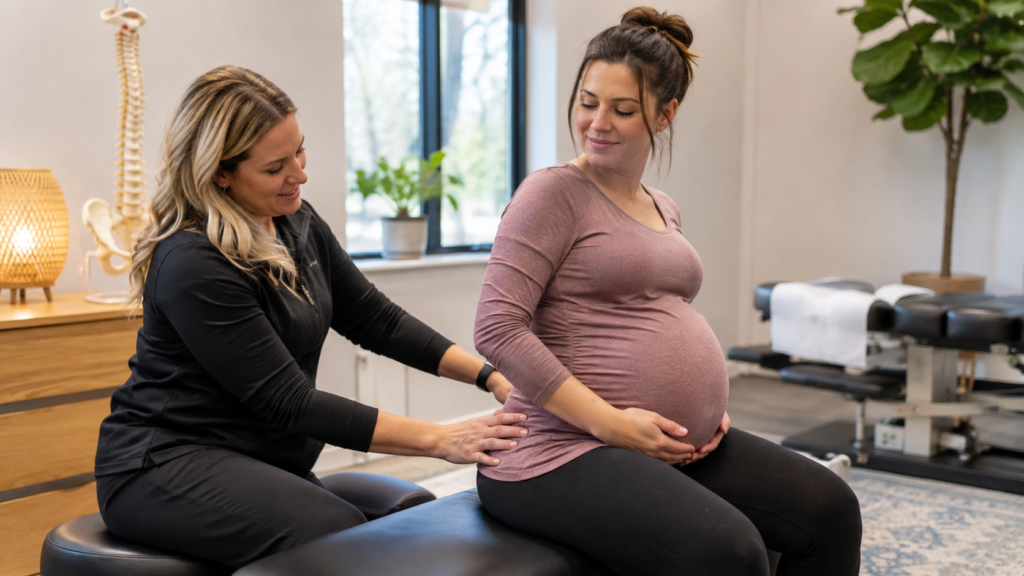
When I talk with women who are pregnant for the first time, one comment comes up again and again: “Nobody told me my body would feel like this.” The nausea and the cravings get all the attention, but the aching lower back, the stabbing pain near the hip, the way rolling over in bed becomes a full workout? Those tend to be a surprise.
In my experience, many expecting moms in Albuquerque quietly put up with these aches because they assume there is nothing safe they can do about them. They do not want to take medication unless they absolutely have to, and they are not sure what other options exist.
That is where gentle, pregnancy-focused care comes in. In this guide, I will walk through what prenatal chiropractic care in Albuquerque looks like during each trimester, what changes your body is going through, what a visit actually involves, what the research honestly says about safety, and how to choose a provider you feel good about.
Before anything else, one important note: everything here is general information. Your OB, midwife or primary care provider should always be part of the conversation about any care you receive during pregnancy.
Key Takeaways
- Prenatal chiropractic care is gentle, hands-on care adapted for pregnancy, with special tables, cushions and positioning so you never lie on your belly.
- Each trimester brings different physical changes, so a good provider adjusts the plan as your pregnancy progresses.
- Common reasons moms seek care include lower back pain, hip and pelvic discomfort, sciatic nerve pain and joint stiffness.
- Serious problems after spinal manipulation during pregnancy appear to be very rare, but the research is still limited, so coordination with your prenatal provider matters.
- Care works best alongside good posture, safe movement, sleep support and the guidance of your OB or midwife.
What Prenatal Chiropractic Care Is
Here is the simplest definition I can offer: prenatal chiropractic care is gentle chiropractic treatment designed specifically for pregnant women, focused on keeping the spine and pelvis moving well and easing the aches that come with a changing body.
It differs from standard chiropractic care in a few important ways:
- Positioning. Specialized tables and cushions make room for your belly, so you can lie comfortably without pressure on your abdomen.
- Gentler techniques. Adjustments are adapted to pregnancy, and many providers favor low-force methods.
- A focus on the pelvis. Because the pelvis carries so much of the load in pregnancy, it gets special attention.
- A plan that changes. What helps you at 12 weeks may look different from what helps you at 34 weeks.
If you want a broader sense of how chiropractic works outside of pregnancy, it can help to read about gentle chiropractic care for back and neck pain so you understand the foundation that prenatal care is built on.
Why Pregnancy Is So Hard on the Spine and Pelvis
It helps to understand what your body is dealing with. Mayo Clinic explains that back pain during pregnancy is common and often comes from several changes happening at once: weight gain, a center of gravity that shifts forward, stretched abdominal muscles and hormones that relax the ligaments in the joints of your pelvis.
Put those together and you get a spine that has to adapt constantly. As your belly grows, many women lean back without realizing it to keep their balance. That posture puts extra strain on the lower back. Meanwhile, the hormone relaxin loosens ligaments to prepare your body for birth, which is helpful for delivery but can make the pelvic joints feel unstable and achy along the way.
First Trimester: Laying the Groundwork (Weeks 1 to 13)
The first trimester is often more about fatigue and nausea than back pain, but changes are already underway.
What Your Body Is Doing
Hormone levels rise quickly, including relaxin. Some women notice early pelvic or lower back discomfort, especially if they already had back issues before pregnancy. Breast tenderness and exhaustion can also change how you sit, stand and sleep.
How Care Might Look
For many women, the first trimester is a great time to get evaluated. Your provider can learn your history, check how your spine and pelvis move, and establish a baseline before bigger changes arrive. Visits tend to be gentle and focused on comfort and good movement.
My Tips for This Stage
- Start building good posture habits now, before your belly grows.
- Keep moving with walks or gentle exercise your OB approves.
- Mention any history of back pain, past injuries or previous pregnancies at your first visit.
Second Trimester: The Body Starts Shifting (Weeks 14 to 27)
For many moms, the second trimester brings more energy. It also brings a growing bump and the first real shifts in posture.
What Your Body Is Doing
Your center of gravity moves forward as your uterus grows. Your lower back curve often deepens. Round ligament pain, a sharp pulling feeling on the sides of the belly, often shows up during this stage. Some women also notice hip pain or the first signs of sciatic nerve irritation.
How Care Might Look
This is when prenatal chiropractic care in Albuquerque often becomes especially helpful. Your provider may focus on pelvic balance, gentle adjustments to the lower back and hips, and soft tissue work for tight muscles. Positioning becomes more important as your belly grows.
Adding Soft Tissue Work
Muscles around the lower back, hips and glutes work overtime during pregnancy. Some clinics offer therapeutic manual therapy for tight muscles, which can complement adjustments by easing tension and helping your body feel less guarded. Always tell the therapist you are pregnant.
My Tips for This Stage
- Wear low-heeled, supportive shoes. Flat, unsupportive shoes and high heels can both make back pain worse.
- Start sleeping on your side with a pillow between your knees.
- Ask your provider about a pregnancy support belt if your lower back or pelvis feels heavy.
Third Trimester: Carrying the Most Weight (Weeks 28 to 40)
The third trimester is when many women feel the physical load the most.
What Your Body Is Doing
Your baby is growing fast, and so is the strain on your spine and pelvis. Lower back pain, pelvic pressure, hip pain, sciatica, rib discomfort and trouble sleeping are all common. Walking can start to feel more like waddling, and getting up from a low couch can take real effort.
How Care Might Look
During the third trimester, care usually focuses on comfort, pelvic balance and mobility. Many prenatal chiropractors use the Webster Technique, a specific approach that assesses and balances the pelvis and the soft tissues around it. Visits are gentle and carefully positioned, and your provider should check in regularly about how you are feeling.
A Note on Breech Babies
You may hear claims that chiropractic care can turn a breech baby. I want to be honest: the evidence for that specific claim is limited. Pelvic balance work may help you feel more comfortable, but decisions about a breech baby belong with your OB or midwife. Do not delay medical guidance in hopes that chiropractic care alone will change your baby’s position.
My Tips for This Stage
- Avoid lifting heavy objects. When you must lift, squat with a wide stance and use your legs.
- Take frequent breaks if you stand for long periods. Resting one foot on a low stool can ease the strain.
- Keep gentle movement in your day, even short walks around the neighborhood.
Common Pregnancy Discomforts and How Care Addresses Them
Every pregnancy is different, but these are the complaints I hear about most often from moms considering prenatal chiropractic care in Albuquerque.
Lower Back Pain
As your belly grows and your posture shifts, the muscles and joints of your lower back take on more work. Gentle adjustments, soft tissue work and posture coaching can help ease that strain.
Hip and Pelvic Discomfort
Loosened ligaments and a shifting pelvis can cause aching or sharp pain in the hips, the front of the pelvis or the sacroiliac joints at the back. Pelvic balancing techniques are often the main focus here.
Sciatic Nerve Pain
Sciatica can show up as pain, numbness or tingling that runs from the lower back or buttock down the leg. Pressure around the pelvis and lower spine during pregnancy can irritate this nerve. A careful evaluation helps decide which gentle techniques make sense.
Round Ligament Pain
That sudden, sharp pulling feeling on one side of your belly, often when you stand up quickly or roll over, comes from the ligaments that support your uterus. Pelvic balance and gentle soft tissue work around the hips may help some women feel more comfortable.
Upper Back and Rib Discomfort
Later in pregnancy, your growing baby can press upward, and changes in breast size can pull your shoulders forward. Gentle mid back care and posture work can ease some of that tension.
Joint Stiffness
Changes in how you move, sit and sleep can leave joints feeling stiff, especially first thing in the morning. Gentle mobility work and regular movement often help.
No matter the symptom, prenatal chiropractic care in Albuquerque should always start with an evaluation, not an assumption. Two women with “back pain” may need very different approaches.
What a Prenatal Chiropractic Visit Looks Like
If you have never had chiropractic care before, the unknown can feel intimidating. Here is a typical flow.
Step 1: Health History
You will fill out forms about your pregnancy, health history, medications and any complications. Bring your due date and the name of your OB or midwife. Many clinics let you complete paperwork ahead of time through their new patient center and online forms, which saves time on your first visit.
Step 2: Conversation and Exam
Your chiropractor will ask about your symptoms, when they started and what makes them better or worse. They will gently check your posture, how your spine and pelvis move, and where you feel tension or pain.
Step 3: Gentle Treatment
Using a pregnancy-friendly table or cushions, your provider will apply gentle adjustments or low-force techniques to the areas that need attention. You should feel comfortable throughout. If anything does not feel right, say so immediately.
Step 4: Home Care Guidance
You will usually leave with simple tips: stretches, sleep positions, posture reminders or activity suggestions.
Preparing for Your First Visit
A little preparation can make your first appointment for prenatal chiropractic care in Albuquerque smoother and more useful. Here is what I suggest:
- Wear comfortable clothes you can move in, like leggings and a loose top.
- Bring your prenatal details, including your due date, any complications and your OB or midwife’s contact information.
- Make a quick symptom list. Note where it hurts, when it started, what makes it worse and what helps.
- Eat a light snack beforehand if nausea or low blood sugar tends to bother you.
- Plan a little extra time. First visits usually take longer because they include history and an exam.
Arriving prepared helps your chiropractor understand your situation quickly, which means more of your visit can focus on helping you feel better.
Is Prenatal Chiropractic Care Safe?
This is the most important question, and I want to answer it carefully.
The National Center for Complementary and Integrative Health notes in its overview of spinal manipulation and pregnancy that reports of serious adverse events from spinal manipulation during pregnancy are very rare, but there has not been much rigorous research on the topic.
So here is my honest take: prenatal chiropractic care in Albuquerque appears to be low risk for many women when it is provided by a chiropractor trained in pregnancy care and coordinated with your prenatal provider. But “low risk” is not the same as “right for everyone,” and more research is still needed.
Talk to Your OB or Midwife First, Especially If You Have:
- Vaginal bleeding or spotting
- Placenta previa or placental abruption
- A history of preterm labor or current signs of it
- Ectopic pregnancy concerns
- Severe pelvic pain
- Preeclampsia or high blood pressure
- Any other high-risk pregnancy diagnosis
Call Your Prenatal Provider Right Away If Back Pain Comes With:
- Vaginal bleeding
- Fever
- Burning during urination
- Rhythmic cramping or tightening that could signal contractions
- Fluid leaking
- Sudden severe headache, vision changes or swelling
Back pain can sometimes be a sign of preterm labor or a urinary tract infection, so these symptoms always need medical attention first.
Myths About Chiropractic Care During Pregnancy
Because pregnancy is such a protective time, a lot of misinformation floats around. Here are the myths I hear most.
“Chiropractors crack your back hard.” Prenatal care uses gentle techniques adapted for pregnancy. Many providers use low-force methods that involve no dramatic movements at all.
“You will have to lie on your stomach.” You will not. Pregnancy tables, cushions and side-lying positions keep pressure off your belly.
“It is only for the third trimester.” Many women start earlier, and some begin with an evaluation in the first trimester to set a baseline.
“It guarantees an easier birth.” Some people make strong claims about labor and delivery, but the research does not support guarantees. A good provider focuses on comfort and mobility, not promises about birth outcomes.
“If my OB did not suggest it, I should not ask.” You are always welcome to ask your prenatal provider about any care you are considering. Most appreciate being kept in the loop.
Making Your Care Part of a Team Effort
I think the best pregnancy experiences come when every provider is on the same page. When you begin prenatal chiropractic care in Albuquerque, here is how I suggest keeping everyone connected:
- Tell your OB or midwife you are seeing a chiropractor, and mention what symptoms you are being treated for.
- Tell your chiropractor about every prenatal appointment, test result or change in your pregnancy that might matter, such as a new diagnosis or a change in activity restrictions.
- Share contact information if you want your providers to communicate directly.
- Speak up quickly if anything changes, especially new bleeding, cramping, swelling or severe pain.
A good chiropractor will welcome this coordination. If a provider ever discourages you from talking to your OB or midwife, that is a sign to look elsewhere.
Why So Many Albuquerque Moms Are Interested
I think a few things make prenatal care especially appealing here.
An active lifestyle. Albuquerque has a strong outdoor culture, and many women want to keep walking, hiking or staying active as long as their OB says it is safe. Feeling comfortable in their bodies helps them do that.
Long commutes and desk jobs. Plenty of pregnant women sit at desks all day and then sit again on I-25 or I-40. Hours of sitting with a growing belly can be hard on the lower back.
The dry climate. At around a mile above sea level, with very low humidity, it is easy to get mildly dehydrated. That can leave muscles feeling tighter, and staying hydrated matters even more during pregnancy.
A desire for drug-free options. Many expecting moms prefer to limit medication. A gentle, non-drug option for comfort is naturally appealing.
Simple Habits That Support Your Care
What you do between visits matters just as much as the visits themselves.
Posture
- Stand tall with your shoulders relaxed.
- Avoid locking your knees.
- Use a comfortably wide stance for balance.
- When sitting, choose a chair with good back support or place a small pillow behind your lower back.
Sleep
- Sleep on your side with your knees slightly bent.
- Use a pillow between your knees, and consider a full-length pregnancy pillow.
- Support your belly with a small pillow as it grows.
Movement
- Walk regularly, as long as your provider approves.
- Try prenatal yoga or swimming if they feel good for you.
- Ask your chiropractor or a physical therapist for safe stretches.
Hydration and Rest
- Keep water with you, especially in Albuquerque’s dry air.
- Take breaks often and listen to your body.
How Often Will I Need Visits?
There is no single visit schedule for prenatal chiropractic care in Albuquerque that fits everyone. Some women come in only when they have a flare-up. Others choose regular visits, especially in the later months when discomfort tends to increase.
Your chiropractor should explain their recommendations, tie them to your symptoms and goals, and adjust them as you go. You should never feel pressured into a long prepaid package. If you are not noticing improvement in comfort or movement, your provider should reassess or suggest another option.
Planning Ahead for After Birth
Pregnancy care does not have to stop when your baby arrives. Your body goes through another big transition after delivery, and many women find that gentle care helps them recover, especially with all the lifting, feeding and rocking a newborn requires.
Rebuilding core and pelvic strength is a big part of that recovery. A structured program of spinal rehabilitation exercises after pregnancy can help you regain stability gradually, once your OB or midwife clears you to start.
How to Choose a Prenatal Chiropractor in Albuquerque
Here is what I would look for:
Specific prenatal training and experience. Ask whether the chiropractor regularly sees pregnant patients and whether they use techniques like the Webster Technique.
Pregnancy-friendly equipment. Tables and cushions that accommodate your belly are a must.
Willingness to coordinate with your prenatal provider. A good chiropractor respects your OB or midwife’s guidance.
Clear explanations. They should explain what they are doing and why, and check in about your comfort.
Honest expectations. Be cautious of anyone who promises specific birth outcomes.
Transparent pricing. Ask about costs, insurance and payment options before you start.
Questions I Would Ask Before Booking
- How often do you work with pregnant patients?
- Are you trained in the Webster Technique?
- What equipment do you use to keep me comfortable?
- How do you coordinate with my OB or midwife?
- What does a typical visit include, and how long does it take?
- What are your prices and payment options?
Final Thoughts
Pregnancy asks a lot of your body, and feeling achy does not mean you are doing anything wrong. It means your body is doing something remarkable. Every stretch mark, every sore hip and every restless night is part of the work of growing a whole new person, and you deserve support while you do it.
Prenatal chiropractic care in Albuquerque can be one gentle way to support your comfort through each trimester, especially when it is combined with good posture, safe movement, restful sleep and the guidance of your prenatal provider. Go in with realistic expectations, share your full history, speak up about how you feel, and choose someone who treats you as a whole person.
If you are ready to take the next step, you can learn more about prenatal chiropractic care in Albuquerque at Blessing Chiropractic, including the techniques used and how visits are adapted for each stage of pregnancy. Talk with your OB or midwife, then book a gentle evaluation and see how your body responds.
Frequently Asked Questions
1. Is it safe to see a chiropractor while pregnant?
Serious problems after spinal manipulation during pregnancy appear to be very rare, but research is limited. Choose a chiropractor with prenatal training and talk with your OB or midwife before starting care.
2. When can I start prenatal chiropractic care?
Many women start whenever discomfort begins, in any trimester. Some prefer an evaluation early in pregnancy to establish a baseline before bigger changes happen.
3. Will I have to lie on my stomach?
No. Prenatal chiropractors use specialized tables, cushions and side-lying positions so you can be treated comfortably without pressure on your belly.
4. What is the Webster Technique?
The Webster Technique is a chiropractic approach used during pregnancy that assesses and balances the pelvis and surrounding soft tissues to support comfort and pelvic function.
5. Can a chiropractor turn a breech baby?
The evidence for this claim is limited. Pelvic balance work may support comfort, but decisions about a breech baby should always be made with your OB or midwife.
6. Can chiropractic care help sciatica during pregnancy?
Many pregnant women seek chiropractic care for sciatic pain in the lower back, hips and legs. A provider will evaluate your symptoms and use gentle techniques where appropriate.
7. How often should I see a prenatal chiropractor?
It depends on your symptoms and stage of pregnancy. Some women come in as needed, while others choose regular visits in later months.
8. Who should avoid prenatal chiropractic care?
Women with bleeding, placenta problems, preterm labor signs, preeclampsia or other high-risk conditions should talk with their prenatal provider before any chiropractic care.
9. Does prenatal chiropractic care hurt?
It should not. Techniques are gentle and adapted for pregnancy. Tell your provider right away if anything feels uncomfortable.
10. Can I continue chiropractic care after giving birth?
Yes, many women continue with postnatal care once their OB or midwife clears them. It often focuses on pelvic alignment, posture and recovering core strength.